
New Release: Lab Series 1 by Holthinrichs Watches skilfully transports us into a retrofuturistic reality
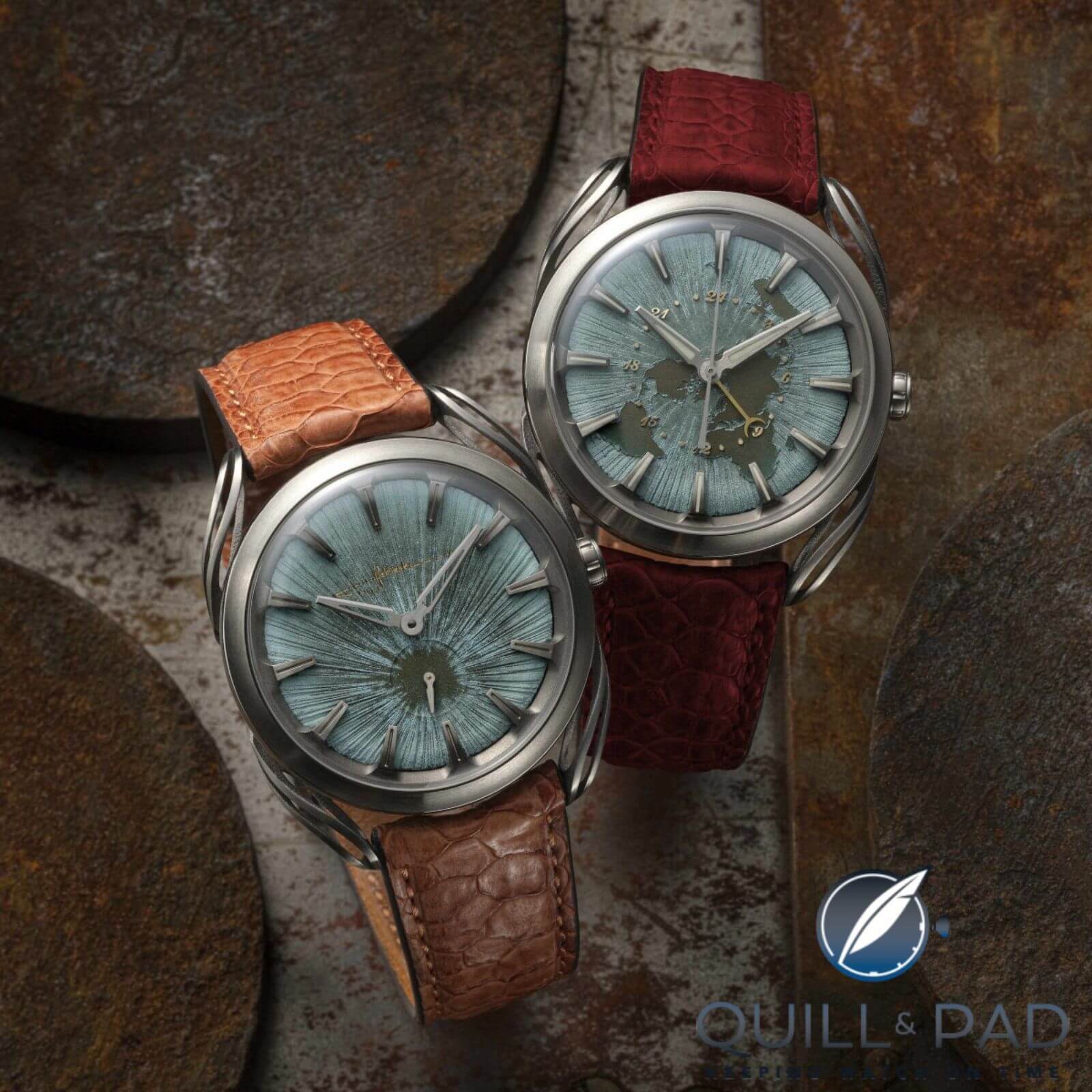
Holthinrichs Watches, founded ten years ago by Dutch architect Michiel Holthinrichs from Delft, initially gained considerable renown – at the time, only in very select circles – primarily for its vision of extensively employing advanced direct laser 3D printing technology with metal powder. Today, I present two new models that caught my attention: the automatic Lab Series 1.S, which offers the rare combination of automatic winding and small seconds, and the Lab Series 1.GMT, featuring a straightforward second time zone function with a central 24-hour GMT hand. It was not only the features that attracted me, although they are important; these two models also make strong and compelling use of 3D printing technology in their distinctive designs. Moreover, as we will see later, this is a particularly important aspect for Holthinrichs Watches and remains one of the brand’s fundamental design tools.
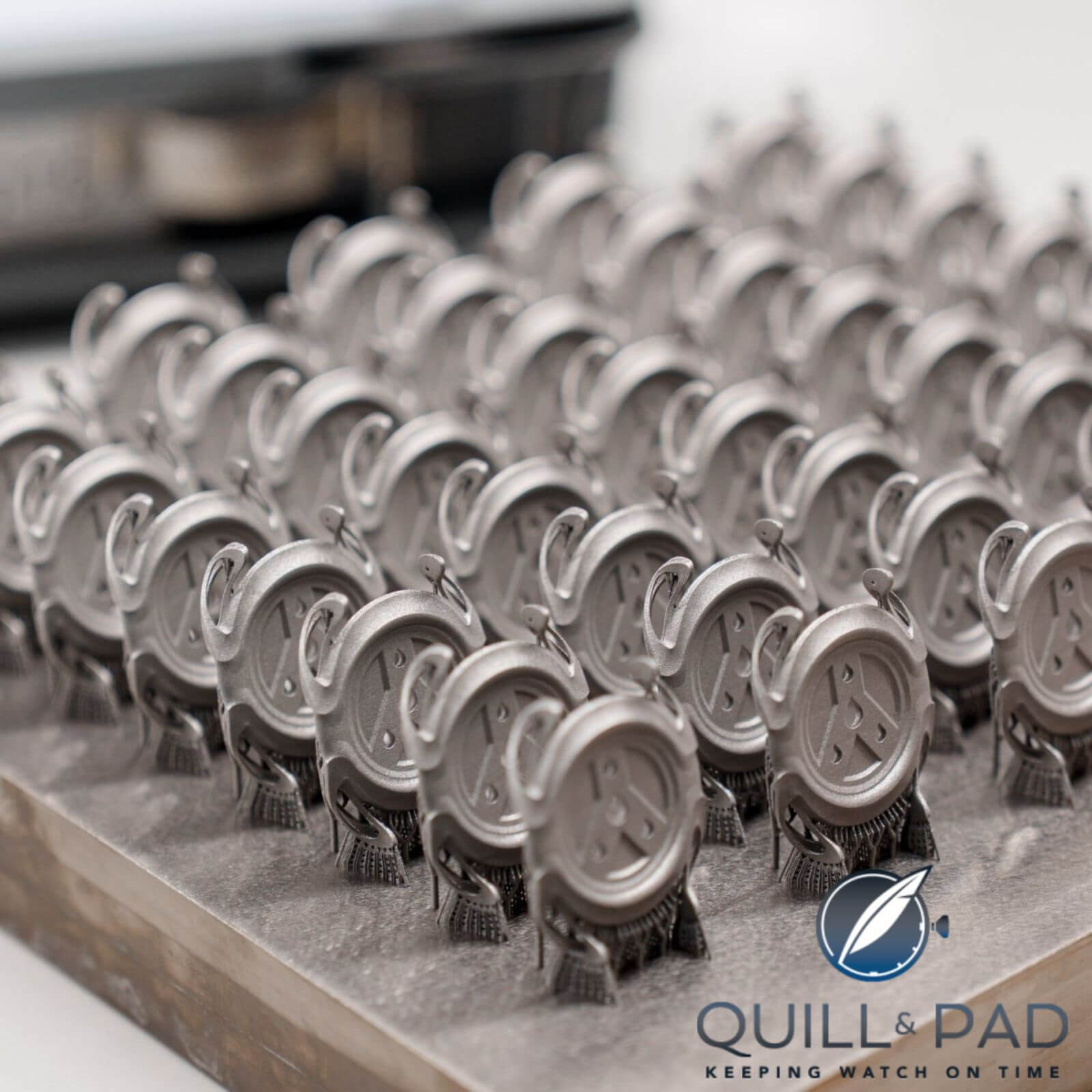
At the time of the brand’s founding in 2016, this technology had already been used in watchmaking, though rarely, and was arguably just another addition to the list of previously employed core technologies – primarily, of course, CNC milling and turning. Michiel Holthinrichs, however, focused on 3D printing metal components, mainly case parts, in a wide range of materials, including steel, titanium, bronze, and gold. This approach immediately set his company apart from other newcomers and established brands. It is worth noting that startups focusing on technology and promoting their own versions of progressive techniques often fail to offer interesting and, more importantly, distinctive designs, making it less engaging to follow their progress. Modern watches, as Mr Hayek Sr taught in the mid-1990s, are largely emotionally charged accessories, while advanced technology alone is unlikely to entice a modern connoisseur; in this sense, the Holthinrichs Watches case is illustrative. When discussing high technology, we are not referring to smartwatches, although even these could often benefit from being more than simply advanced high-tech gadgets and should also evoke an emotional response.
The ten-year journey of Holthinrichs Watches has followed a distinctive course. Mr Holthinrichs’ artistic background has played a significant role in the brand’s ongoing presence in the market and, as seen in its latest releases, has provided a notable boost. He has a personal connection to design and architecture, having completed a Master’s in Architecture at Delft University of Technology, and comes from a family with both engineering and artistic traditions. This combination is evident in the brand’s unique designs, which are rooted in strong technical engineering. Notably, he and the Holthinrichs Watches team have not followed the well-trodden path of copying established watch designs – a practice that, unfortunately, has become common among new start-up brands offering endless variations on 1960s and 1970s diving watches.

From the outset, Mr Holthinrichs’s use of 3D printing technology was not solely for production purposes, such as making case components more cost-effective. In fact, direct 3D printing of metal parts is more expensive than serial CNC machining, particularly as CNC machining offers a better foundation for artisanal finishing. Mr Holthinrichs’s vision was different: he saw 3D printing as the most flexible means, given the current state of modern technology, to realise expressive designs unattainable by other production methods. What does this mean? Hollow 3D objects, of course. In his early sketches, Mr Holthinrichs, inspired by classic 1950s watch designs with imaginatively shaped lugs – never before in the history of watchmaking had there been such a variety of lugs as in the 1950s – continued this trend in watch design with the hollow lugs he created. This may be an unexpected result of the technology, but these lugs give the watch the appearance of a fantastical artefact, with a watch case supported by a skeletal frame. This impression is further enhanced by the deep annular recess of the caseband, and is particularly striking in the original Holthinrichs Ornament 1 design due to the presence of a monolithic logo 3D-printed within this recess.
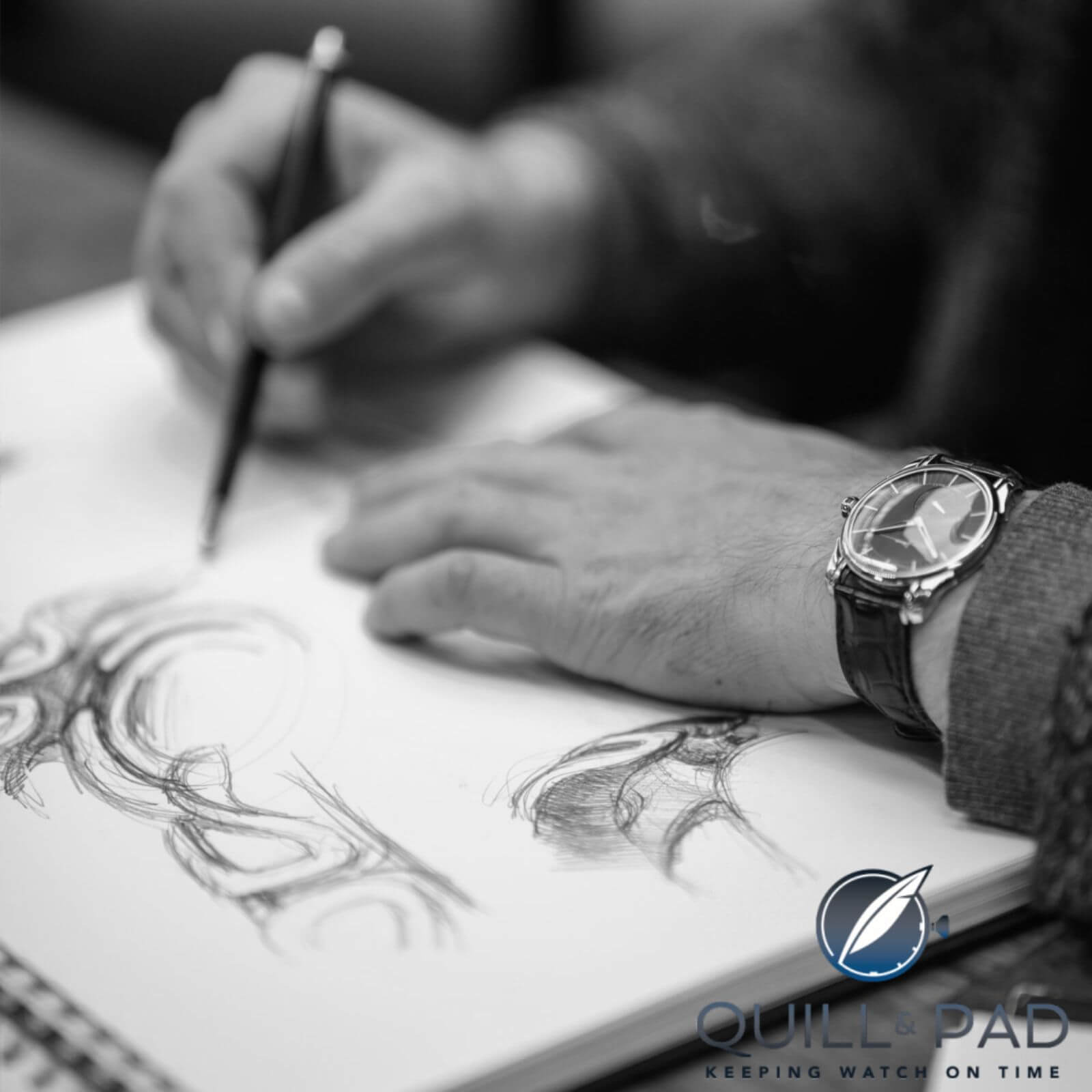
Mr Holthinrichs
Mr Holthinrichs focused on his original Ornament 1 design for eight years, until 2024, when he introduced his new Signature design, which proved even more distinctive in style. Technologically, he reached a new level, as the Signature cemented the brand’s position at that time through its value proposition. The basic versions have cases manufactured on CNC machines but retain the characteristic combination of ruggedness, decorativeness, and elegance, while the advanced Signature Lab and Lab Series 1 versions have case parts that are still 3D printed. These watches feature sculpted, sensually and strikingly curved lugs, clearly inspired by 1960s sports cars. The basic Signature series, using CNC technology, has monolithic lugs, whereas the high-tech Signature Lab and Lab Series 1, using 3D-printed technology, have skeletonised lugs resembling two thin ribbons bent by a gust of wind. Looking at the Lab series lugs, one might be tempted to doubt their robustness. However, this concern is entirely unfounded, as 3D-printed titanium is used in the production of rocket engine parts and other highly technical applications, where concerns about delicacy are unwarranted.
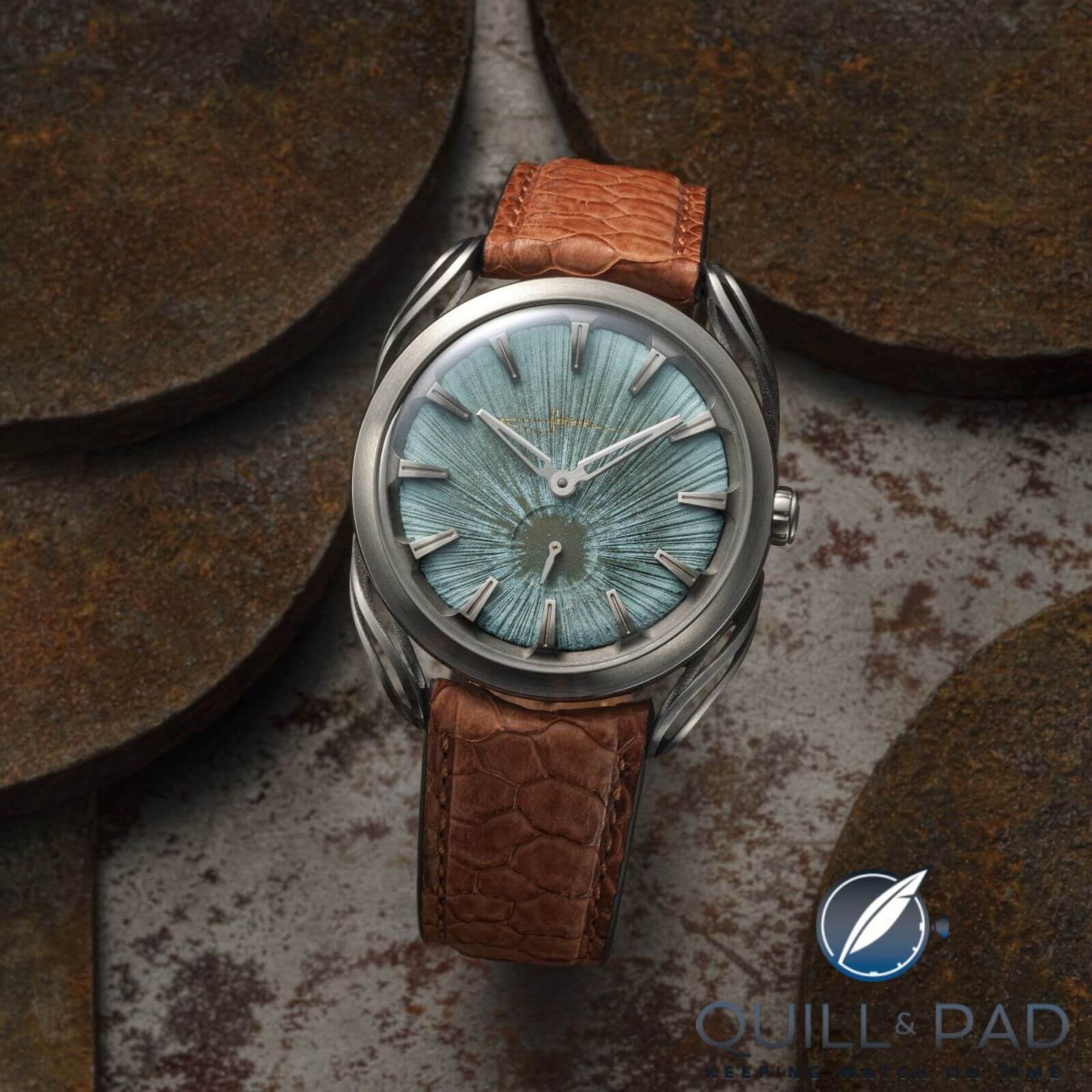
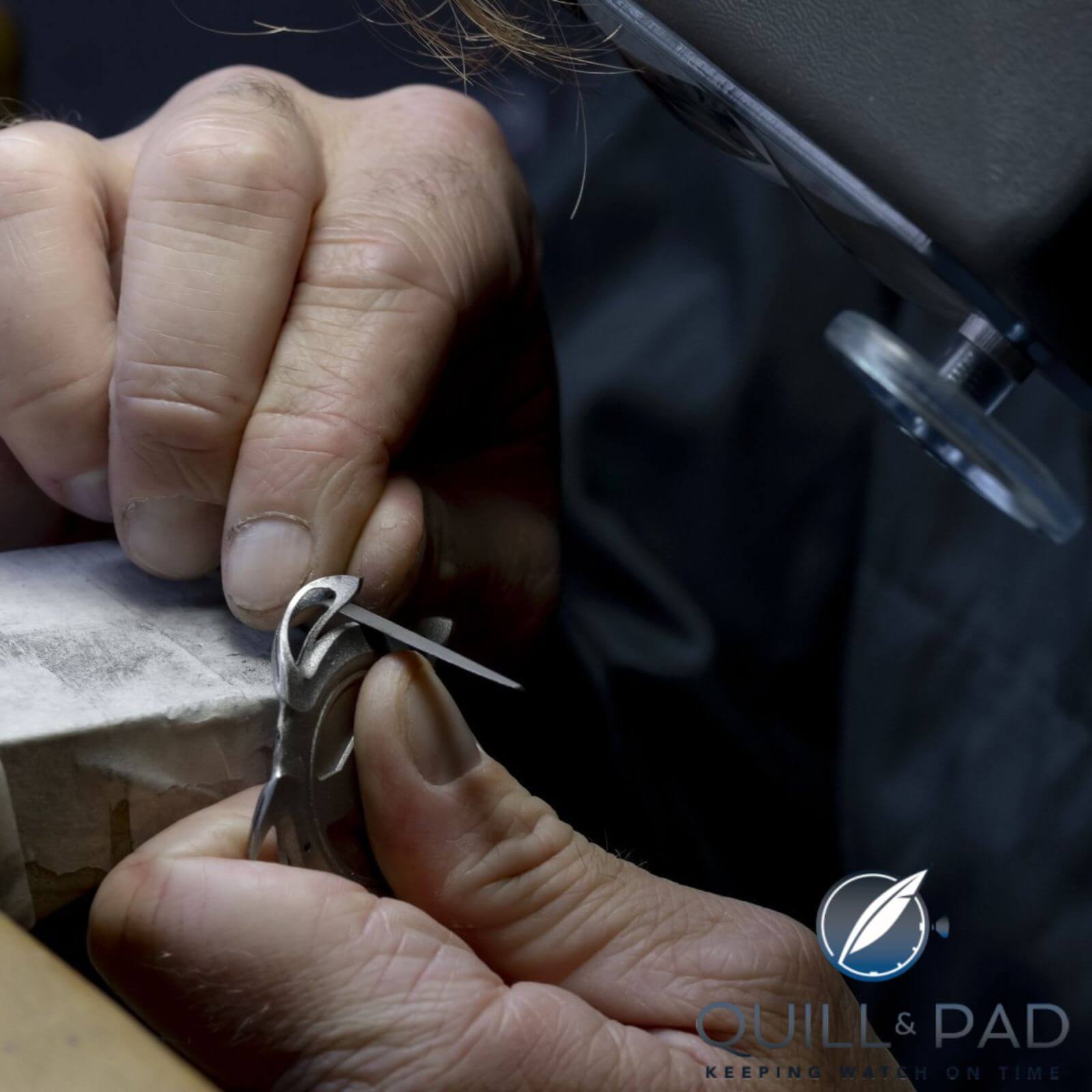
Modern 3D-printed metal technology produces a relatively rough surface texture with rows of protruding mini-pyramids. Mr Holthinrichs retains this artifactual feature in some models, but not in the new Lab Series 1.S and Lab Series 1.GMT. This adds value to the watches, as they receive a noticeable and impressive artisanal finish – work done by hand using traditional tools such as a file. Parts of the case surface are brushed, including the bezel and outer lugs, while other areas are sandblasted, producing a clearly defined, large-scale matte texture. When used in titanium, this results in a deep grey tone, adding sculptural contrast to the watch case.
Mr Holthinrichs also upgraded the Signature and Lab Series 1 engines, introducing a self-winding movement for the first time in the brand’s collection. The new movements are modified versions of the reliable Sellita SW-300, which received a 2021 update increasing the power reserve from 42 to 56 hours. This was a significant development for Sellita, giving the SW-300 an advantage over the standard Eta 2892, whose architecture was originally used in the SW-300. This suggests that Mr Holthinrichs, who previously relied on a modified hand-wound Eta/Peseux 7001 calibre, has begun to prioritise practicality, indicating he is reaching a wider audience than just avid collectors and dedicated connoisseurs.
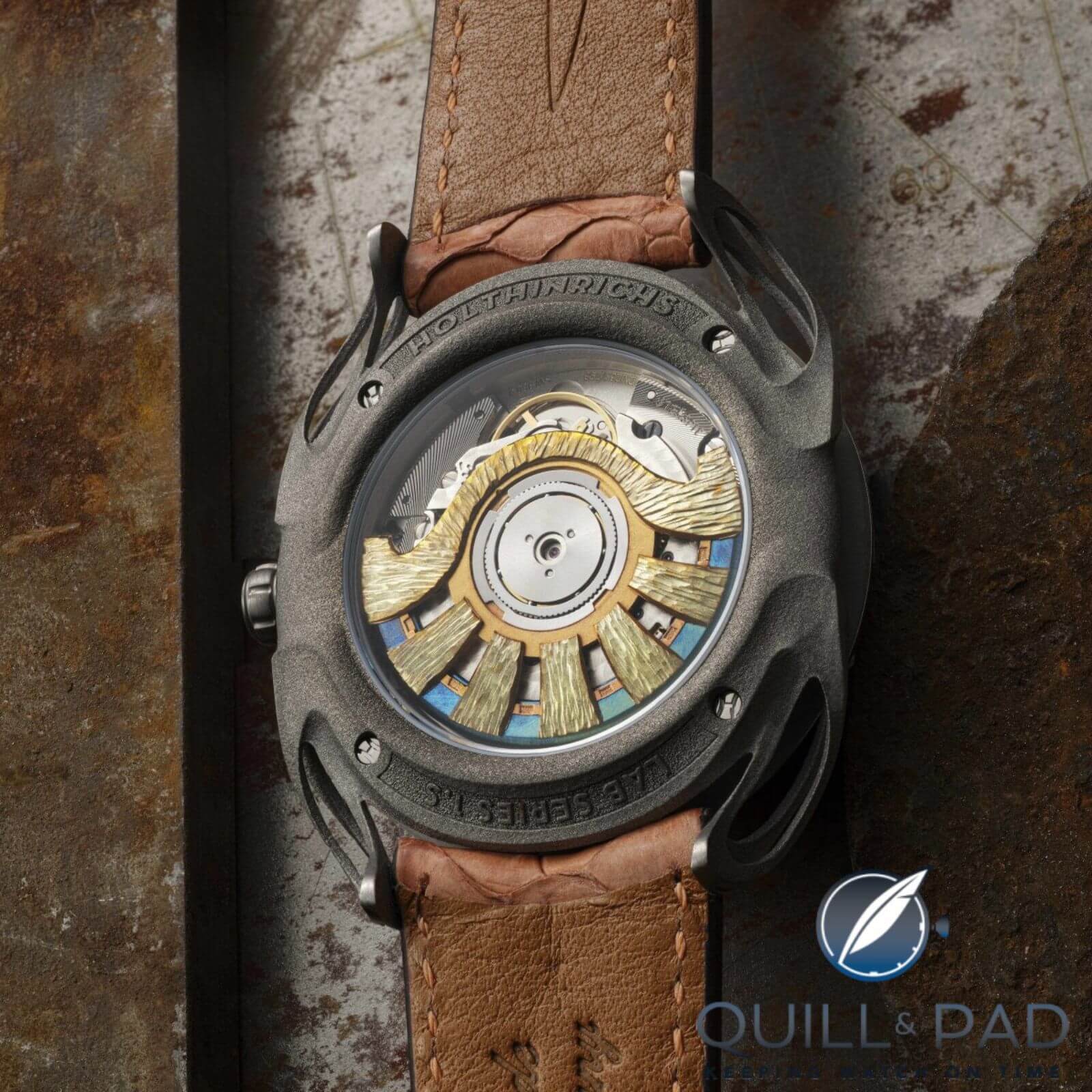
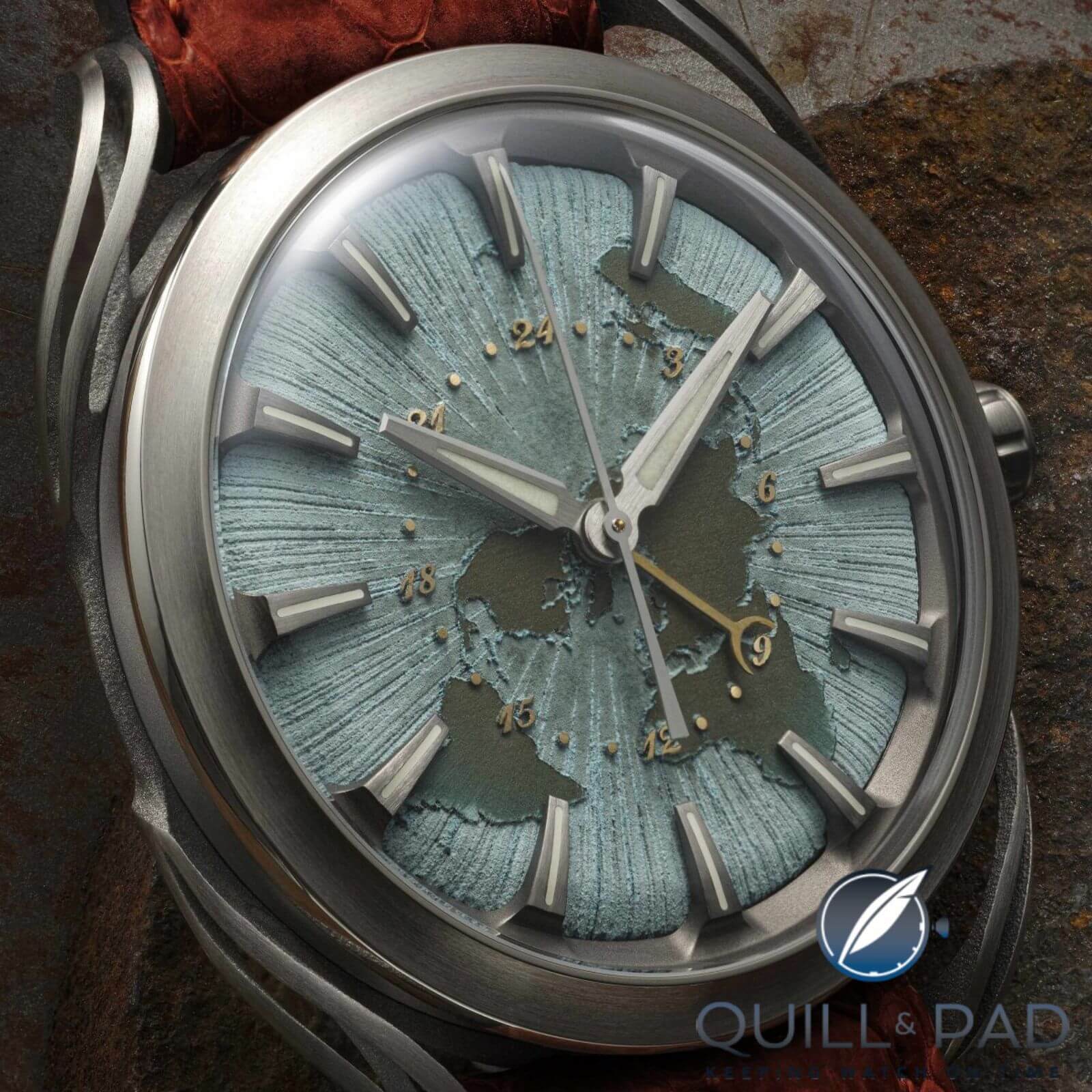
The two new Lab Series 1 releases feature unconventional SW-300 modifications: the SW360, with its rare combination of automatic winding and small seconds, used in the Lab Series 1.S, and the SW330-2, with a central 24-hour GMT hand in the Lab Series 1.GMT. The former provides an aesthetic option for connoisseurs attracted to the traditional pocket watch dial architecture with small seconds, a design extensively used in earlier Holthinrichs collections, while the latter provides the most relevant and sought-after feature for modern globetrotters. Additionally, both versions are a highly pragmatic choice in terms of worldwide service accessibility.
At the same time, Mr Holthinrichs ensured that the SW360 and SW330-2 no longer retained their standard industrial appearance, which is not ideal for a small creative brand like Holthinrichs. He designed a custom rotor featuring a rising (or setting) sun motif, with deliberately rough, textured engraving of its ‘rays’ – an image evoking retrofuturism that perfectly complements the dial design. Most importantly, this rotor looks stunning when paired with the roughly sandblasted, sculpted forms of the titanium caseback – a watch with such a case feels remarkable on the wrist, knowing how unusual and appealing it appears when you take the trouble to remove the watch and admire what Mr Holthinrichs has created on its back. The retrofuturistic impression is reinforced by another, quite unexpected, association: the sculpted Lab Series 1 case reminds me of an ancient Egyptian scarab motif. When I think of this, the watch becomes strongly associated in my mind with scenes from the sci-fi film Stargate, as a plausible and relevant wrist tool in that context.
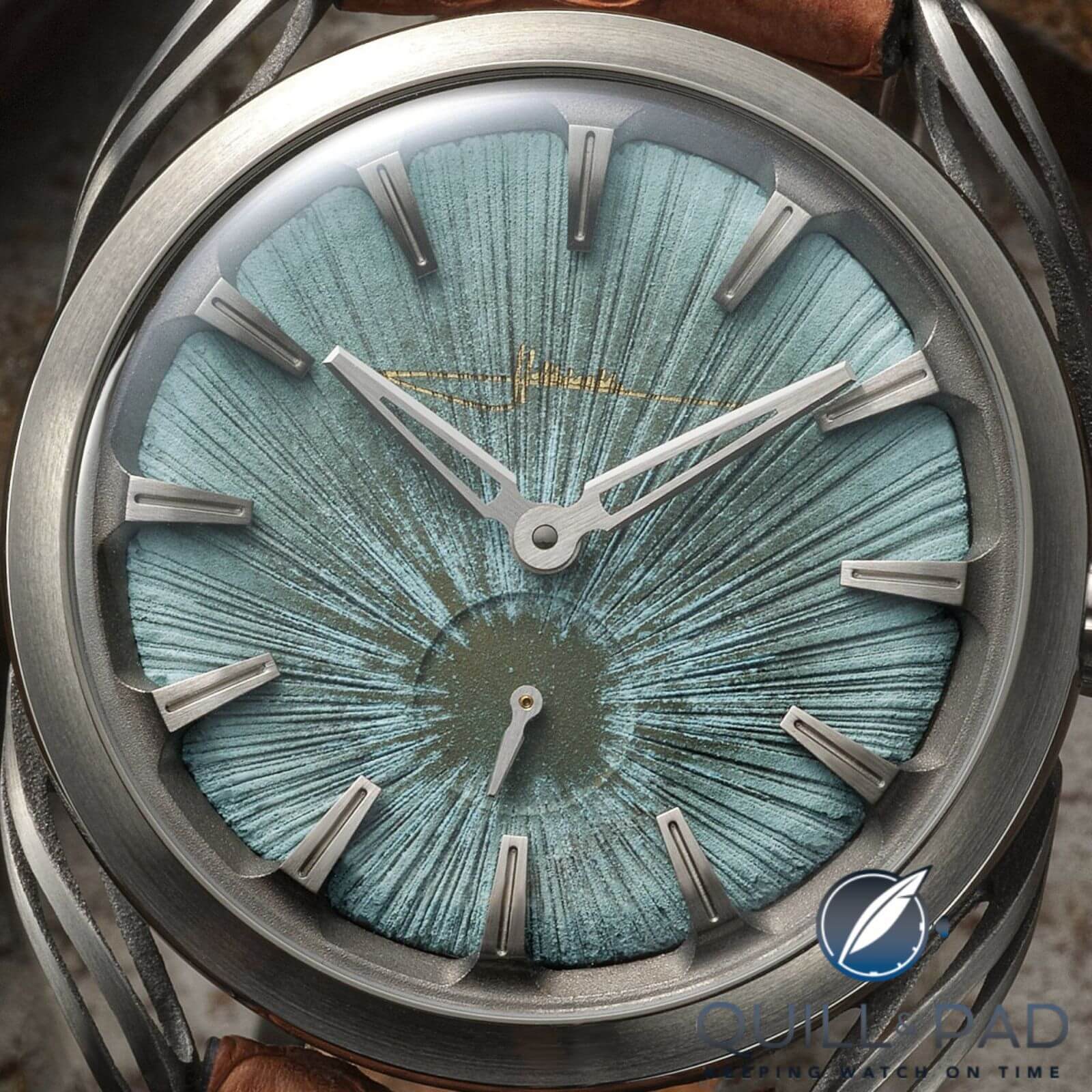
Moreover, the dials of the two new Holthinrichs Lab Series 1 editions naturally evoke a sense of antiquity. The dials are clearly the third element that unifies the design and creates harmony. To call these dials special is an understatement. They appear to represent another technological breakthrough from Mr Holthinrichs. This technique was first used in the Raw Ornament Bronze watch, announced at the end of 2021. A domed dial blank of solid copper, featuring a complex sunray relief pattern achieved by milling and textured with laser engraving, is then patinated in acid to produce the characteristic bluish-green colour of this metal patina, which typically develops through natural oxidation. The cool tones of the patina are accentuated by the raised areas of the dial, where brushing reveals a reddish copper hue.
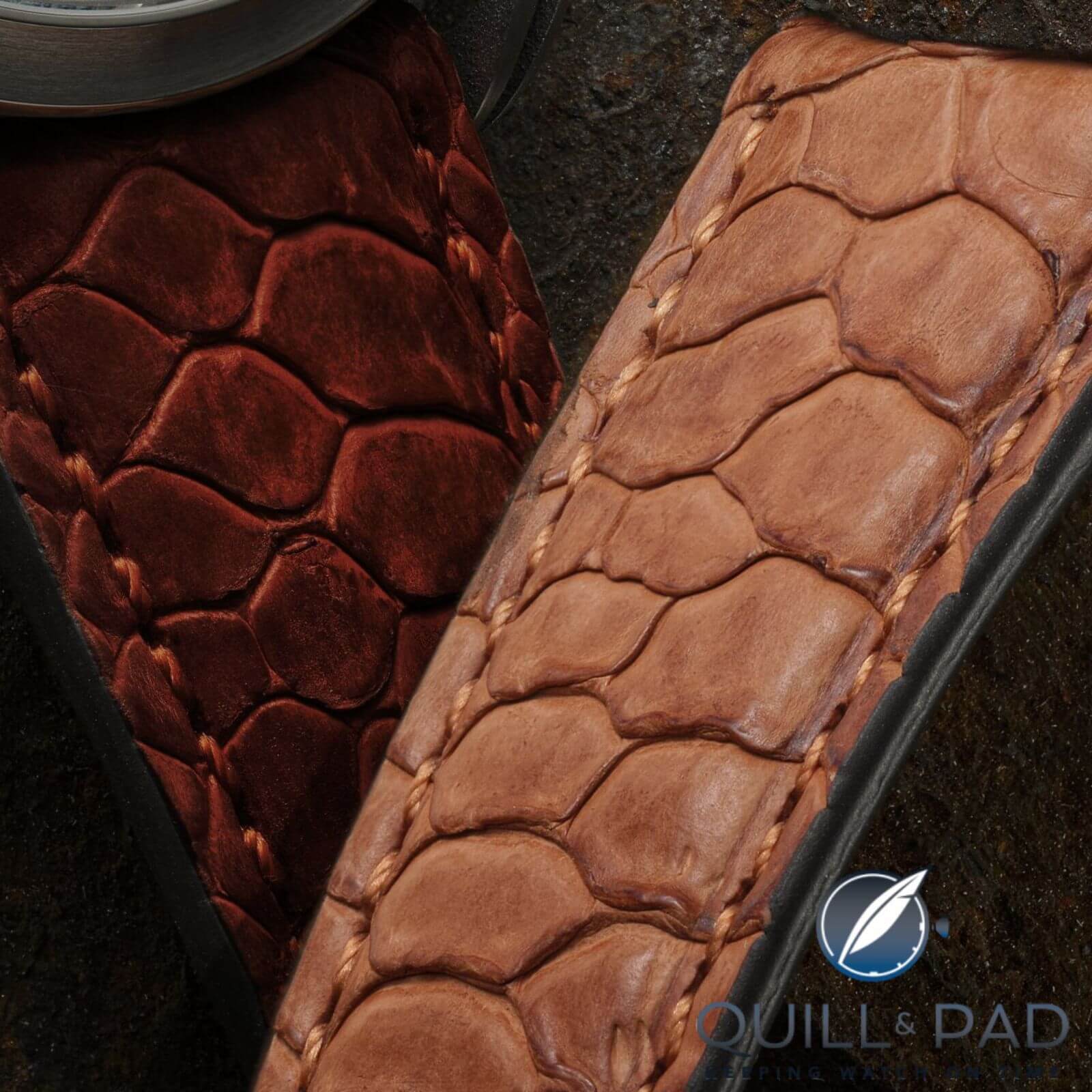
The finishing touch to Mr Holthinrichs’s artwork is the leather strap of the new Lab Series 1.S and Lab Series 1.GMT watches, which at first glance appears remarkably similar to alligator or reptile leather. Surprisingly, this is not the case; it is an extravagant decorative overlay made from specially tanned and dyed rooster feet leather. The initial reaction: is this a joke? The next: it is a bold choice for a small, independent brand, providing another memorable sign of its creativity, alongside its philosophy of sustainable responsibility and concern for the survival of rare species, which is certainly welcome. After all, roosters are closely related to dinosaurs, and I love the idea of wearing my favourite watch on a dinosaur leather strap, especially a retro-futuristic watch. The rooster may not look as menacing as, for example, a Tyrannosaurus rex, but at least the rooster is not an extinct species, which is a distinct advantage – it is definitely a winner in the evolution race.
All images courtesy of holthinrichswatches.com.
Quick Facts — What to Know About
Models and maker: Holthinrichs Lab Series 1.S and Lab Series 1.GMT.

Limited edition: 100 pieces of each version.
Case: 3D-printed in grade 5 titanium, hand-finished with brushing and sandblasting; sapphire crystals – domed at the front, flat at the back.
Case dimensions: Diameter 38.5 mm, lug to lug 46 mm; thickness 7.8 mm, 9.85 mm including crystal.
Dial: In-house domed copper-oxide textured and patinated dial; titanium cantilevered hour markers; world map and 24-hour GMT scale in relief (Lab Series 1.GMT); ‘Signature’ hands with diamond-cut chamfers; hands and hour markers with luminous coating (Lab Series 1.GMT).
Movement: Modified automatic calibre Sellita SW360 (Lab Series 1.S) or Sellita SW330-2 (Lab Series 1.GMT); running at 4 Hz (28,800 vph), with a 56-hour power reserve; hand-carved and heat-treated rotor.
Strap and buckle: Leather strap with rooster feet leather facing; cognac (Lab Series 1.S) or burgundy (Lab Series 1.GMT); grade 5 titanium pin buckle produced by Holthinrichs.
Read more like this:
Unlocking the Mechanical Secrets of the New Felipe Pikullik Sternenhimmel FPA1
The Dancing Cage: 10 Best Tourbillon Watches
Clash of the Titans: A Comprehensive Guide to Blancpain vs. Jaeger-LeCoultre
