
Good Vibrations: Armin Strom reveals the Minute Repeater Resonance 12:59 First Edition
We all know that watchmakers love complications. Throughout history, the quest for ever greater chronometric precision has produced a wide range of mechanisms, like the tourbillon, which has been mastered by many and improved. The cohort of watchmakers venturing into the mechanics of resonance is far smaller. Among these high achievers is Armin Strom.
It has been almost ten years since the little manufacture in Biel, once known for classically engraved watches by the company’s namesake, the late Armin Strom, emerged as an acknowledged technological innovator. In November 2016, Serge Michel and Claude Greisler, the owners of the brand, presented the Mirrored Force Resonance, a remarkable concept that introduced resonance inside a watch as a means to stabilize the rate and improve accuracy.

The phenomenon of resonance had been known to physics and clockmaking for centuries. One day in 1665, the great Christiaan Huygens, scientist and inventor of the pendulum clock, was bedridden when he noticed that his clocks were ticking together in perfect unison. He got up, nudged the pendulum of one clock to desynchronize it, and sure enough, after a brief moment of disorder, the two clocks fell back into step. Through experimentation he deduced that there must be microvibrations traveling between the clocks, and their rate was thus evened out.
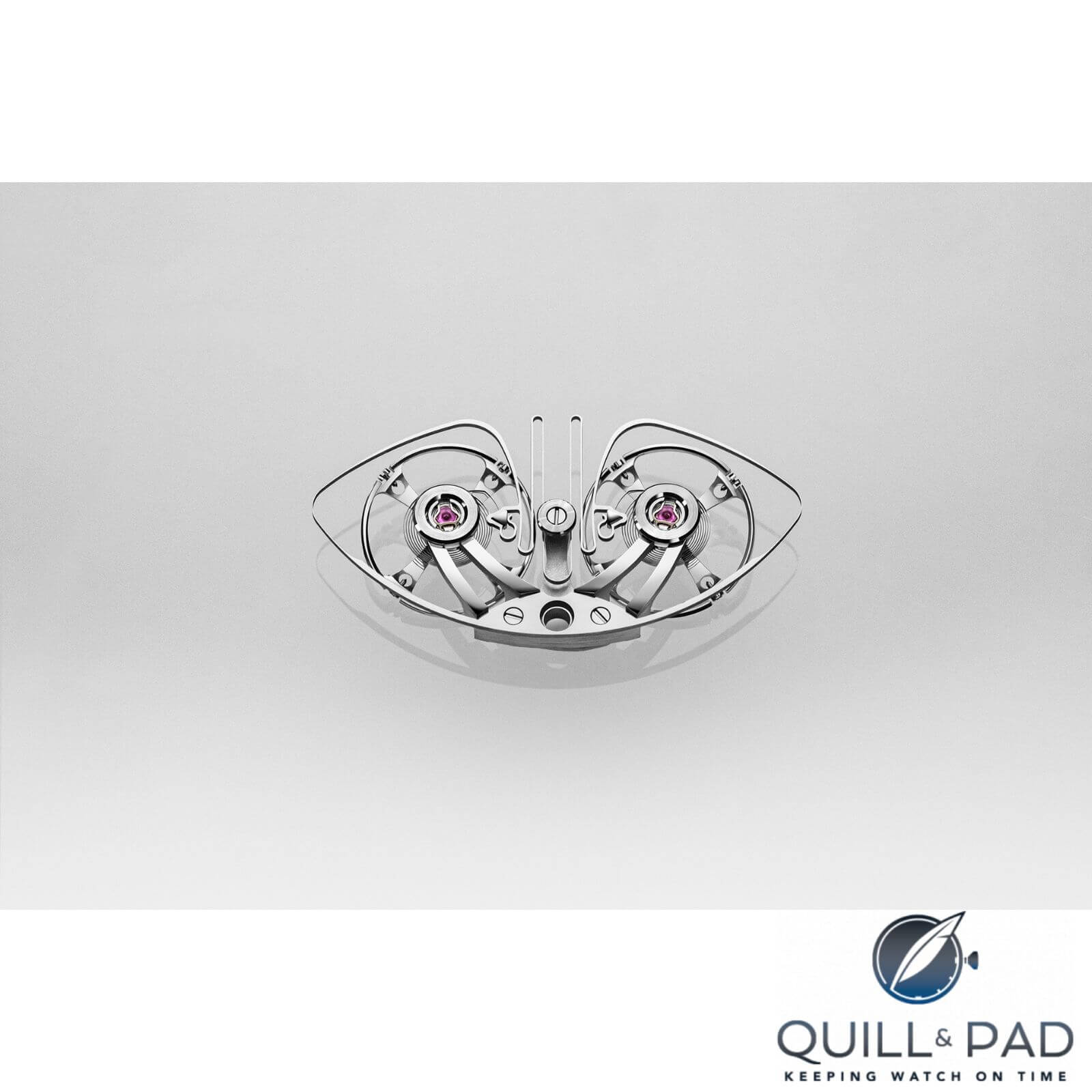
At the heart of the Mirrored Force Resonance is a pair of engines driving the watch, with two barrel springs, two gear trains, two escapements, and two balance wheels. To ensure synchronization between the systems and the stable rate necessary for everyday wearability, the company patented the “clutch spring,” a peculiar component that winds around the two beating balance springs. “It’s a flexible guidance system,” Claude Greisler explained. “It gives the watch a lot more stability and precision.”
Armin Strom had the happy idea of placing the entire mechanism on the dial side of the watch, where its hypnotic beat can be admired at leisure. But Claude Geisler fascinated by the possibilities offered by the resonance-based movement. “Resonance is also called ‘shared mode of motion,’” he told me. “It’s natural, too, like people suddenly clapping synchronously at a concert.” He even spoke to a professor of psychology at the University of Bern, who assured him that couples who are in resonance have more harmonious relationships.
So, with the support of the manufacture, he pressed on, adding a GMT for the next iteration. And now, at Watches and Wonders 2026, Armin Strom unveiled a timepiece that has clearly been gestating in the workshops for a long time: the Minute Repeater Resonance 12:59. For those who know minute repeaters well, that very precise time indication should ring a bell, as it were. Translated into sound, it means 12 hour chimes, 3 quarter hours, and 14 minute chimes.
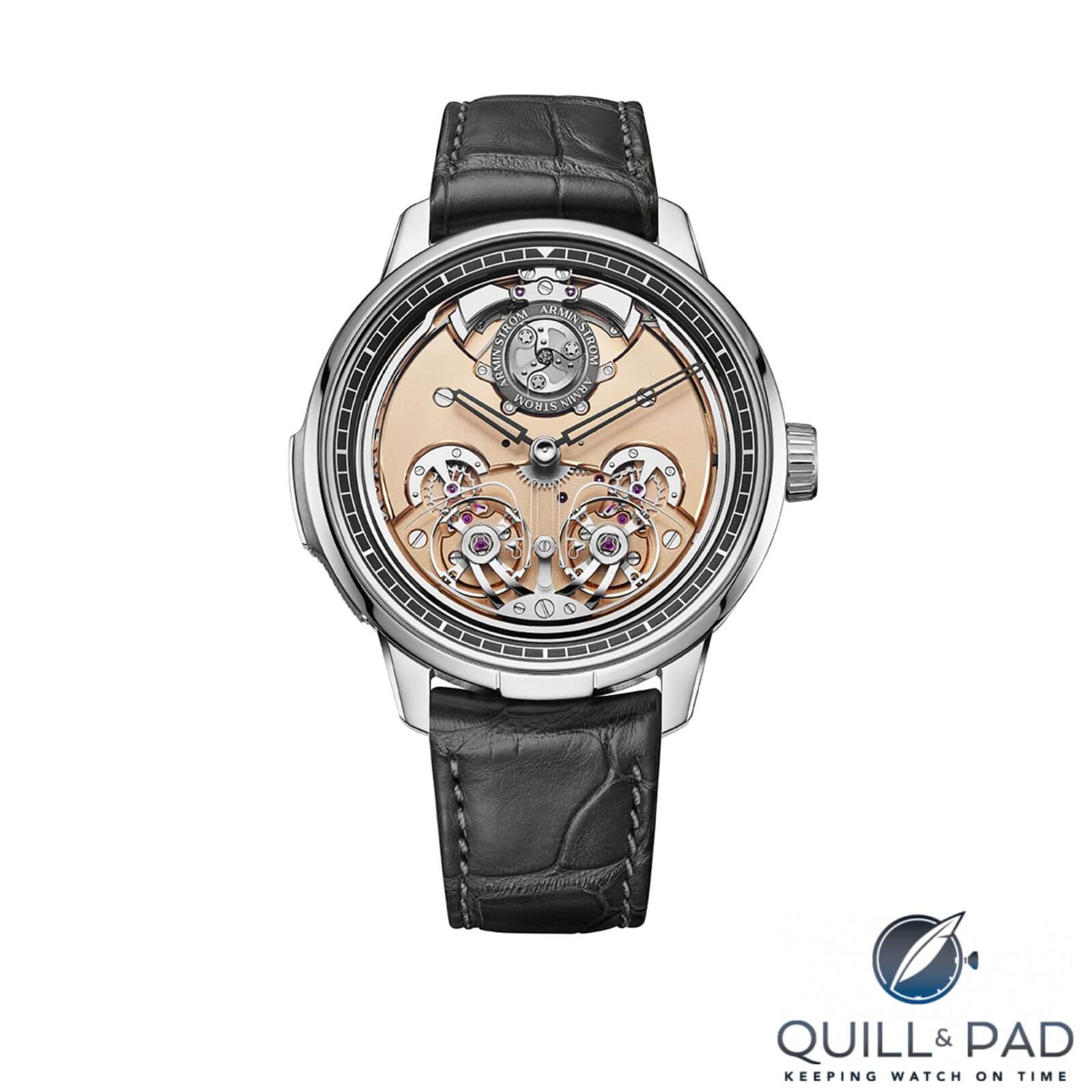
At first glance the Minute Repeater Resonance 12:59 First Edition is such a harmoniously designed timepiece that you might wonder about its price tag of CHF 390,000. It is a relatively slim watch, suitable for everyday wear, and with a diameter of 42 millimetres. It is crafted in titanium, a material that is lightweight and robust but also produces a particularly bright, carrying chime. That last quality is no small advantage: amplifying sound is one of the central challenges of any minute repeater.
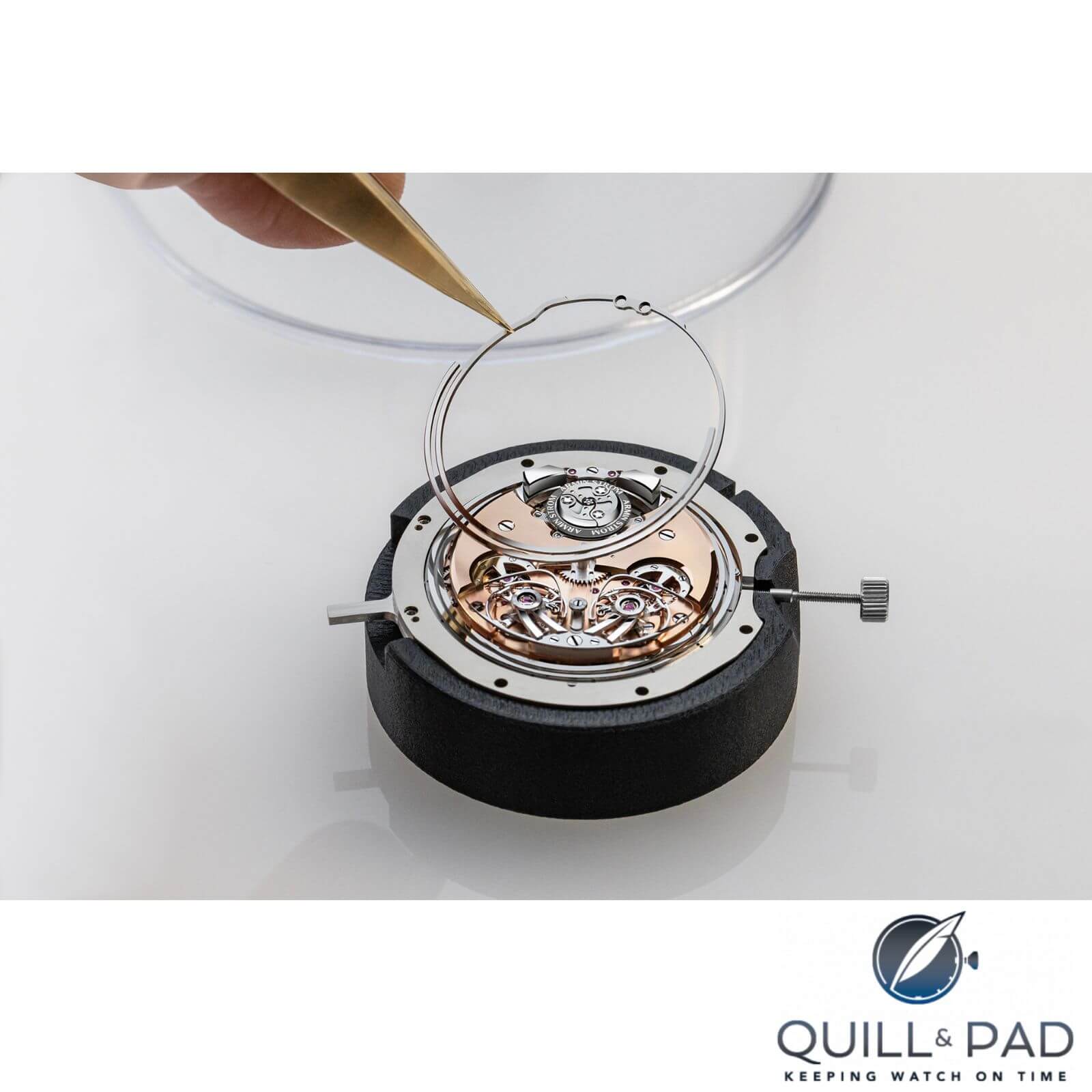
The real complexity congregates around the 12 o’clock position, where the flying governor sits. This intricate little mechanism that will spin when the repeater is activated ensures that the striking runs at an even pace. Just above it, four hammers strike four very thin gongs to produce a Westminster chime. As Greisler readily admits, striking hours, quarter hours and minutes in precise sequence is not entirely happy company for a regulatory system that depends on microvibrations for its consistency. He illustrates the conflict with an image: two people marching across a suspension bridge. As the bridge begins to sway beneath them, it will create unpleasant anti-phase rhythm. The resonance watch faces exactly that kind of interference each time it chimes. Any disturbance to the resonance between the two escapements, however, is prevented thanks to the clutch spring.
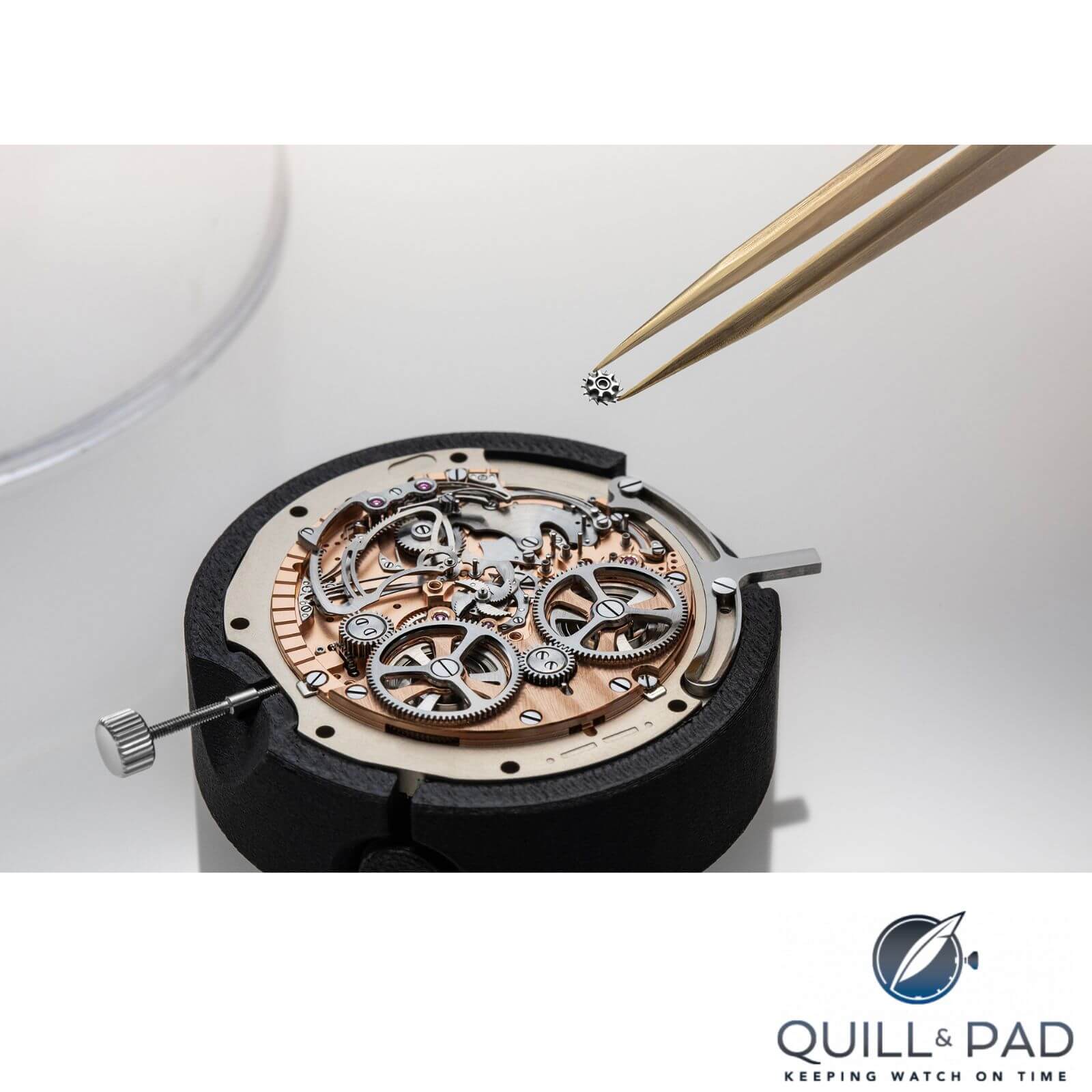

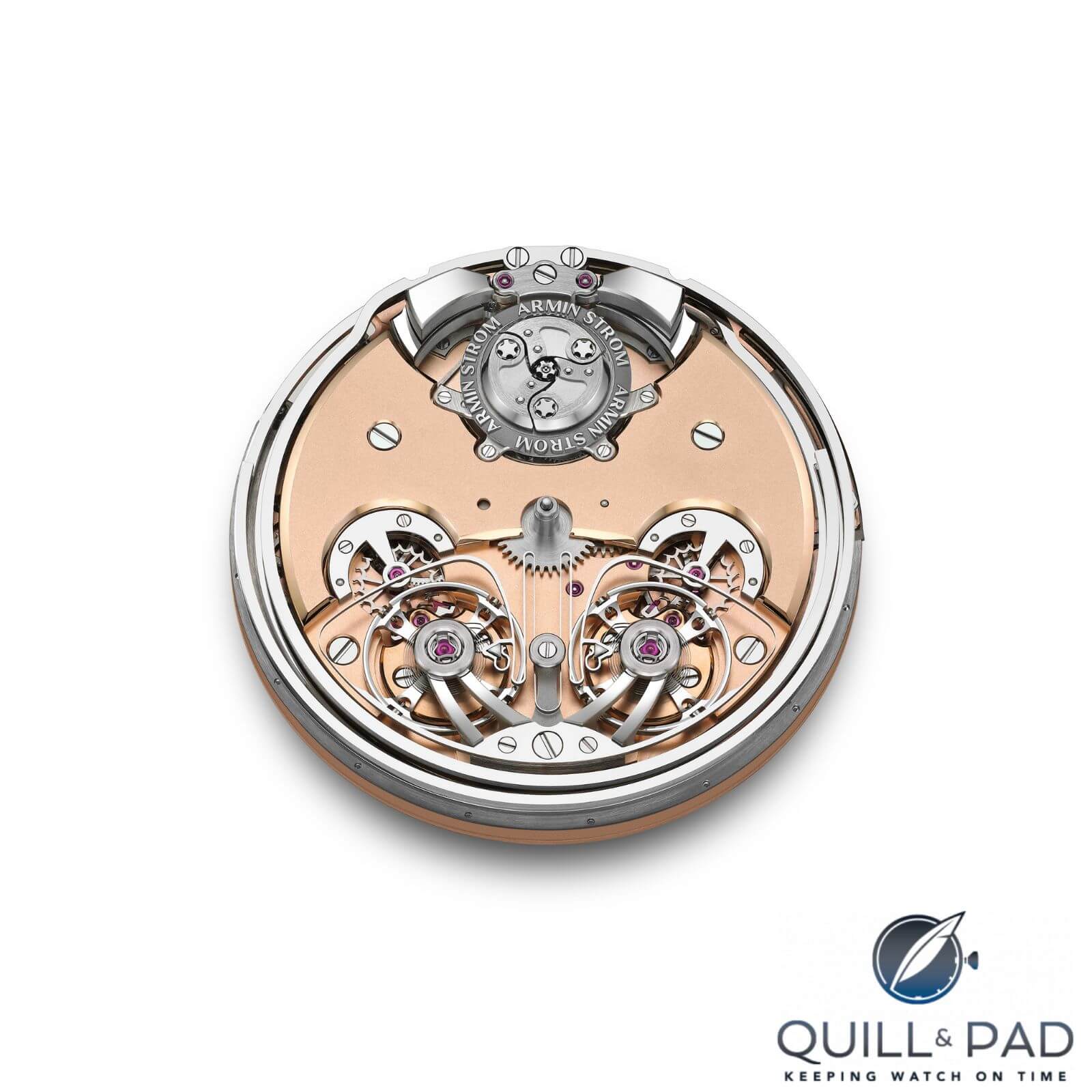
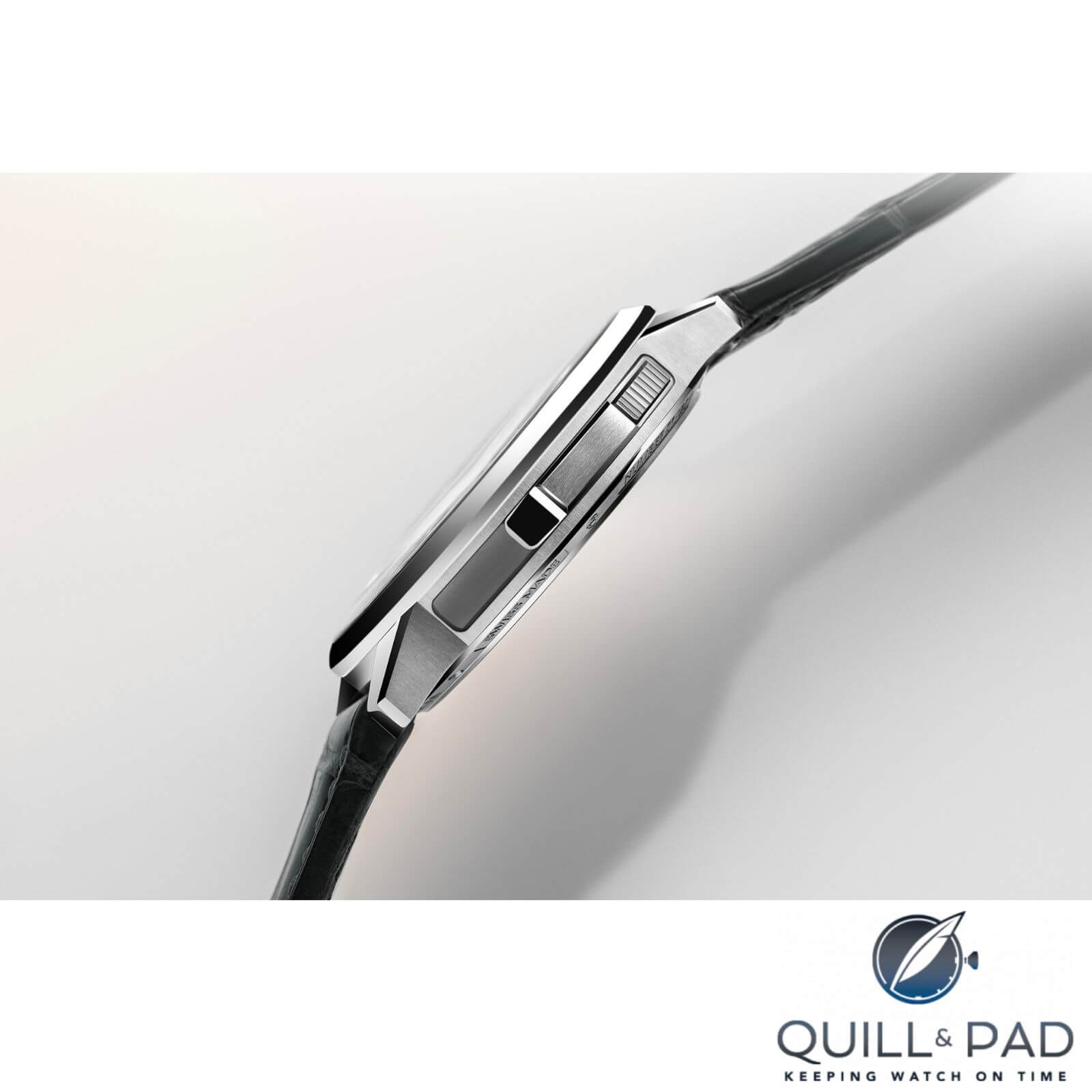
Further technical ingenuity is revealed through the exhibition caseback, where the in-house Calibre ARR25 can be admired in full. Alongside the two barrel springs and the gear train driving the twin escapements, a curiously shaped bridge holds the repeating mechanism together above the characteristic star-shaped snail cam that governs the minute strikes. To the right of the caliber is a small column wheel that allows the user to select one of two modes using the slider running along the side of the case. Pushed upward, it activates on-demand chiming; pushed downward, it selects the 12:59 chime, allowing the fortunate owner to demonstrate everything this exceptional timepiece is capable of at any moment they choose.

Armin Strom’s Minute Repeater Resonance 12:59 is no doubt a very technically advanced piece. The fact that you can thrill your friends by letting it chime out 12:59 on demand may seem a bit frivolous, but it also reveals a humorous streak. And the “First Edition” added to the title sounds like a very pleasant promise of more techno-magic to come.
Read more like this
| Old-World Guilloché vs. The Geneva Tradition: Breguet and Patek Philippe Compared
Unlocking the Mechanical Secrets of the New Felipe Pikullik Sternenhimmel FPA1 |

