
14 Features That Make Moritz Grossmann Watches Stand Out
An implied discussion between two Glashütte brands
First, I want to clarify that there is no debate in the literal sense. Moritz Grossmann (hereinafter MGr) and A. Lange & Söhne (hereinafter ALS) carefully communicate as if the other does not exist, operating as though they are in two separate universes, despite being located next door in the same small town. Yet, they are connected by too much to simply ignore: a partially shared history, reestablishment in the modern era, and, finally,their shared location. In this context, discussing the impact of this kind of implied – though imaginary – debate, whose signs seem quite real, on the current state and development of these brands’ collections is not only permissible but also fascinating. The history of these two brands is such that MGr’s existence as a brand was largely initiated by Ferdinand Adolf Lange’s entrepreneurial venture in Glashütte and the ecosystem he created, which allowed a wide variety of watch and clock production businesses to emerge and develop, far beyond MGr. The historic MGr followed in the footsteps of ALS as if it were its younger brother, which is clearly evident in the few pocket watches that appear at auctions.
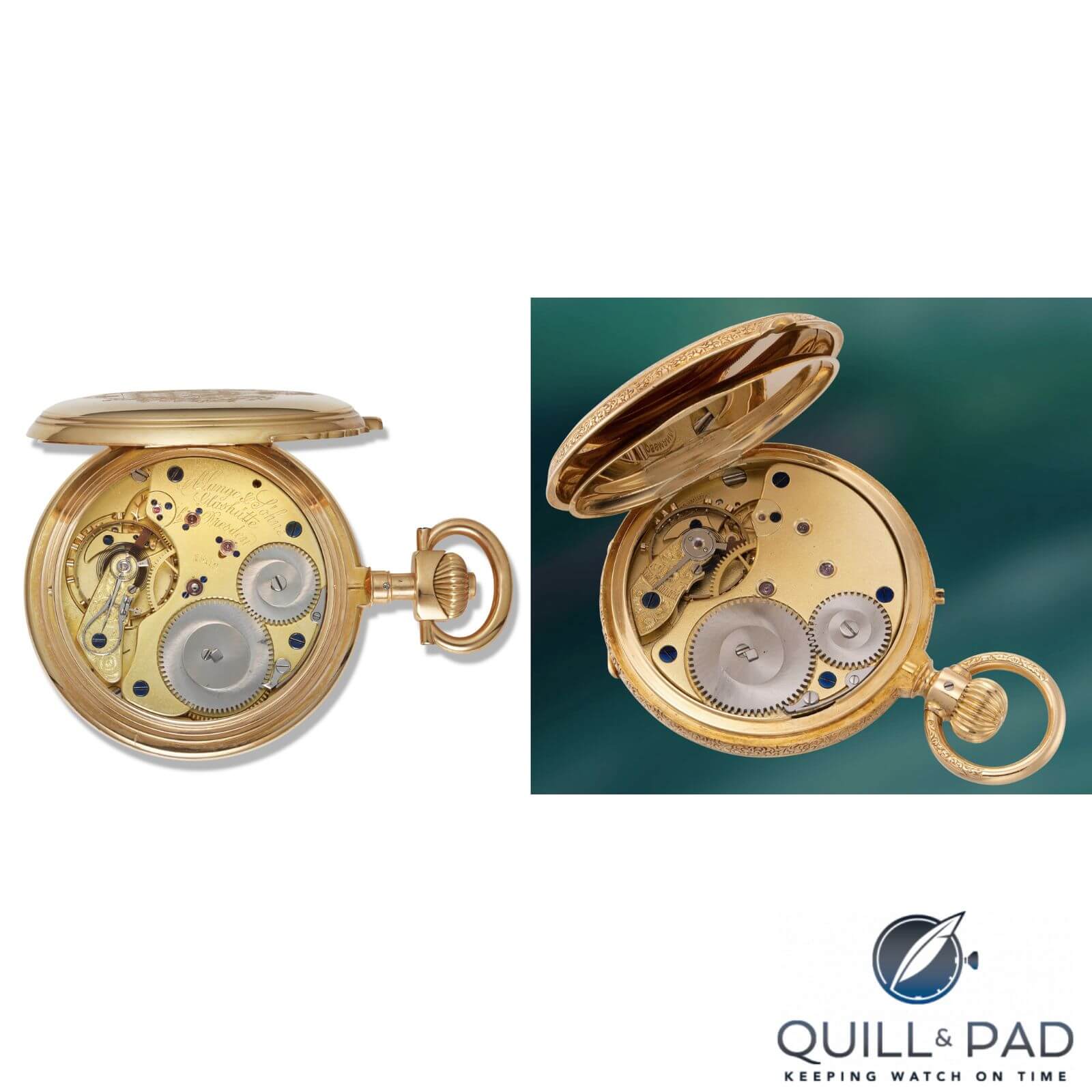
Typical 19th-century pocket watch movements from both brands illustrate their shared origins in era, location, and base caliber technology, from left to right: A. Lange & Söhne No. 15119, circa 1882 (photo courtesy of Christie’s), and Moritz Grossmann No. 6126, circa 1875 (photo courtesy of Phillips).
Modern MGr, in contrast to its historic predecessor, is taking a path that gradually distances it from ALS, creating watch types still absent from the latter’s collection, such as skeleton and open-dial timepieces, watches with an inverted caliber, and automatic models with a pedometer winding. However, one should not ignore the clear parallels between the watches of both brands. Once again, ALS acts as a pathfinder, having revived the business in 1990 (with the first watches appearing in 1994), while MGr follows, having started in 2008 (with the first watches in 2010). Among these parallels are the 2/3 plate of MGr versus the 3/4 plate of ALS; nickel silver as the main material for the plates and bridges of both brands; the traditionally engraved balance cock of both brands – on ALS watches, almost always only the balance cock is engraved, with few exceptions, while on MGr watches the escapement wheel bridge is often engraved as well; both use gold chatons for the jewels, with the jewels being red in ALS watches (closer to tradition) and colorless in MGr watches (as a sign of originality); and the straight cut of the 2/3 plate of the MGr calibers as opposed to the 3/4 plate of ALS movements with a three-arc cut (a basic design based on the most common form of this component in 19th-century pocket watches from Glashütte). It should be noted that in 19th-century MGr pocket watches, the classic layout of the Saxon caliber of the ALS pocket watch predominates, and the straight cut is rarely seen.
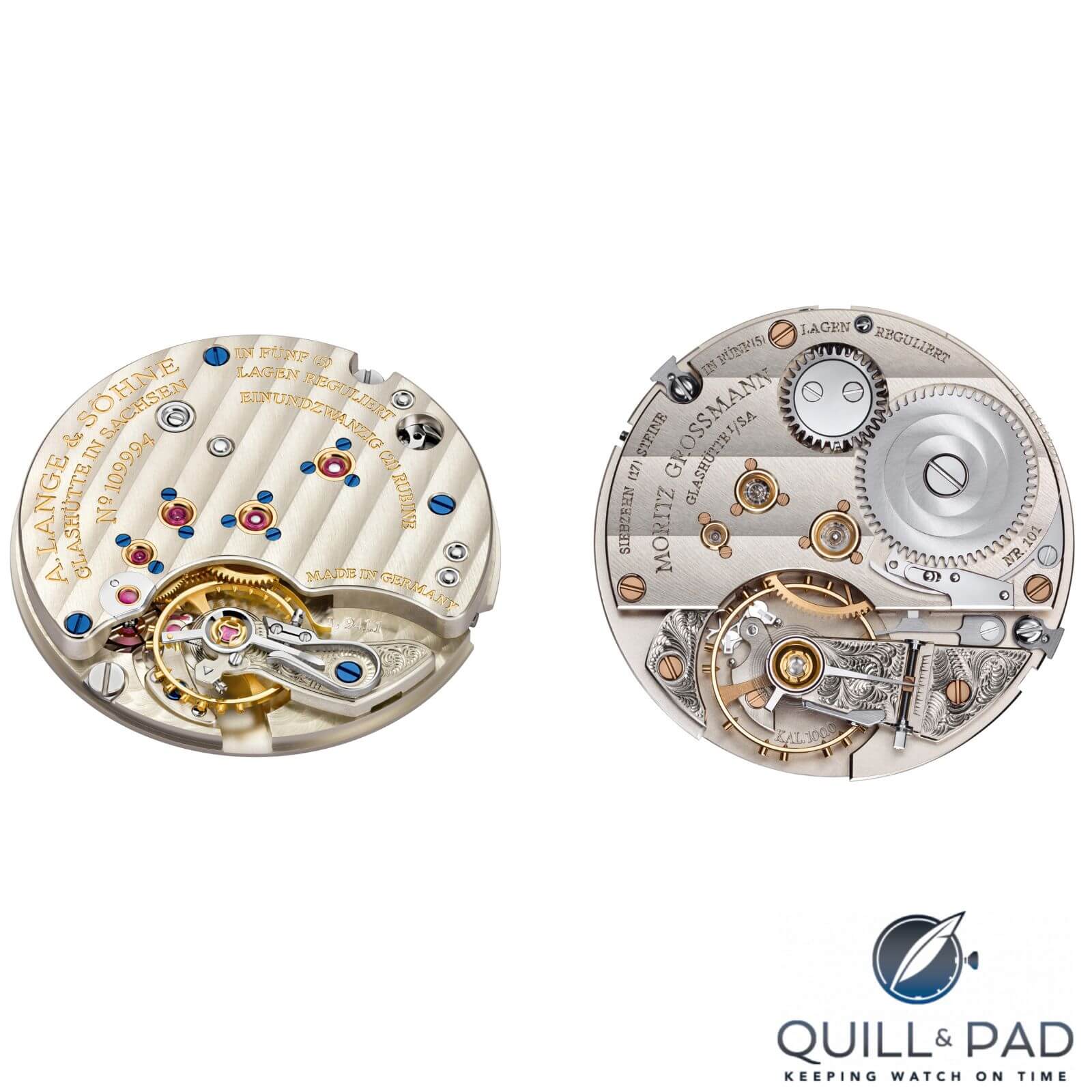
Typical wristwatch calibers that marked the beginning of the modern era for both brands, from left to right: L941.1 (A. Lange & Söhne, launched in 1994) and 100.0 (Moritz Grossmann, launched in 2010).
It’s interesting to consider whether ALS is part of this implied discussion. Naturally, it must monitor what its neighbors at Uferstrasse 1 are doing to avoid adopting the same technical or design solutions in its own collection. The same applies to a third neighboring brand, Glashütte Original, located just a few steps away at Altenberger Straße 1. It’s a discipline, isn’t it?
This means a lot to anyone passionate about watchmaking. At the very least, this implied debate broadens the range of offerings from neighboring brands, making it easier to find a watch that suits one’s taste. For me, the result is a clear, distinct positioning of MGr, and as the years go by, this becomes increasingly apparent. It’s truly fascinating to follow what’s happening at MGr, both in collection development and in the specific features that distinguish MGr watches from everything else, especially from ALS.
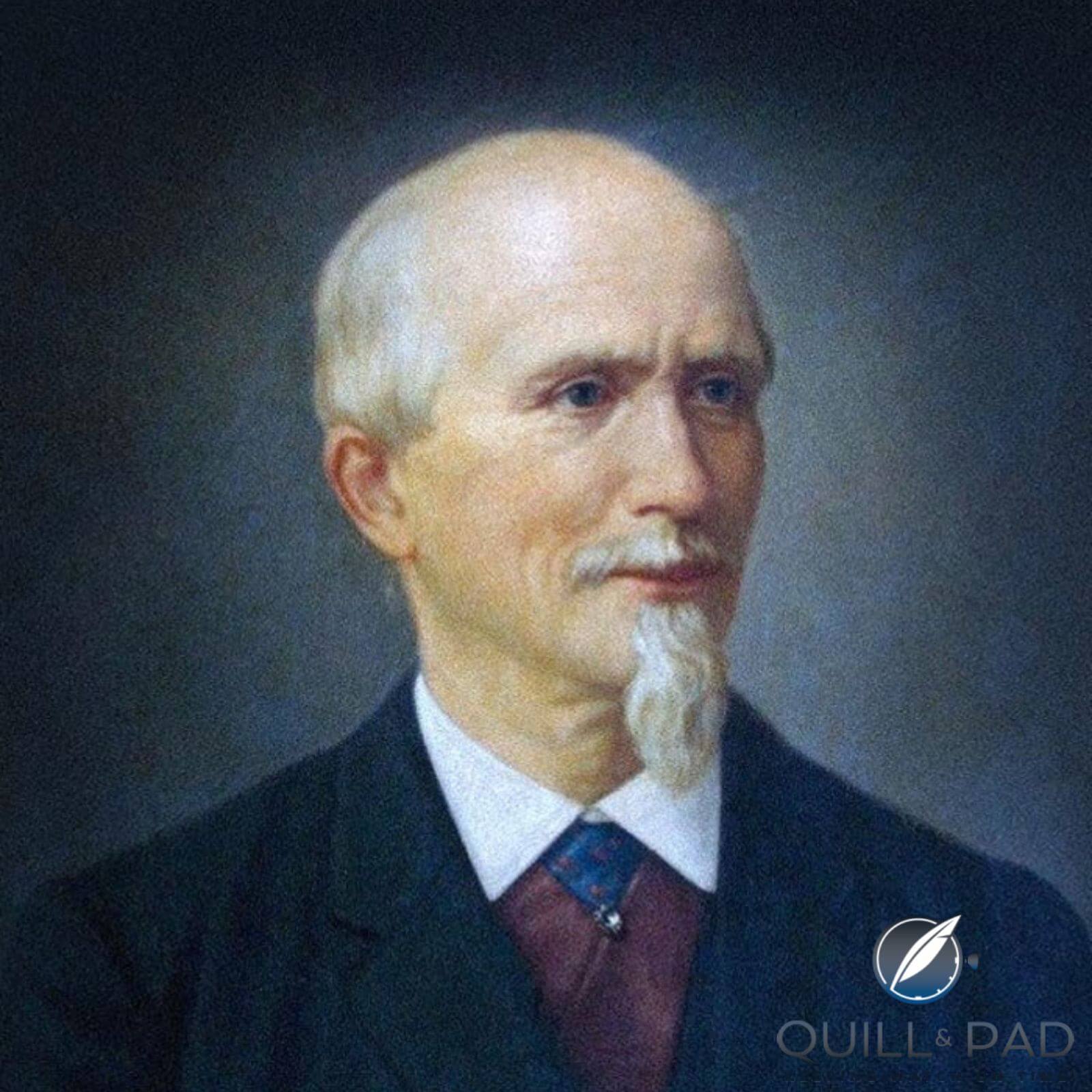
Carl Moritz Grossmann (1826–1885). Photo courtesy of Stiftung Deutsches Uhrenmuseum Glashütte.
Short historical overview
Carl Moritz Grossmann founded his own watch company in 1854. His professional interests, which later shaped the company’s activities, were broad: in addition to producing high-quality pocket watches, his firm manufactured marine chronometers, measuring instruments, watchmaker’s lathes, and model escapements. He also developed the Glashütte seconds pendulum clock, which became an important reference timepiece for watchmakers in the region. For his core product – the pocket watch – he clearly did not aim for large quantities. During the company’s three decades of operation, it is estimated to have produced about 8,000 pocket watches, or 250 to 300 pieces per year. The modern brand follows the same niche strategy and does not pursue mass production.
Moritz Grossmann established a reputation not only as a watchmaker but also as an accomplished writer. Grossmann had a significant influence on watchmaking long after his death, passing on knowledge and defining terminology and processes in greater detail. One of his most significant achievements is the 1866 essay “Der freie Ankergang für Uhren. Praktische und Theoretische Abhandlung” (The Free Lever Escapement for Watches: A Practical and Theoretical Treatise), which analyzes the Swiss lever escapement, the most important for modern watches. In his 1880 essay “Ueber die Konstruktion einer einfachen, aber mechanisch vollkommenen Uhr” (On the Construction of Simple, Yet Mechanically Perfect Watches), he describes the technique of pocket watches now known as Glashütte watches. Another important focus in his later years was founding the German School of Watchmaking in Glashütte in 1878, which he saw as essential for educating skilled watchmakers and maintaining Glashütte’s status as one of the most important centers of the watch industry.
Timeline as a source for analysis
The development of Moritz Grossmann’s contemporary wristwatch collection began in 2008, following the founding of Grossmann Uhren GmbH. This process involved adapting the style, design, and technical features created by the brand’s founder. The Benu, the first watch from the revived brand, was released in 2010. Caliber 100.0 was developed for it and, like the inaugural ALS calibers, fully embodies the brand’s DNA.
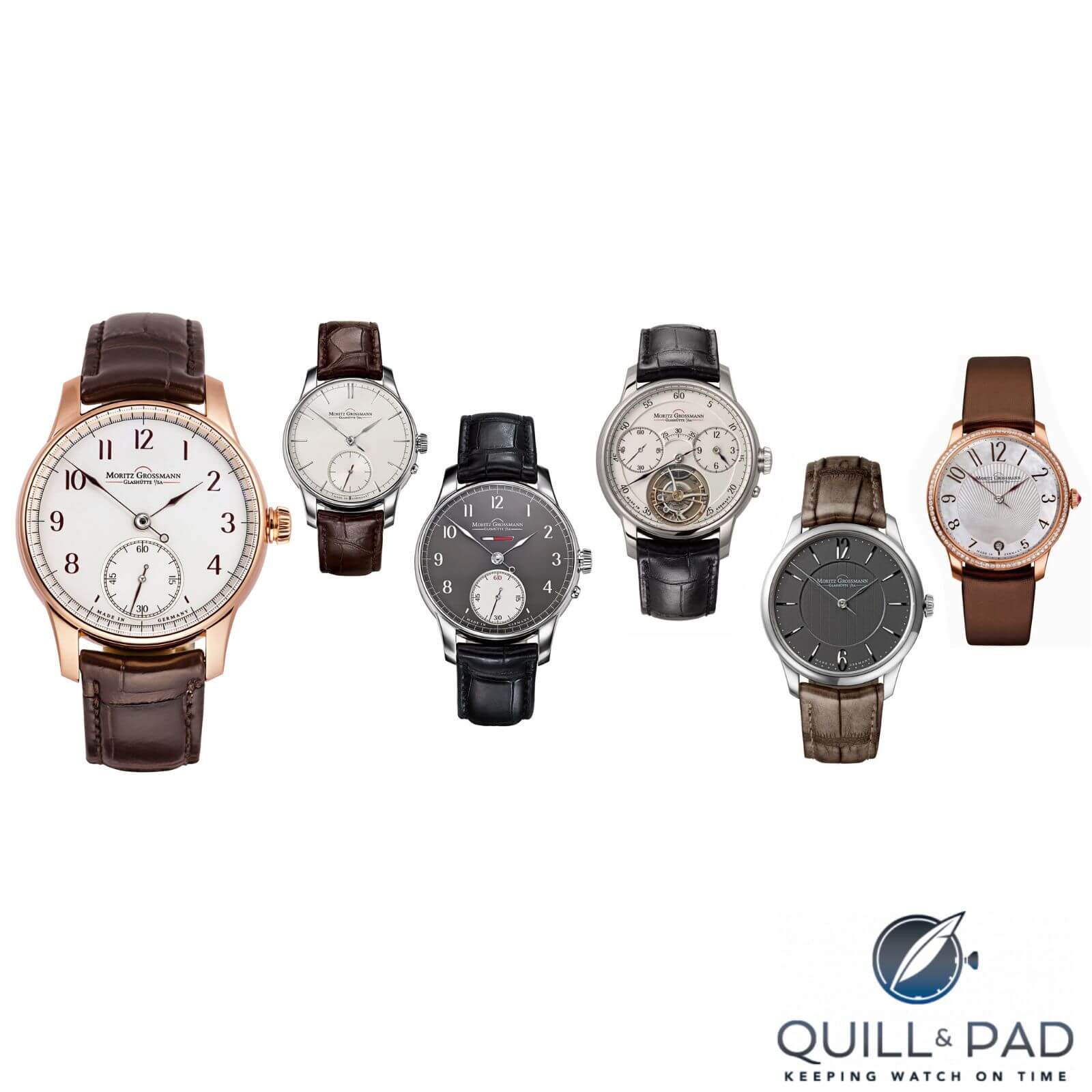
MGr’s important releases, from left to right: Benu (since 2010) – traditionalism and restraint; Atum (since 2013) – contemporary classic style; Benu Power Reserve (since 2013) – discreet additional indications; Benu Tourbillon (since 2013) – a unique approach to complex mechanics; Tefnut (since 2015) – a two-hand dress watch; Tefnut Lady (since 2015) – the brand’s first women’s watch.
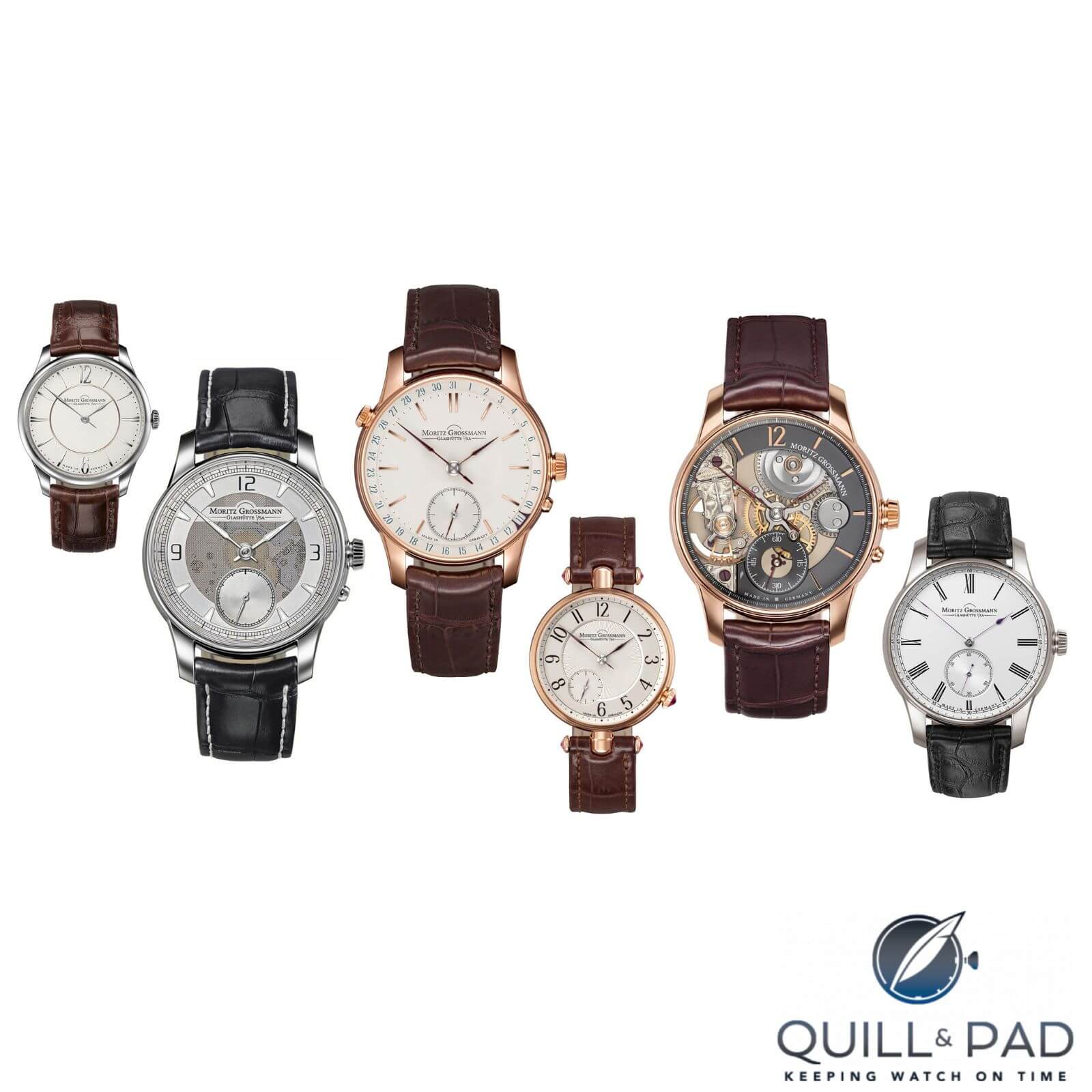
MGr’s important releases (continued), from left to right: Tefnut Pure (since 2016) – the first steel watch equipped with the new caliber 201.0, featuring unengraved bridges and a sandblasted finish; also applies to the Tefnut Pure (caliber 202.0); Atum Pure M ‘Mesh Dial’ (since 2016) – a steel watch with a see-through dial center zone and a steel mesh; Atum Date (since 2017) – features an in-house developed date indication with both forward and backward setting; Tefnut Twist (since 2017) – equipped with the Grossmann “strap winder”; Backpage (since 2018) – features a reversed caliber and openworked dial; Atum Hamatic (since 2019) – the first automatic watch with a unique pedometric winding system..
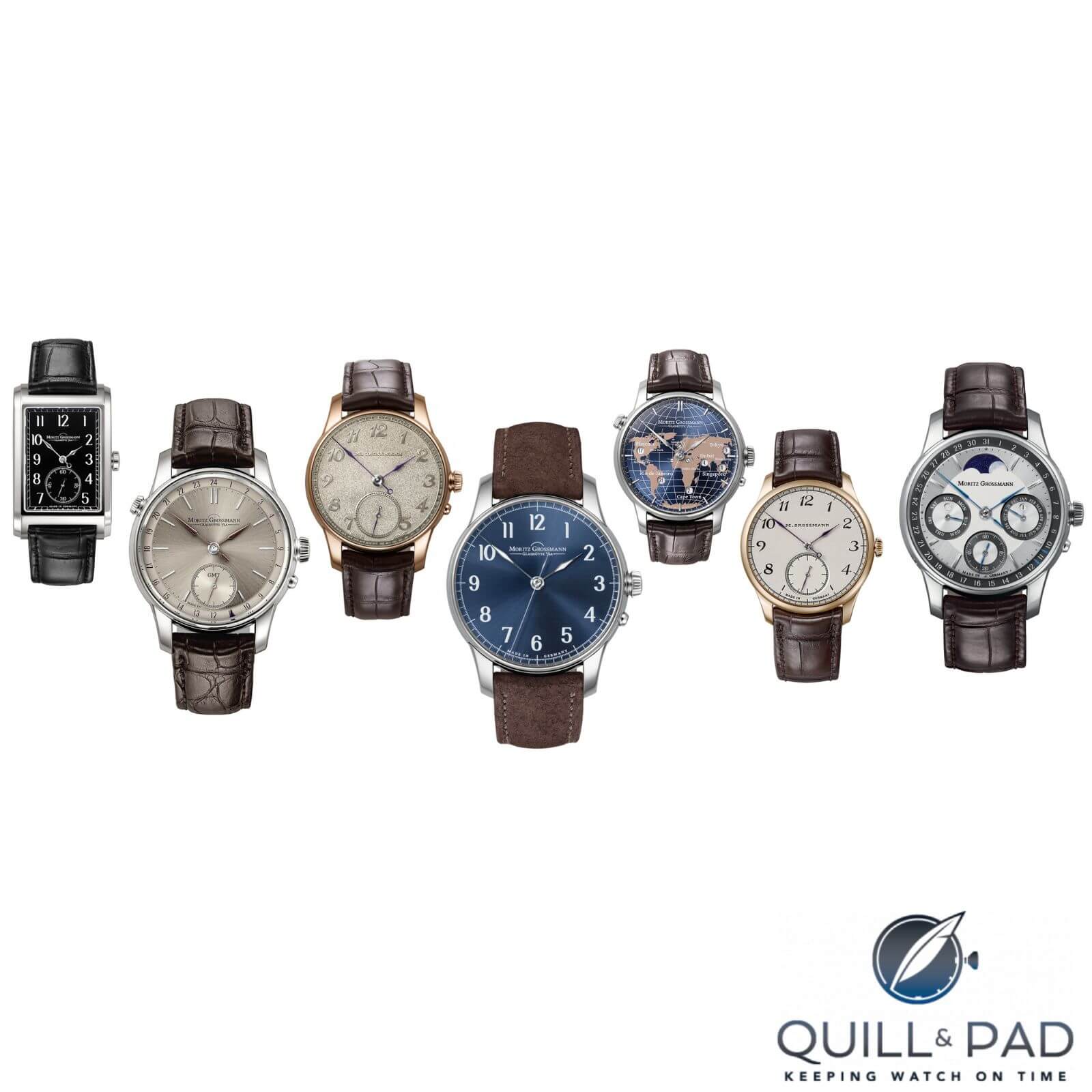
MGr’s important releases (conclusion), from left to right: Corner Stone (since 2019) – the first rectangular watch with a shaped caliber; Atum GMT (since 2019) – a practical function for globetrotters; Tremblage (since 2021) – a watch with an engraved, textured nickel silver dial; Central Second (since 2021) – the first version with a central seconds hand and its special drive; Universalzeit (since 2022) – its own way of displaying world time in a truncated form; Tefnut Silver-plated by Friction (since 2023) – featuring a fresh-looking antique dial decoration technique; Perpetual Calendar (since 2025) – its own version of a perpetual calendar.
This timeline, which highlights major releases, is intriguing to follow. At a minimum, it shows which watchmaking trends have not yet been explored in the MGr collection – for example, chronographs and chiming watches, to name the most obvious. One might also consider fusée, given the pillar-and-plate construction chosen for MGr modern calibers. Or consider constant force escapements, which are difficult to implement, expensive, and offer poor returns. Thin designs could also be considered, though they unfortunately suffer from the same drawback. One could also look toward sports watches with integrated bracelets, although that would probably be considered poor form; as always, much depends on the quality of design and production. Then there’s military style. There are also vintage-style divers’ watches (again, the comment about poor form applies). Finally, there are unique complications, if they simply want them.
The timeline offers a broad overview, but next I’d like to focus on the “little details” that, in my opinion, play a crucial role in the MGr collection. I believe these “little” (or rather, “delicious”) features are what make you think about and even dream of MGr watches.
Particularity #1
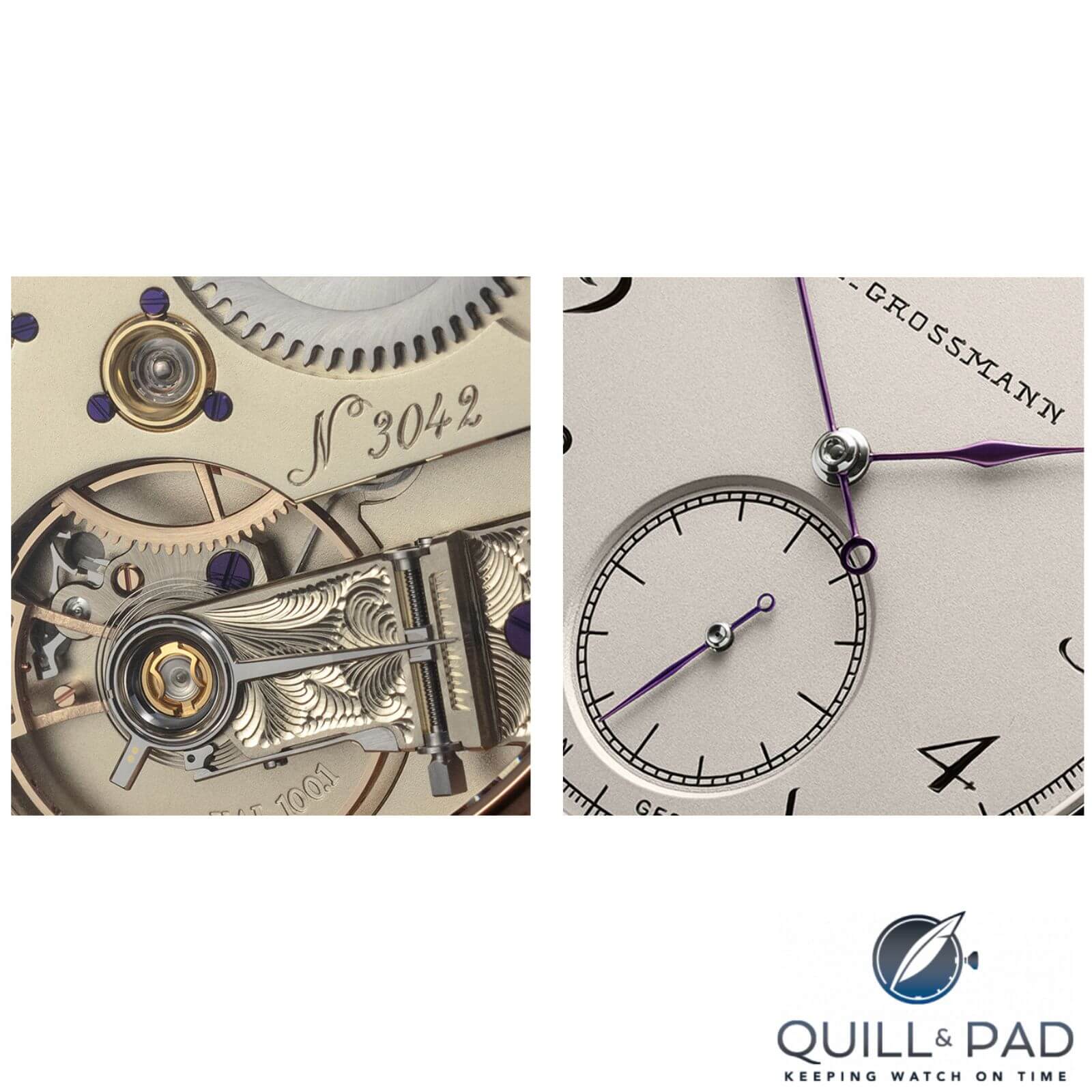
I’ll start with this feature, as it was what first caught my attention – and admiration – for this brand’s watches. When I picked up the watch, I was surprised by the unusual, highly reflective shine emanating from the center of the dial, where the hands are attached. The minute hand collet has a concave, spherical, mirror-polished internal section surrounding the shaft of the cannon pinion (the collet of the small seconds hand is finished the same way), and I immediately realized that this small detail is a sign of meticulous attention: any detail can be transformed into a masterpiece through ingenuity, craftsmanship, dexterity, and time.
Then, when I turned the watch over and looked at the movement, I noticed the same reflections on the chaton of the balance jewel and on the other chatons, which are not flush-mounted but protrude noticeably from the surface of the plate. Using a consistent design approach for both the dial and the caliber’s finish creates a simply stunning effect.
Particularity #2
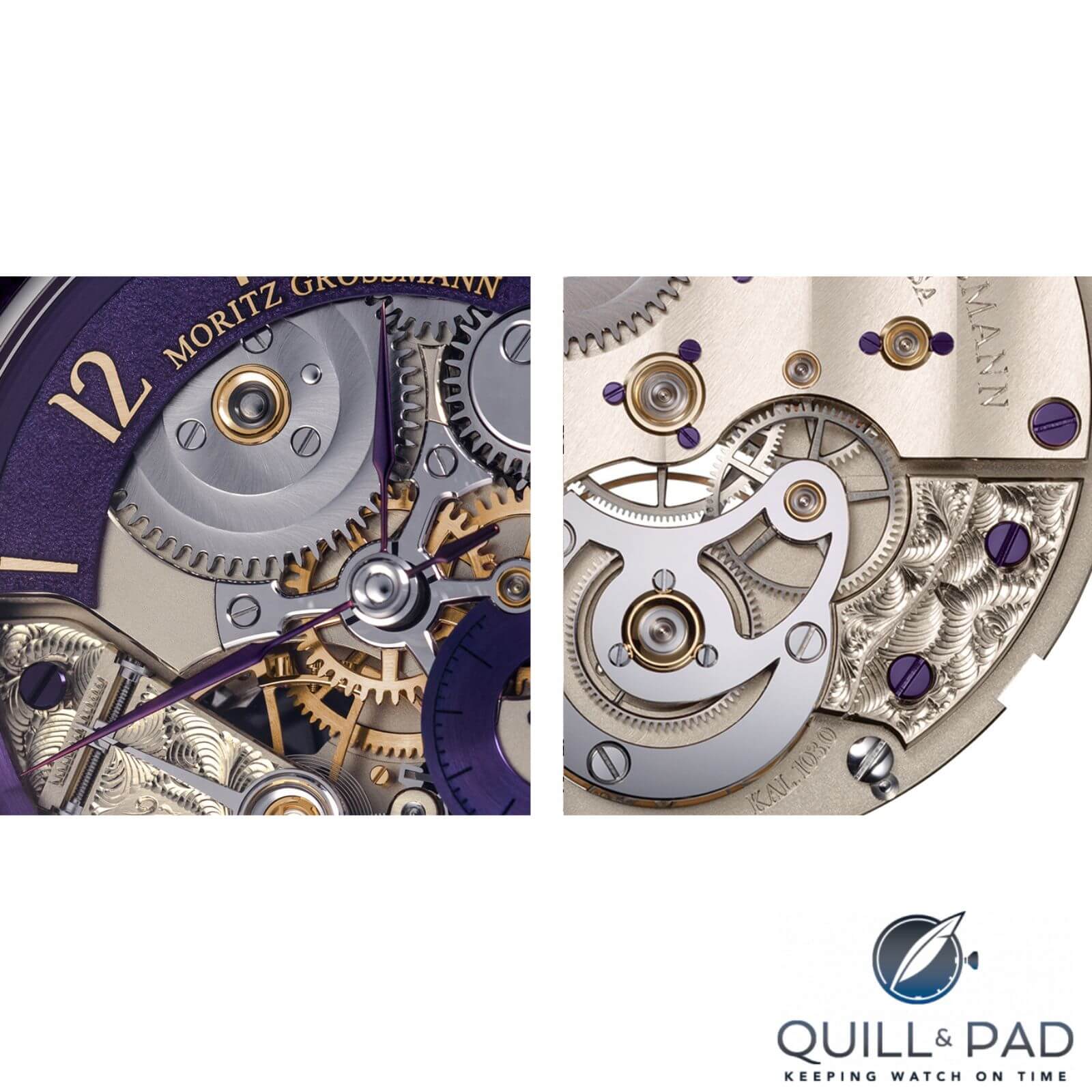
This feature was my next step in understanding MGr watches. The blued steel components – the hands and the screws that secure the chatons – in this brand’s watches, instead of the usual dark blue (cornflower blue) used by most watchmakers, have a unique hue, variously described as deep brownish-violet, ripe cherry, or purple. To achieve this color, the craftsman must carefully control the heating of the hands or other components.
Particularity #3
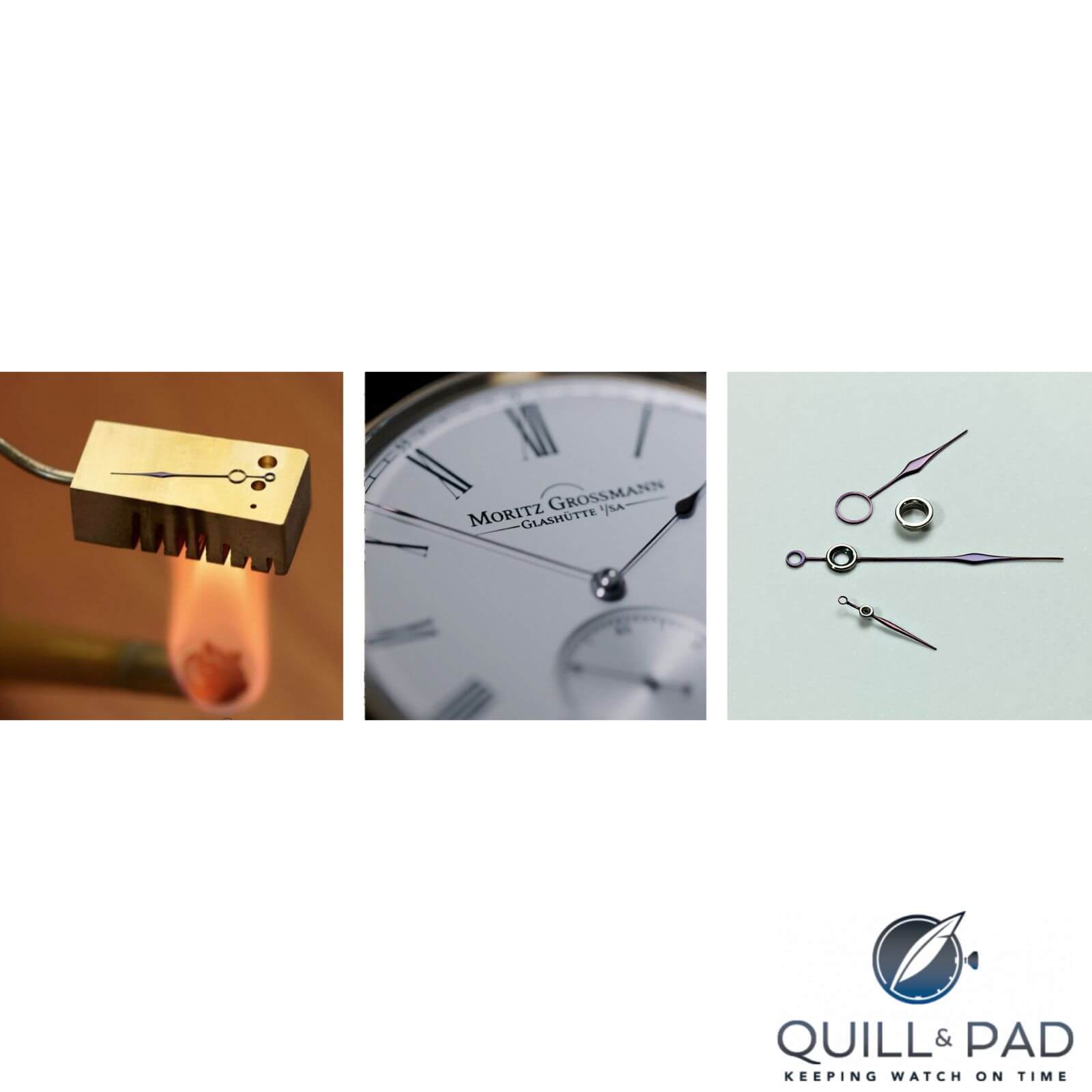
It’s also worth noting that MGr produces some of the most refined and meticulously crafted hands in modern watchmaking, including brushing and polishing the tips to ensure a sense of sharpness. I’ve seen such attention to the finish of their hands perhaps only at Laurent Ferrier, whose so-called assegai hands are an elongated and very narrow version of the traditional spade and whip hands that emerged in the late 19th century (MGr also uses this style on its Hamatic and some other designs). However, MGr’s original hand style, widely used in the modern collection, is based on elongated and very narrow lozenge hands, a classic shape that gained popularity in the 1930s.
Particularity #4
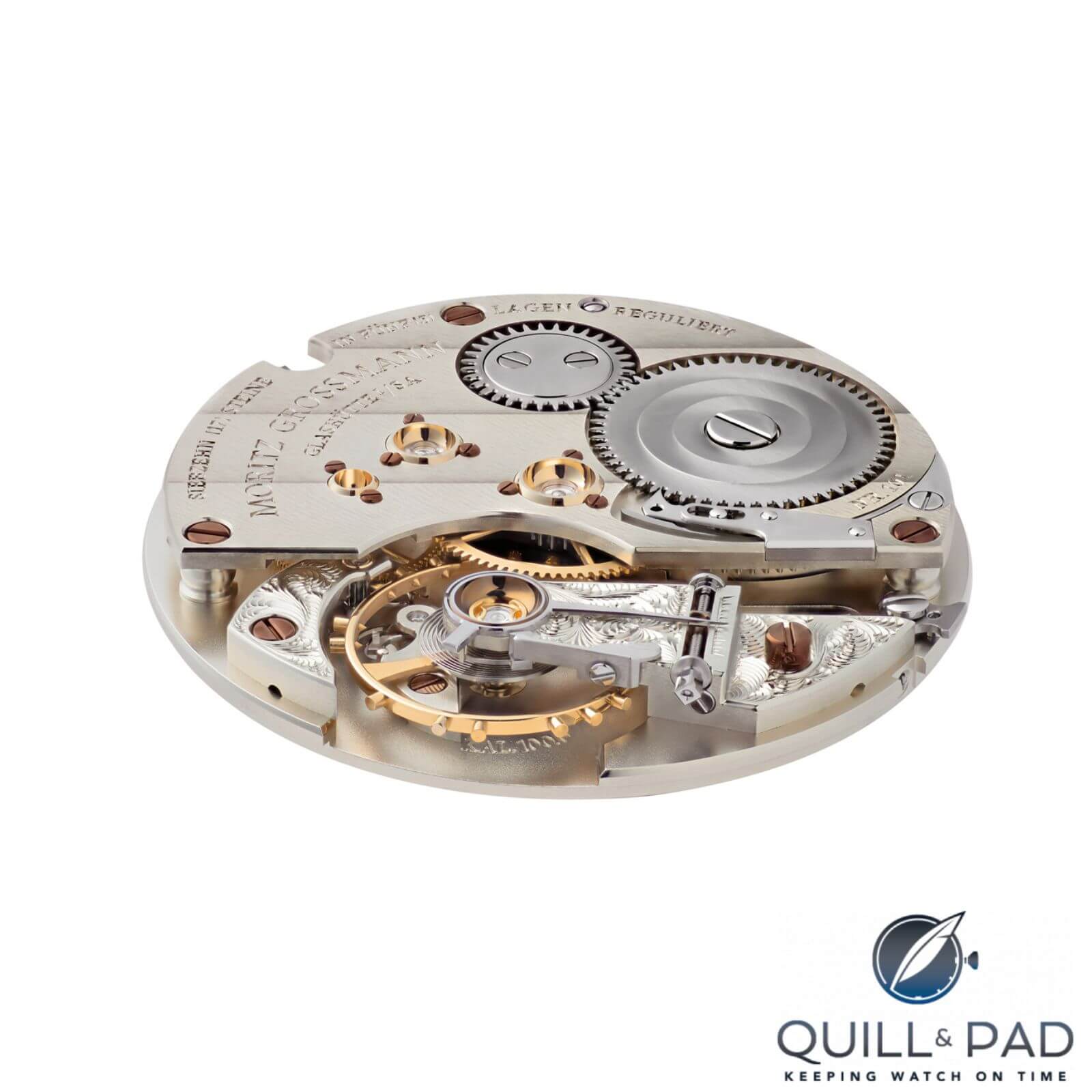
All MGr calibers are developed and produced in-house, making these movements exclusive to this brand and unavailable in watches from any other manufacturer. The situation becomes even more interesting when you examine the movement from the side and see that it uses pillar-and-plate construction. This is the same design that German watchmakers, who resisted adopting the French and Swiss Lepine bridge-caliber construction in the late 18th and early 19th centuries, developed based on the traditional two-plate caliber scheme and adapted for a 3/4 or 2/3 plate design.
Particularity #5
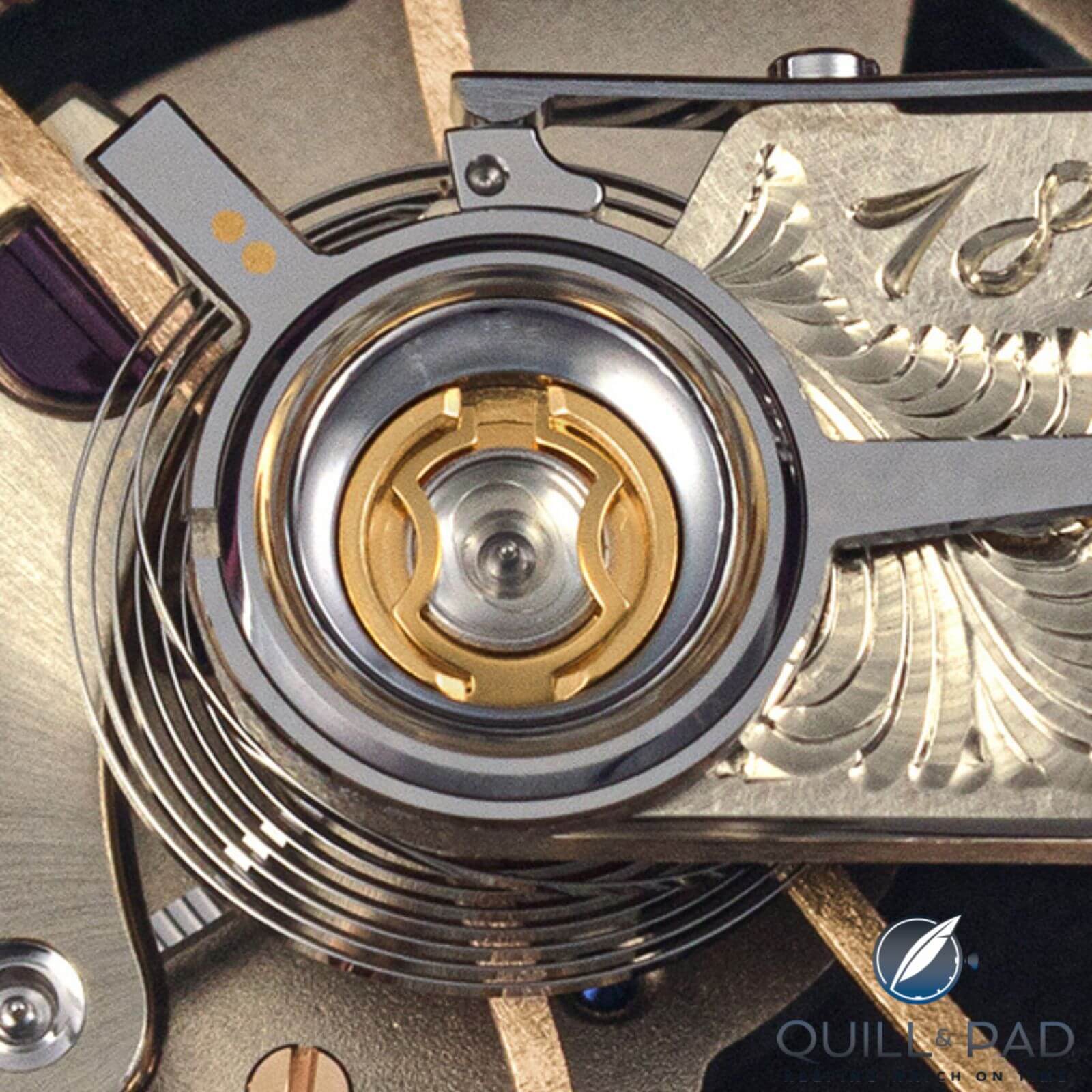
This is crucial: many MGr calibers feature a balance spring with a Breguet overcoil. Modern watchmakers generally consider this feature unnecessary and expensive to produce. However, the commitment to equipping watches with chronometer-quality components, including a Breguet balance spring, demonstrates good taste and respect for customers.
Particularity #6
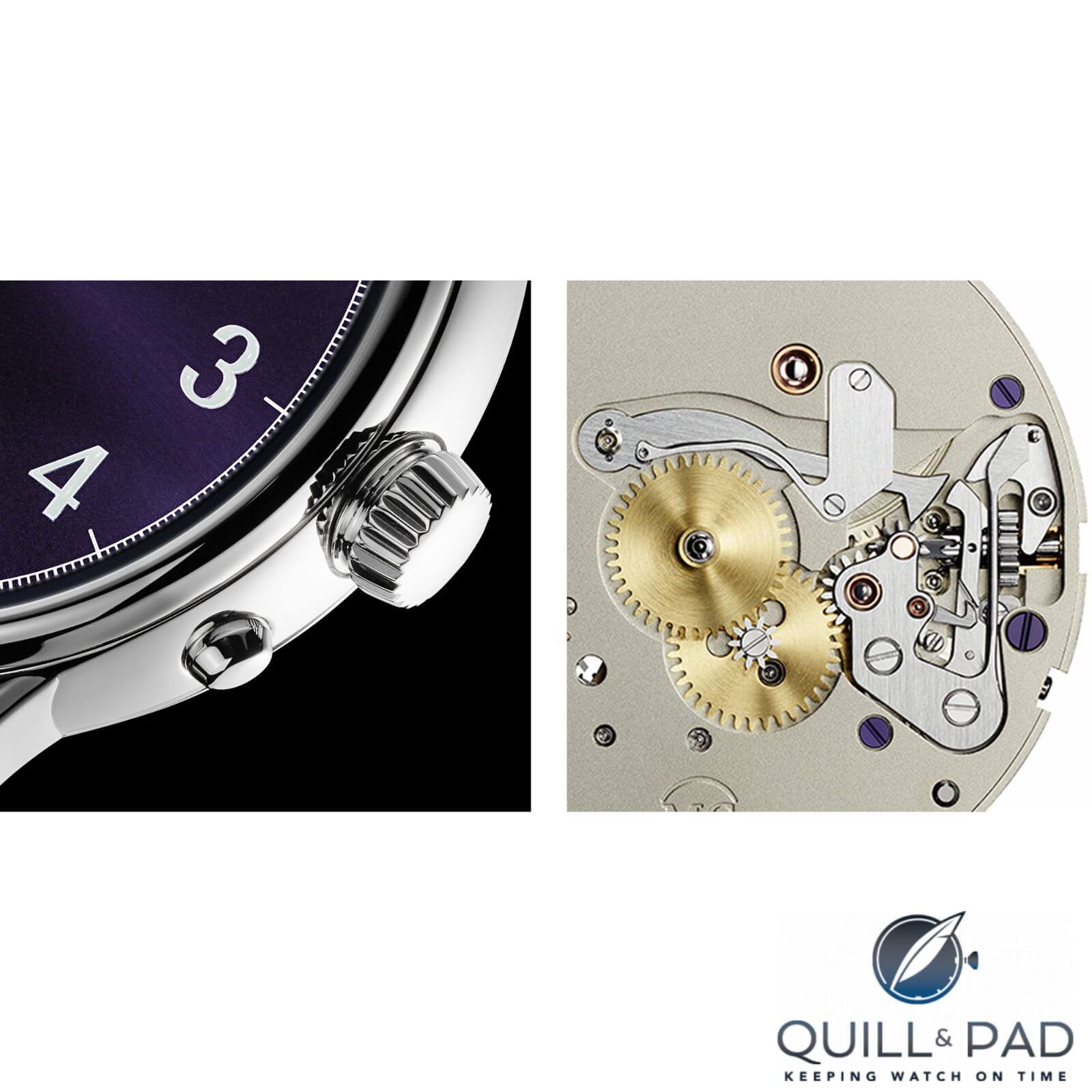
A manual winding system with a crown and pusher enables a perfect restart of the movement after the hands are precisely set. This highly complex mechanism is a modified version of the traditional remontoire, redesigned for perfectionists. In MGr watches equipped with this system (most are; they can be identified by a pusher next to the winding crown), the movement stops as soon as the crown is pulled out. The crown immediately returns to its starting position under the force of a special spring, but the watch remains stopped. You then turn the crown to set the hands and restart the watch by pressing the special pusher. In addition to its technical sophistication, which is always valued in collector watches, this system completely eliminates the annoying shift of the minute hand by a fraction of a minute that sometimes occurs in watches with a traditional remontoire system when you press the crown to return it to its normal position and start the watch.
Particularity #7
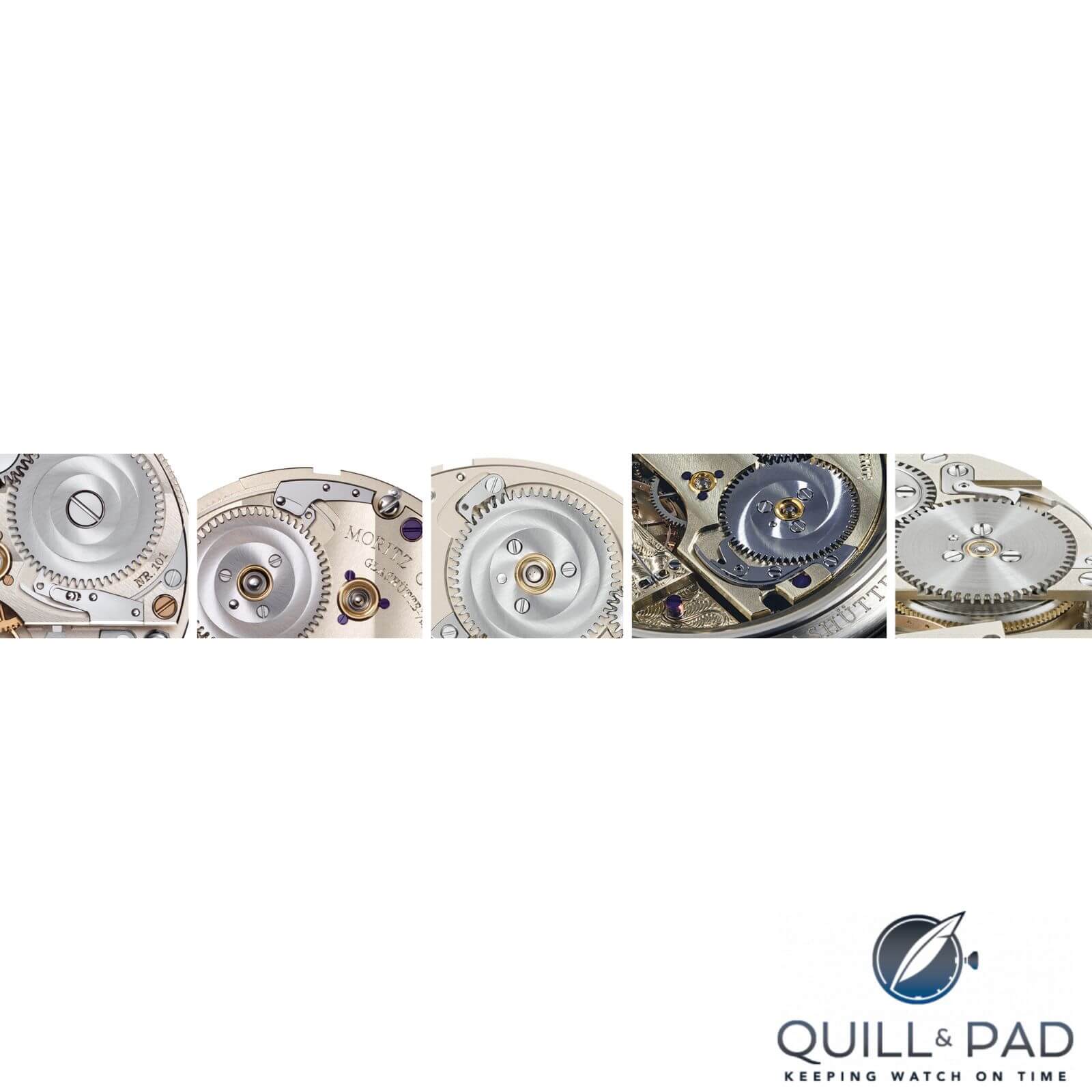
Five clicks of the ratchet wheel of the winding barrel, from left to right: calibers 100.0 (Benu), 103.0 (Benu Tourbillon), 107.0 (Backpage), 102.1 (Atom Moore 37), and 202.0 (Tefnut Pure).
Frankly, I don’t understand why MGr uses different click designs in its watches. I counted five types, and I find this fascinating. My favorite is the spectacular sliding-action ratchet wheel click, which effectively relieves excess tension on the mainspring during manual winding; it can be found in the original caliber 100.0.
Particularity #8
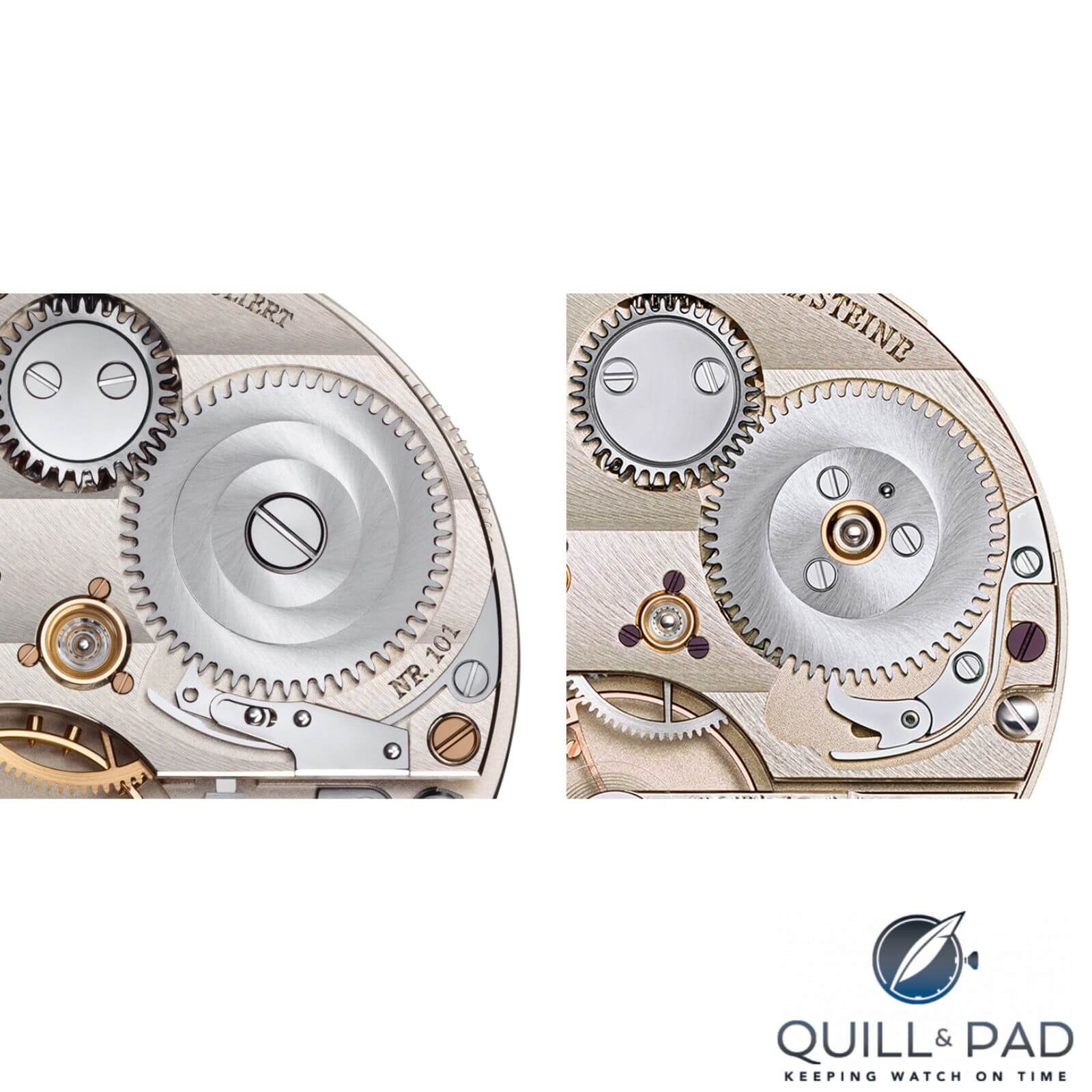
Snailing finishing types, left to right: 100.0 gauge with 3-band snailing; 102.1 gauge with 2-band snailing.
Since we’re discussing the ratchet wheel of the winding barrel, it’s important to mention a traditional and now rare finishing technique applied by MGr to this wheel: 3-band snailing. In principle, a single snailing would be enough to create a good impression of this component, not to mention a 2-band snailing. However, MGr often uses the most elaborate version with three bands, as seen in caliber 100.0 and its derivatives, as well as in calibers 102.3 (Corner Stone) and 103.0 (Benu Tourbillon). In some models, though, there is a somewhat simpler 2-band snailing (for example, 102.1), which also adds a very attractive accent to the movement.

Particularity #9
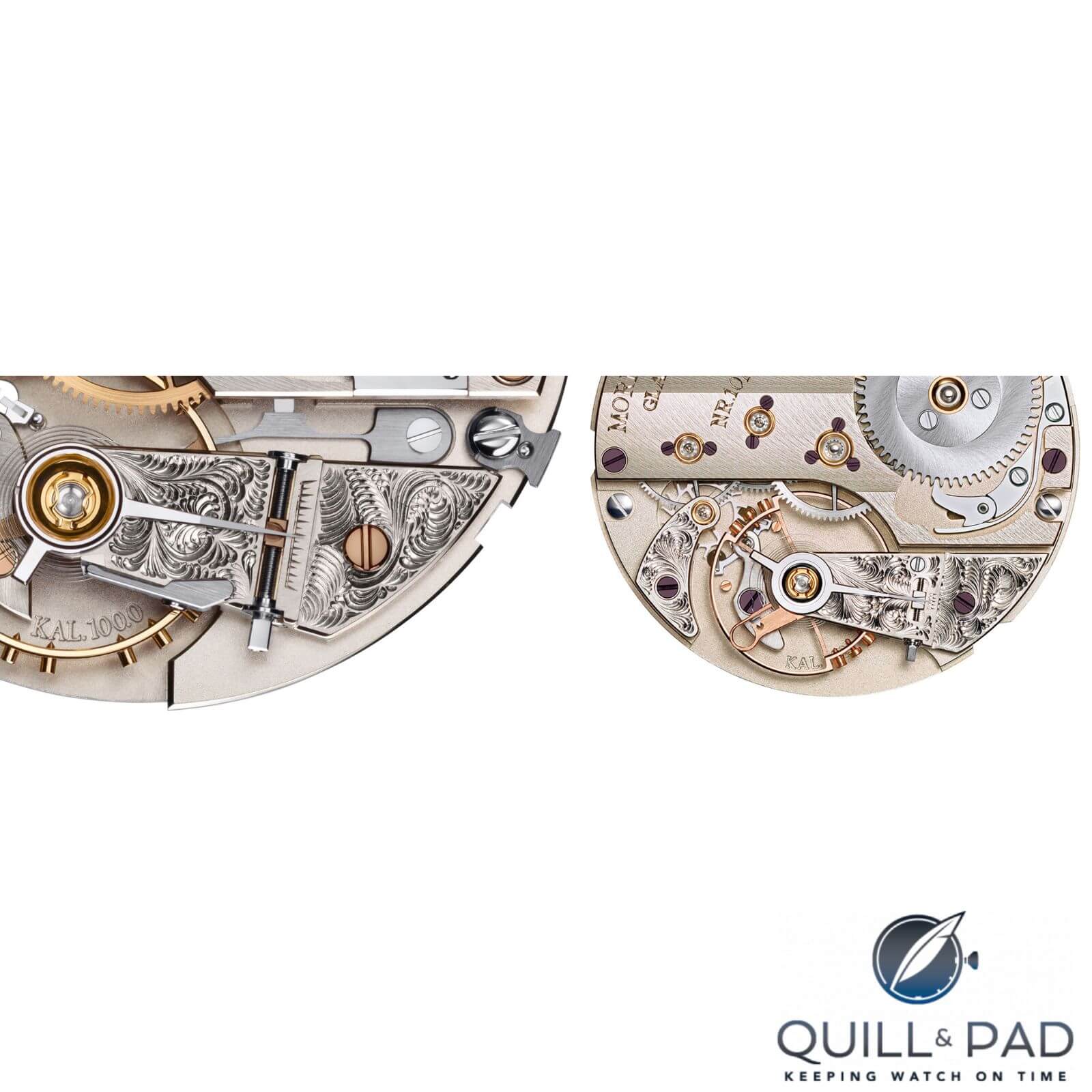
Grossmann micrometer screw regulator, from left to right: open style, caliber 100.0; semi-open style, caliber 102.1.
To adjust the effective length of the hairspring’s outer coil, modern MGr watches use a Grossmann micrometer screw regulator system with a long micrometer screw and a sliding bolt. This bolt cannot rotate, but when the screw is turned, it moves right or left, shifting the index and thereby changing the length of the outer coil. MGr watches feature two types of this regulator, which raises questions about the technical reason for this solution but also adds to the collection’s overall appeal. In the first (original) type, implemented in caliber 100.0, the micrometer screw is located in a transverse slot in the balance cock and is completely open. In the second type, only the central part of this slot is open (for example, in calibers 102.1 or 202.0). It is not known exactly when such a regulator was invented, but it is believed to have been developed by Carl Moritz Grossmann, who also described this design in his 1880 essay “Ueber die Konstruktion einer einfachen, aber mechanisch vollkommenen Uhr.” There is reason to believe he made this invention much earlier; for example, the Grossmann regulator in the Moritz Grossmann pocket watch No. 2966, dated around 1870–1871, features such a regulator.
Particularity #10
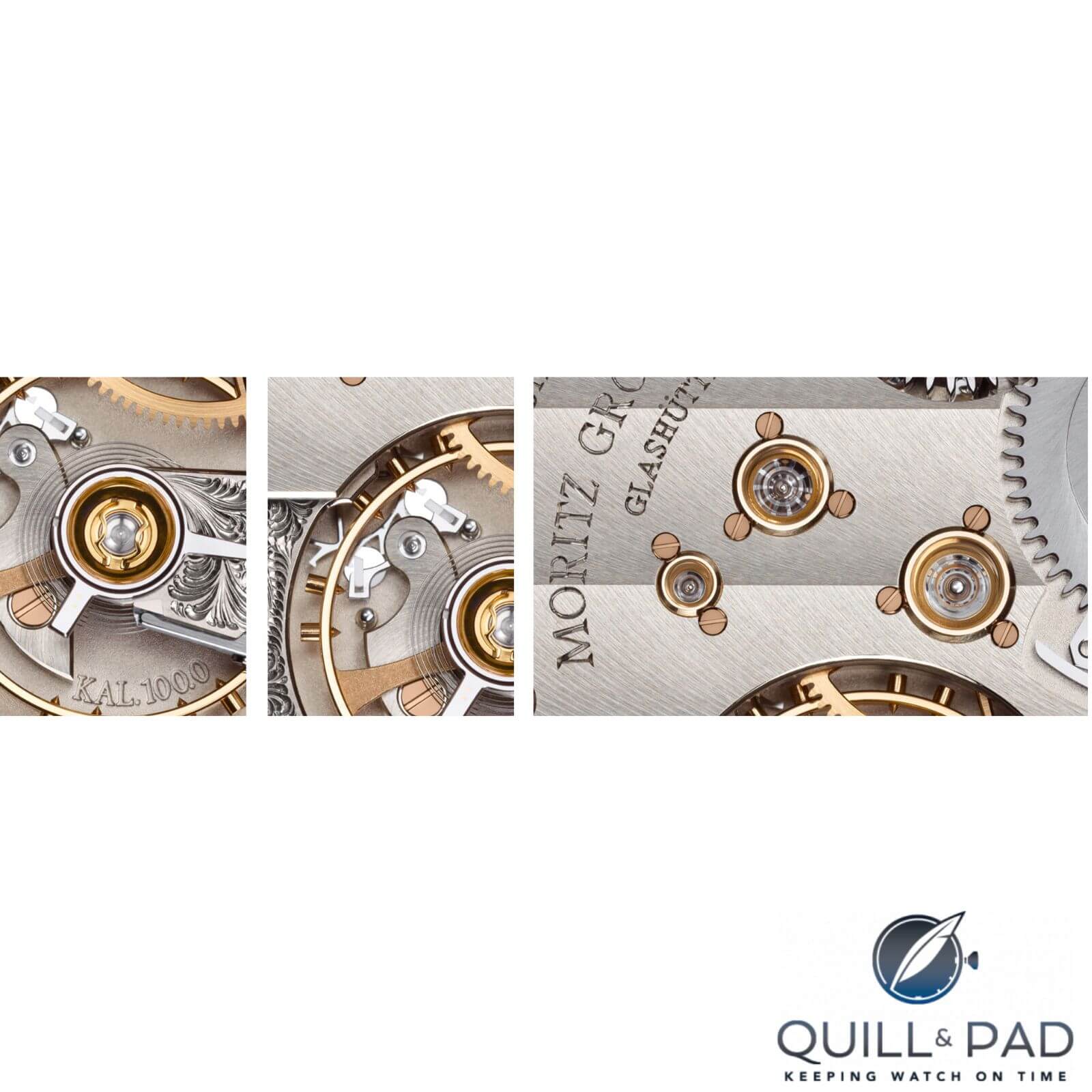
Transparent, colorless jewels of caliber 100.0, from left to right: jewel on the balance shaft, pallets, and jewels on the main gear wheels.
I consider colorless sapphire jewels a questionable choice. On one hand, this component isn’t so bad; technically, it has neither drawbacks nor advantages compared to red or rare blue jewels. On the other hand, from a traditional aesthetic perspective, red jewels are more appropriate – you would simply expect to see them in such a quality movement. Large red stones, like those found in some late 19th- or early 20th-century pocket calibers from Geneva or the Vallée de Joux, look magnificent.
Particularity #11
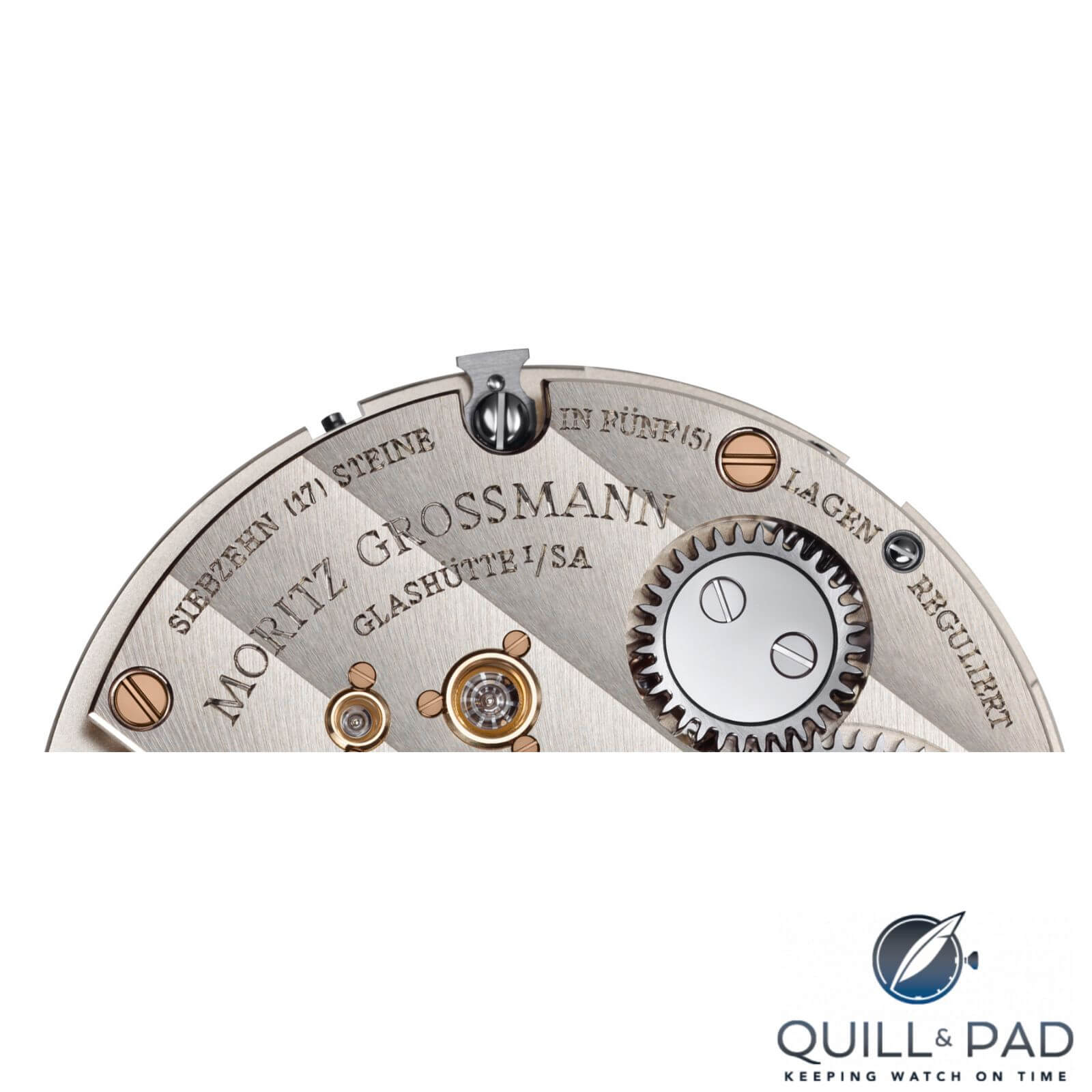
Hand-engraved inscriptions on the two-thirds mainplate are an important feature of niche mechanical watches. Note the absence of CNC-machine engraving, which is typical of modern luxury watches. Only hand engraving is appropriate and adds the distinctive touch of a master craftsman to the watch.
Particularity #12
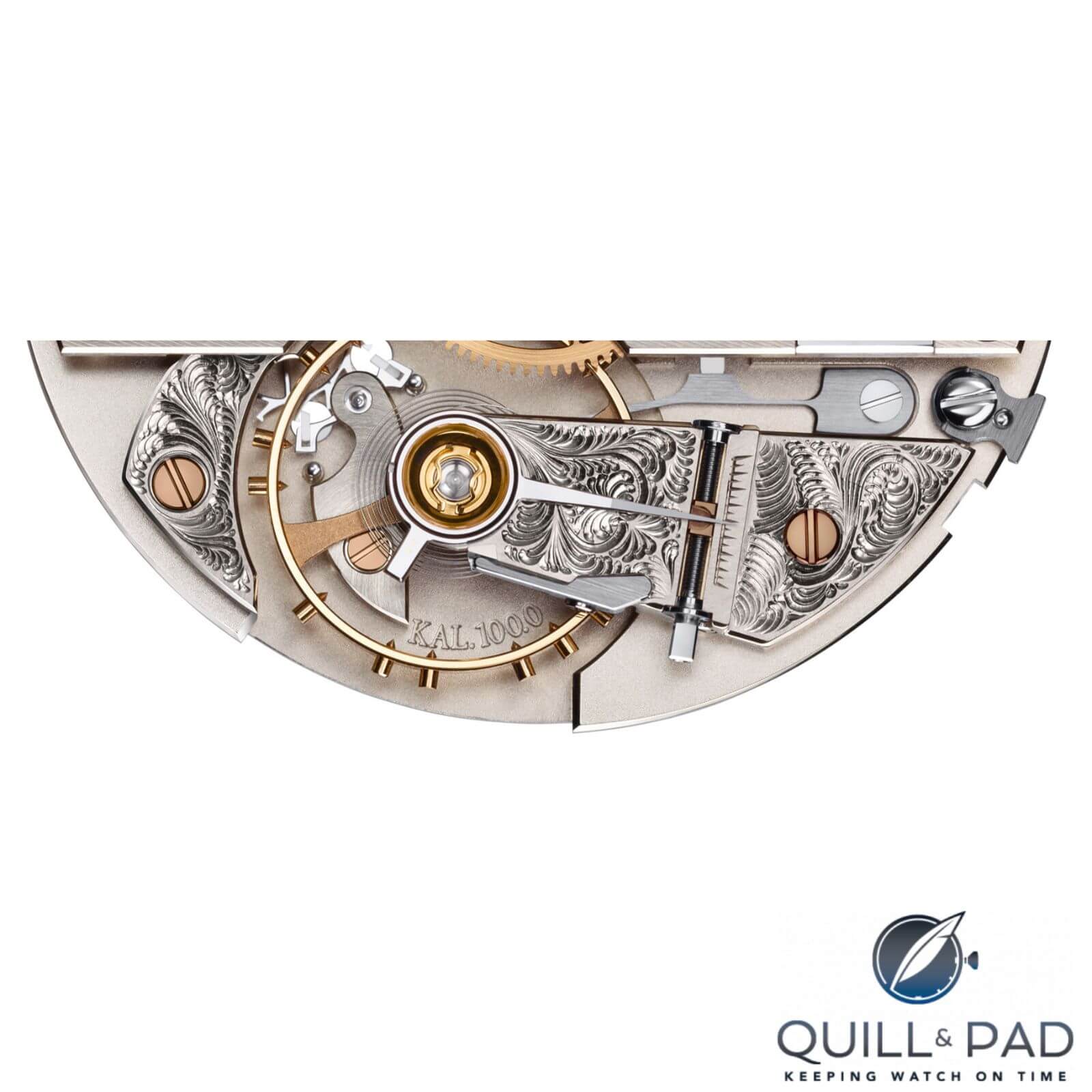
In most MGr movements, except for the 200-series calibers, the balance cock and escapement wheel bridge feature an exquisite hand-engraved scroll motif. This is not limited to a few discreet touches but consists of extensive engraving that covers almost the entire upper surface of these bridges. Engraving is omitted only in the small sections where it is technically impossible.
Particularity #13
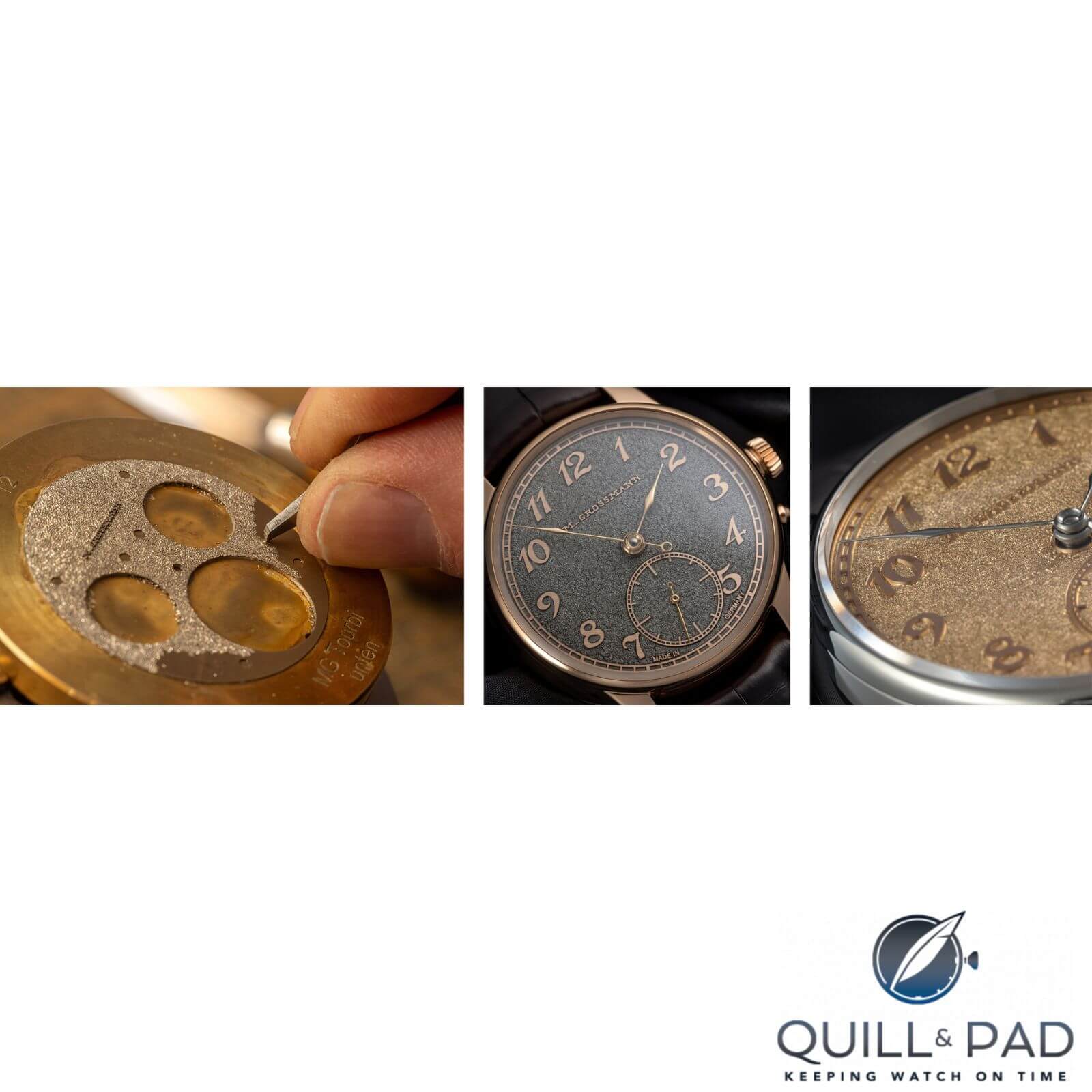
In 2021, MGr introduced a new dial style featuring a chaotic yet uniform textured engraved finish called “tremblage.” MGr is not the first brand to use this finishing technique; for example, ALS has employed a similar method since 2011 to create the décor for its Handwerkskunst series dials. What makes MGr’s version appealing is the choice to produce some dials with tremblage decor applied to nickel silver, which, due to the inevitable patina that develops over time, creates a particularly dramatic and vintage mood.
Particularity #14
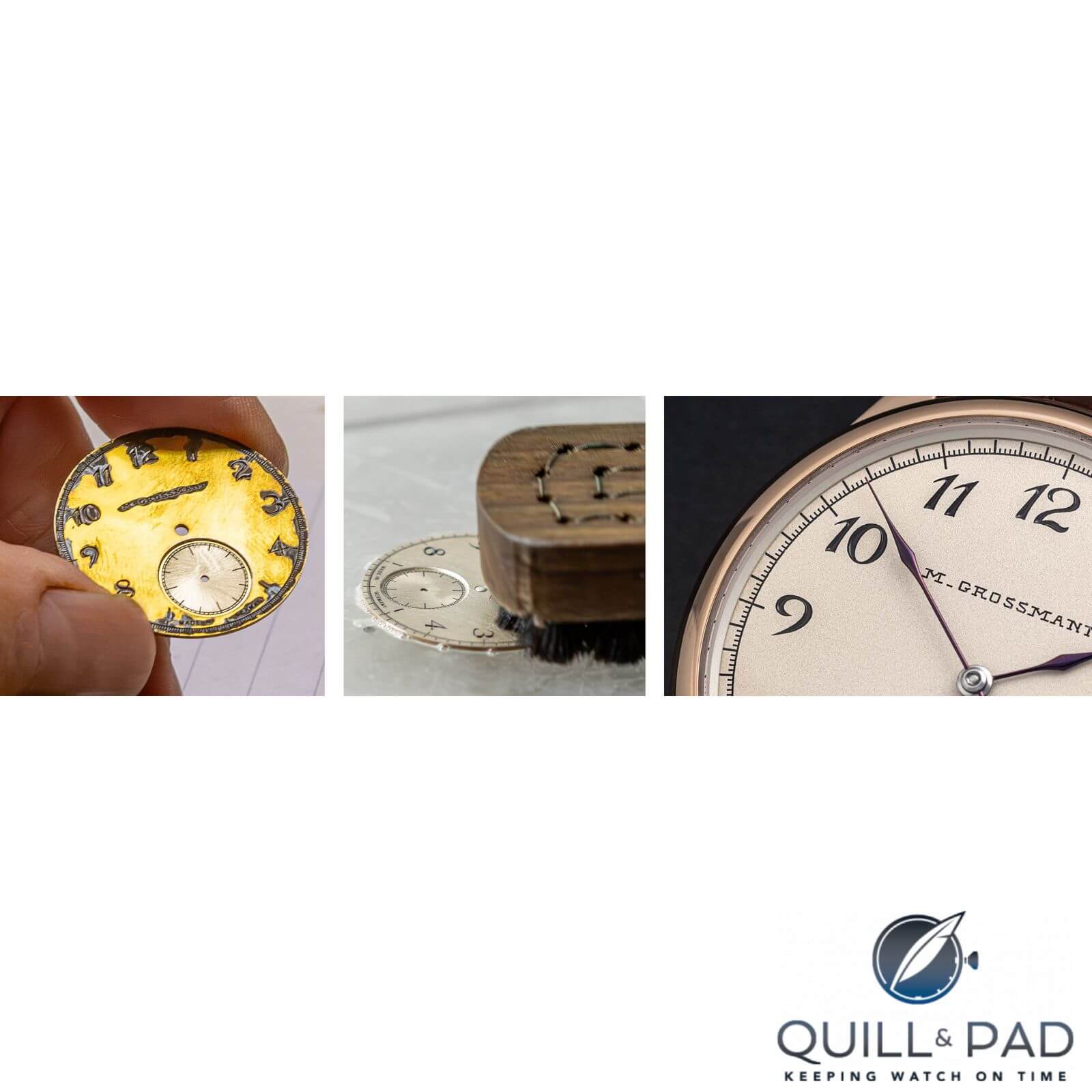
Handmade decorative techniques give MGr watches their distinctive character. This is immediately apparent in the dials, which feature a finish MGr calls silver-plating by friction. This rare 19th-century technique imparts a sense of airiness, warmth, and softness, with a fine matte texture reminiscent of a white eggshell’s surface. It is achieved by applying a mixture of silver powder, salt, and cream of tartar to the dial and rubbing it into the dial blank. Engraved numerals, inscriptions, and scales beautifully complement this technique in MGr watches, while the tempered steel hands stand out in striking contrast against this background, creating unforgettable color combinations.
All images, except where otherwise noted, courtesy of grossmann-uhren.com.
Read more like this
How to Choose Between Buying a Vacheron Constantin or H. Moser & Cie Watch
The Inventor and the Survivor: Breguet Vs Vacheron Constantin

