
The Golden Age of Rolex Movements Part I: Sowing the Seeds of Greatness
by Tim Mosso
If you want to love Rolex, but you love mechanical movements more than you love watch brands themselves, rejoice: we are living in the halcyon days of Rolex movement innovation.
Since the late 1990s, Rolex watchmaking – complications, patents, and even movement finish – has flourished in the shadow of the Rolex brand and individual blue-chip model families. While it would be tempting to forge straight into the highlights of this golden era, proper perspective first requires a retrospective.
The desert of Grunge-era Rolex
I grew up during the 1990s, and my awareness of the larger watch scene began to take shape around 1999. The crazy stuff – complex calendars, rattrapantes, tourbillons, and chiming watches – was made by brands like Audemars Piguet, Patek Philippe, Blancpain, Breguet, Vacheron Constantin, Jaeger-LeCoultre, and other nameplates that an American kid stood no chance of encountering in the cultural desert of a strip-mall Tourneau.
But Rolex was as ubiquitous as boy bands, New York Yankees caps, and overheated dot-com stock in ’99.
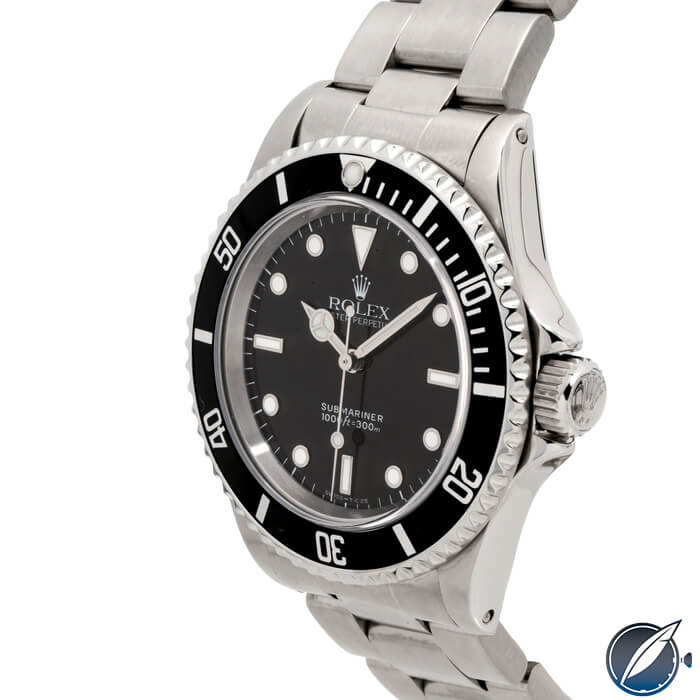
Rolex Submariner Reference 14060 (photo courtesy WatchBox)
At the time, most Rolex models and their Caliber 3000 or 3135-based architectures dated back more than a decade. You could have a dual time (GMT, Explorer 2) or a chronograph (Daytona).
Rolex had yet to take complete control of its movement production facilities in the old Aegler works in Biel at that time. If you were willing to be waitlisted for a Cosmograph Daytona in those days, it would arrive with an El Primero-based Caliber 4030 assembled by Zenith of Le Locle to Rolex’s specifications.
————————————————————————————————————–
—————————————————————————————————–
Reflecting on past glories: Rolex complications in the twentieth century
It was tempting to comb the specialist collector’s guides and then-embryonic online watch media for evidence that Rolex of a different era was a glorious champion of ambitious watchmaking.
Setting aside its pioneering role in fundamental breakthroughs like popularizing water-resistant cases and automatic movements, Rolex of the 1930s, ’40s, and ’50s was flush with extravagant mechanisms.
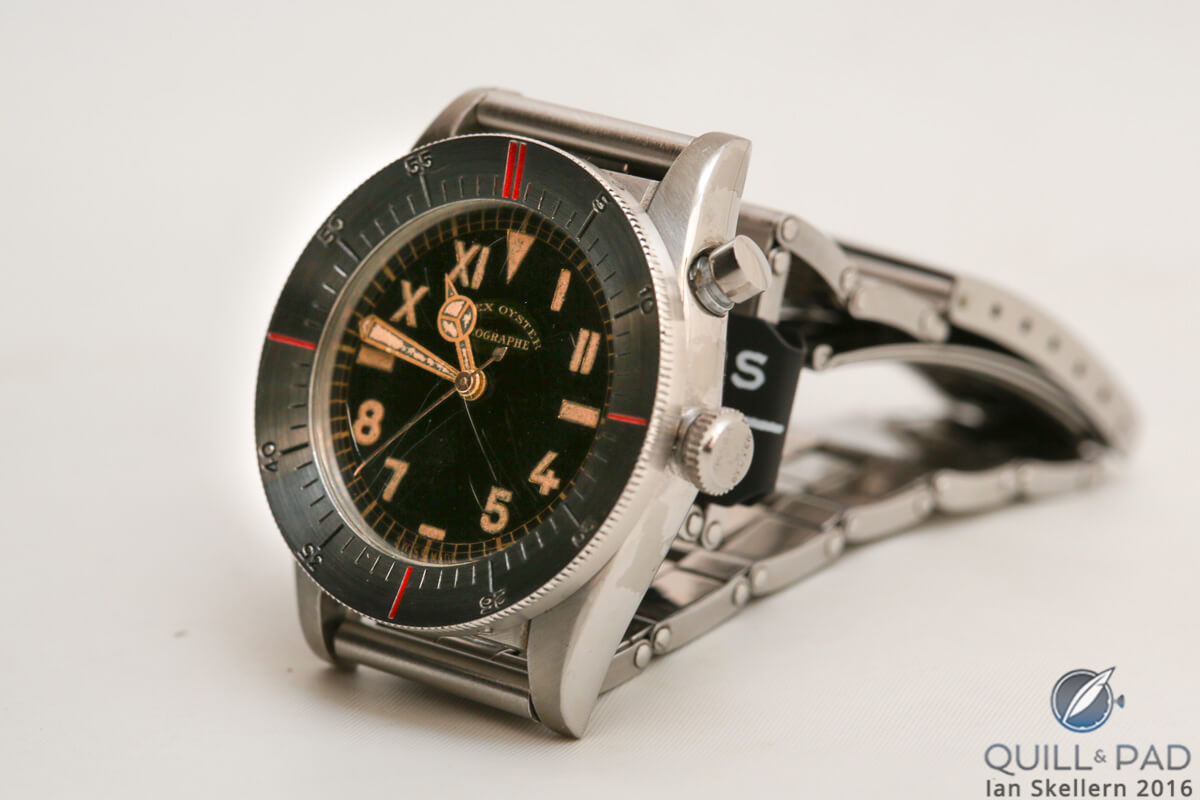
Rolex Oyster Zerograph monopusher flyback chronograph Reference 3346 from 1937
During the 1930s, you could have ordered a largely in-house caliber 10’5” flyback in the Rolex Zerograph or Centregraphe. Reference 4113 of the same period offered split-seconds chronograph muscle in a 44 mm case that still wears with epic wrist presence. Granted, only a few of these were made, but it’s the ambition that impresses.
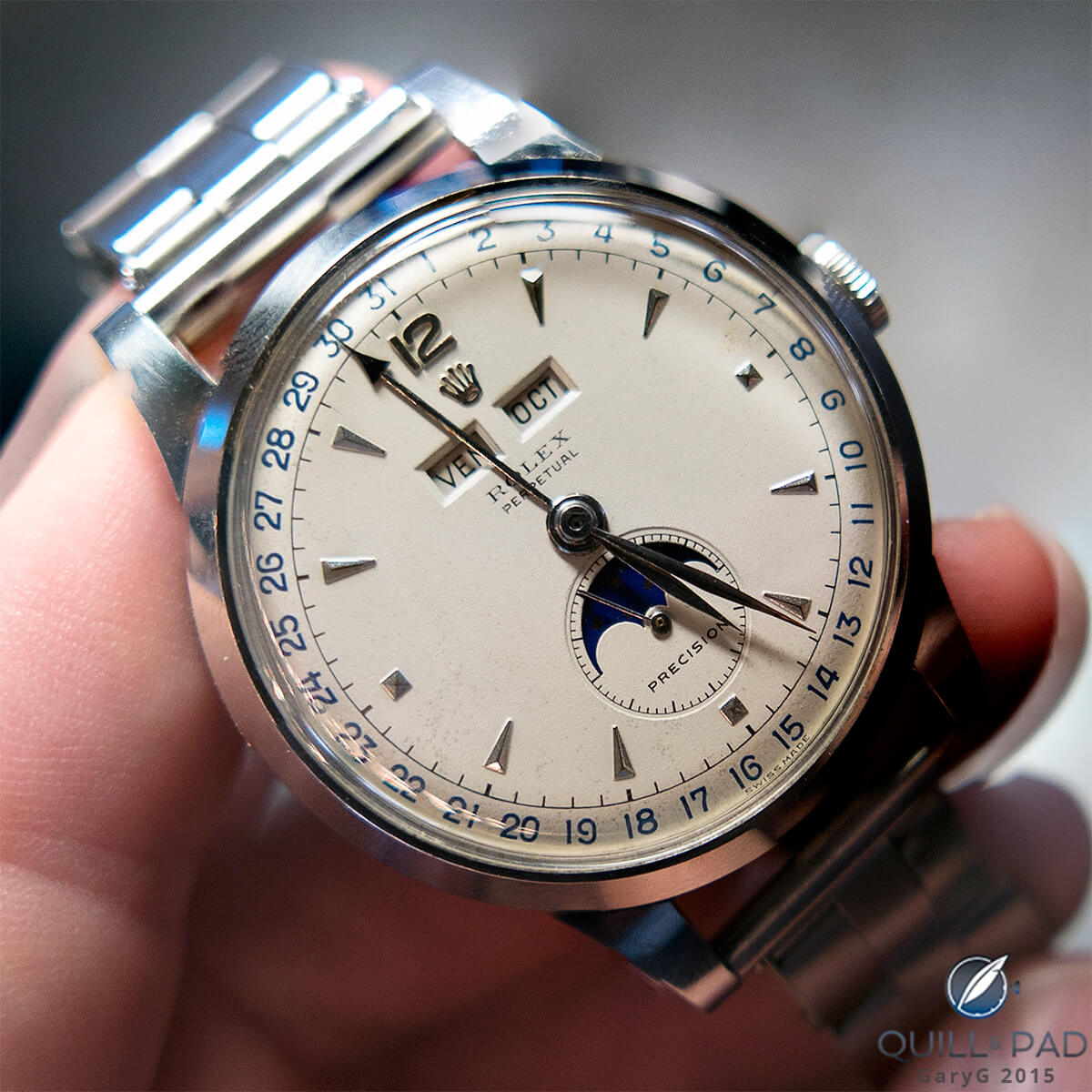
Rolex Padellone Reference 8171
A second wave arrived in the early 1950s with the 8171 “Padellone” triple calendar moon phase and its 6062 Oyster-cased counterpart.
No fewer than five Rolex Dato-Compax “Jean-Claude Killy” triple calendar chronograph references arrived amid this torrid streak, and the 1955 Reference 6556 Tru-Beat “deadbeat” seconds bowed on the heels of Omega’s own attempt at this function with the abortive Synchrobeat of 1954.
And it’s easy to forget that the original Rolex GMT-Master and Day-Date arrived within this bumper crop of complications.
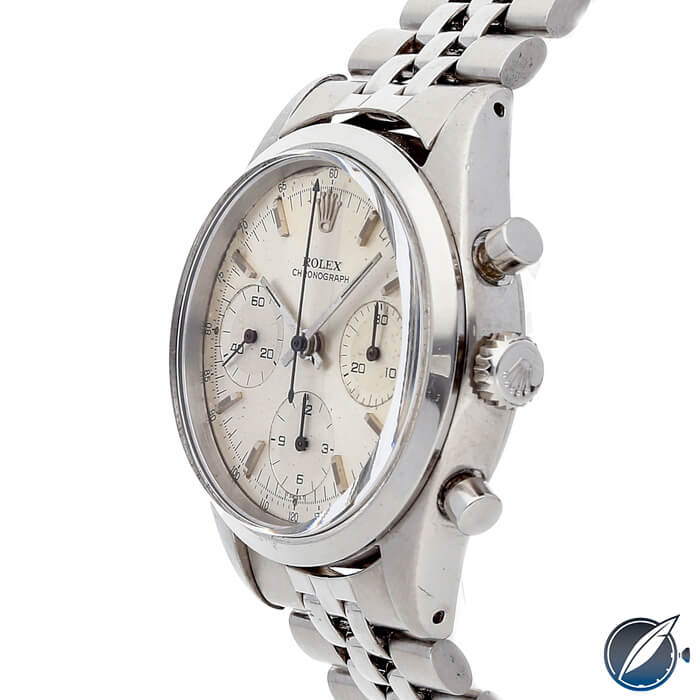
Rolex 1950s Reference 6238 Pre-Daytona (photo courtesy WatchBox)
Rolex changed during the 1960s. While innovation continued in detail, and regular upgrades were made to the basic calibers through the 1980s, most of the firm’s energy was directed at refinement of existing mechanical models and a ramp-up for quartz production during the 1970s.
—————————————————————————————————–
—————————————————————————————————–
Y2K Rolex Cosmograph Daytona: moving toward a revolution
This relentlessly abridged history of Rolex watchmaking returns the narrative to the 1990s.
While I was oblivious to developments from my vantage point in American suburbia, wheels were turning above my head. U.S. patent number 5793708, which Rolex applied for in October 1996, revealed the Genevan giant’s hand: “the present invention relates to a timepiece with a chronograph mechanism comprising seconds, minutes, and hours counters.”
Moreover, Rolex “proposed to replace this [lateral] type of coupling with a friction coupling between coaxial circular members one of which is axially movable against the action of a spring tending to apply them against one another.”
If that sounds like a vertical clutch – the heart of today’s Caliber 4130 Daytona powerplant – it’s no coincidence.
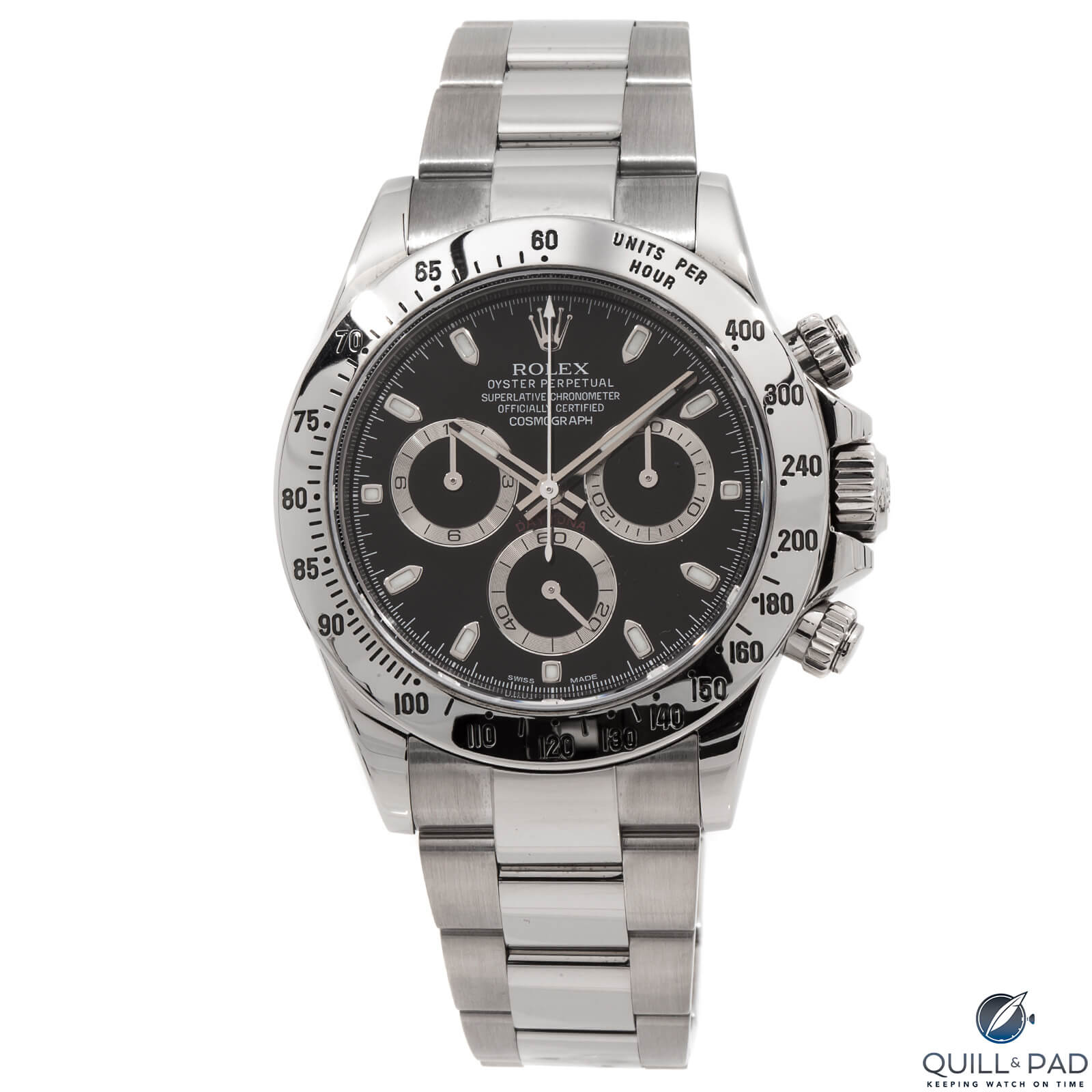
Rolex Cosmograph Daytona Reference 116520 (photo courtesy WatchBox)
It’s easy to forget how impressive the 4130 chronograph movement seemed in 2000.
Rolex had created a mass-produced chronograph caliber almost as thin (to one mm) as the benchmark high-horology Frédéric Piguet 1185 and just as sophisticated with both vertical clutch coupling and a column wheel function cycler to match the Piguet. The Rolex was tougher too.
Compared to its predecessor, the El Primero-based 4030, the new Rolex chronograph was built with a full rather than half balance bridge and was immensely simplified with fewer parts and fewer unique screws; and hacking seconds became a feature of the automatic Daytona.
And with a three-day power reserve, this mass-market Rolex catapulted itself among the then-scarce options with more than two days’ worth of autonomy; others in that class included the Blancpain 8-Day tourbillon Caliber 25, the Patek Philippe Caliber 28-20/220, the Frédéric Piguet 1150, and the IWC Portuguese Automatic’s Caliber 5000.
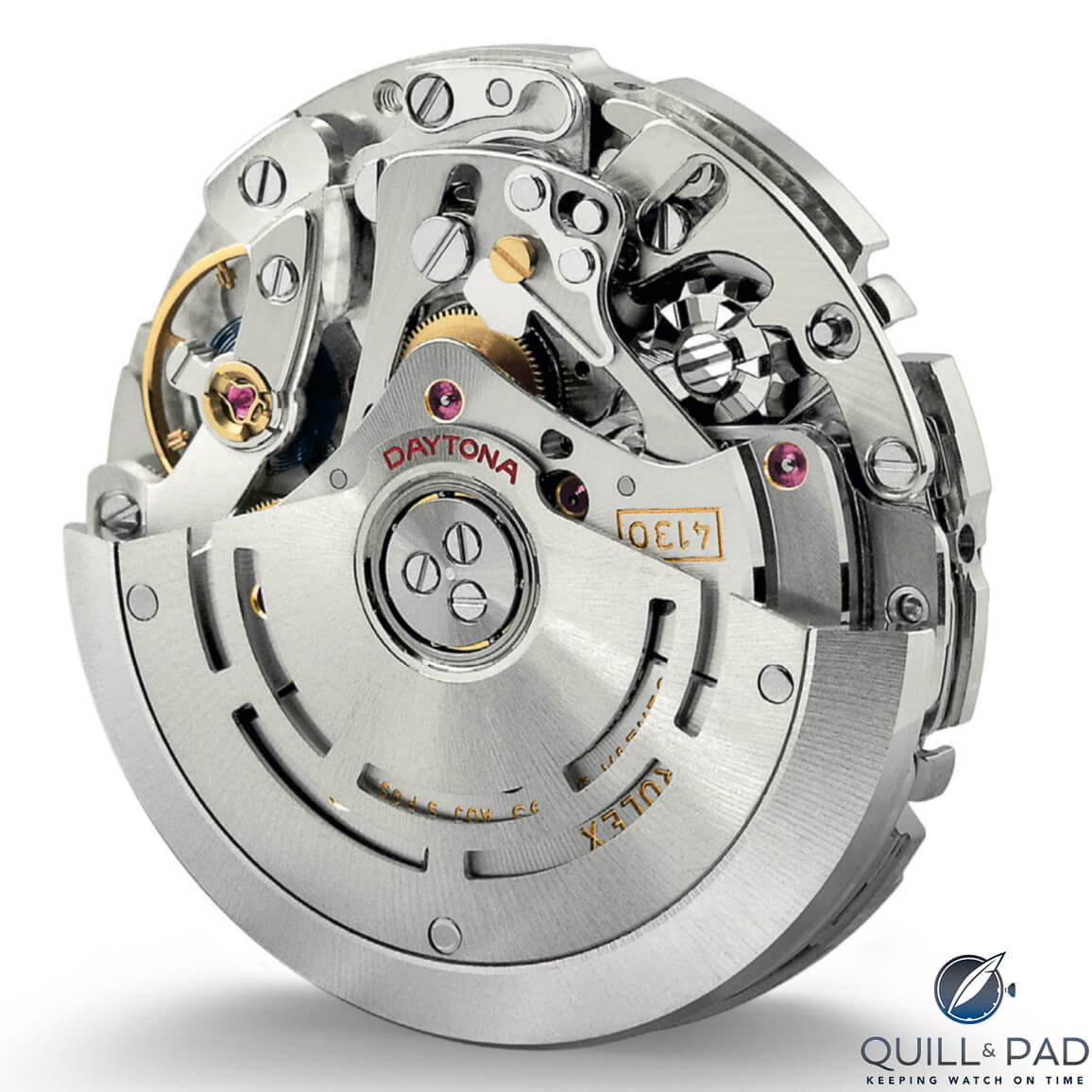
Rolex Caliber 4130
In hindsight, the Basel 2000 arrival of the Daytona 1165xx was the focal point for Rolex’s revolution as a movement manufacture.
Today, 70+ hours’ worth of power reserve is considered the standard for newly introduced Rolex calibers, and “model one” in that series was the 4130 chronograph. Moreover, the Daytona 4130 was the first modern Rolex caliber to dispense with the smooth but fragile jeweled staff rotor pivot previously used on most automatic Rolex movements.
And ball bearings arrived to stay with the 4130.
—————————————————————————————————–
—————————————————————————————————–
Rolex and Aegler: rent to own (your manufacture)
Events proceeded apace of engineering. April 2004 witnessed a development little noticed outside of the watch industry: Rolex purchased its longtime movement supplier, Aegler, from its controlling Borer family.
The two enjoyed a fruitful relationship dating back almost a century and were highly integrated, but it remains surprising from the vantage point of 2019 to think that Rolex took full control of its movement supply only 15 years ago. This newfound capability soon would be tested.
Case back fit for a (Rolex) Prince
The next public revolution in Rolex movement design came in an unprecedented form: a sapphire crystal display case back.
For the first time in series production, a Rolex caliber was designed expressly for visibility through a showcase window, and the now Cellini-branded Rolex Prince of 2005 served as the unlikely vessel.
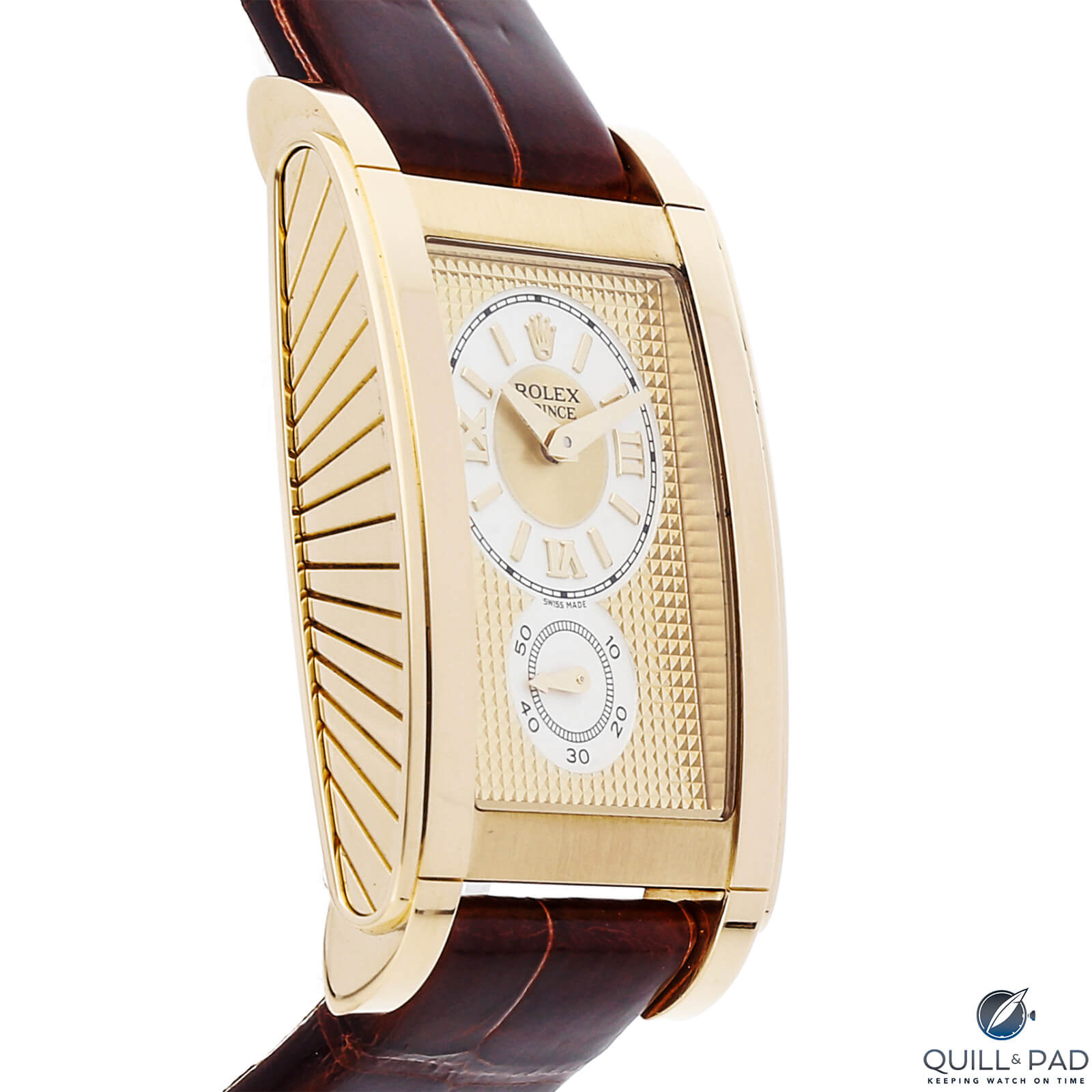
Rolex Cellini Prince Reference 5440-8 (photo courtesy WatchBox)
Initially launched as the Rolex Prince in 1928, this rectangular family of interwar Rolex shaped watches enjoyed its glory years during the heyday of Art Deco style and the parlous balance between gilded towers and Depression-era privation.
And the original Prince was a testbed for flamboyant concepts: fused “tiger stripe” white-and-yellow-gold models, board-flat “brancard” styles, and jump hours all had their day before the Prince line became uncool in the postwar world of the late 1940s.
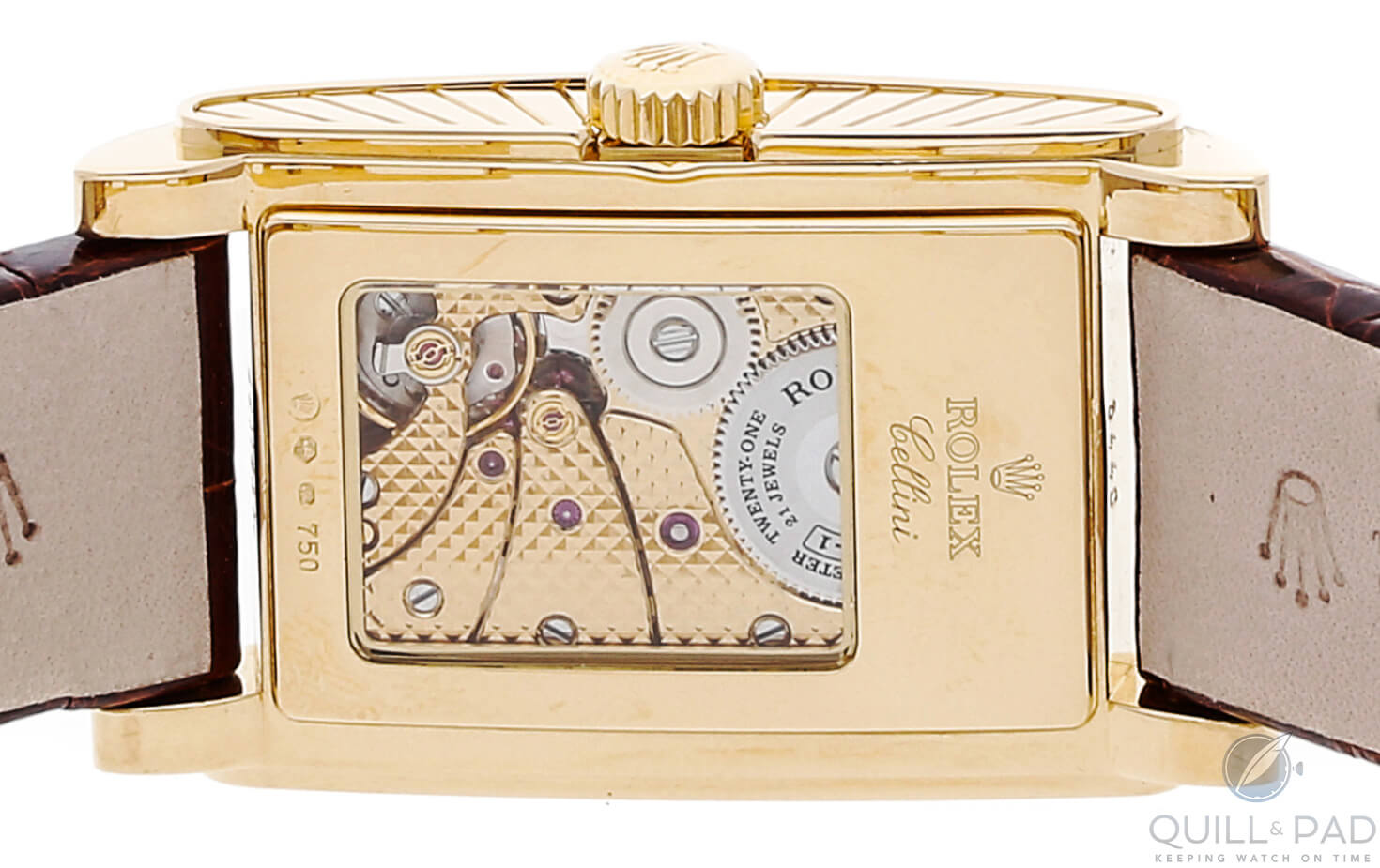
Rolex Cellini Prince Caliber 7040 (photo courtesy WatchBox)
The precious metal-only Prince of 2005 was no less ambitious. All four versions of the watch featured movements expressly designed and finished to mirror the style and features of each respective model’s dial.
Yellow gold with a “pyramide” flourish included a yellow-gold set of bridges with matching peaks. White and pink gold could be ordered with an extravagant “rayon” motif.
A second white gold model boasted rippling silver gadroons worthy of a 1936 coffin-nose Cord 812.
More than simply a bridge motif, the style theme of the Cellini Prince’s Caliber 7040 extended to the very structure of the movement.
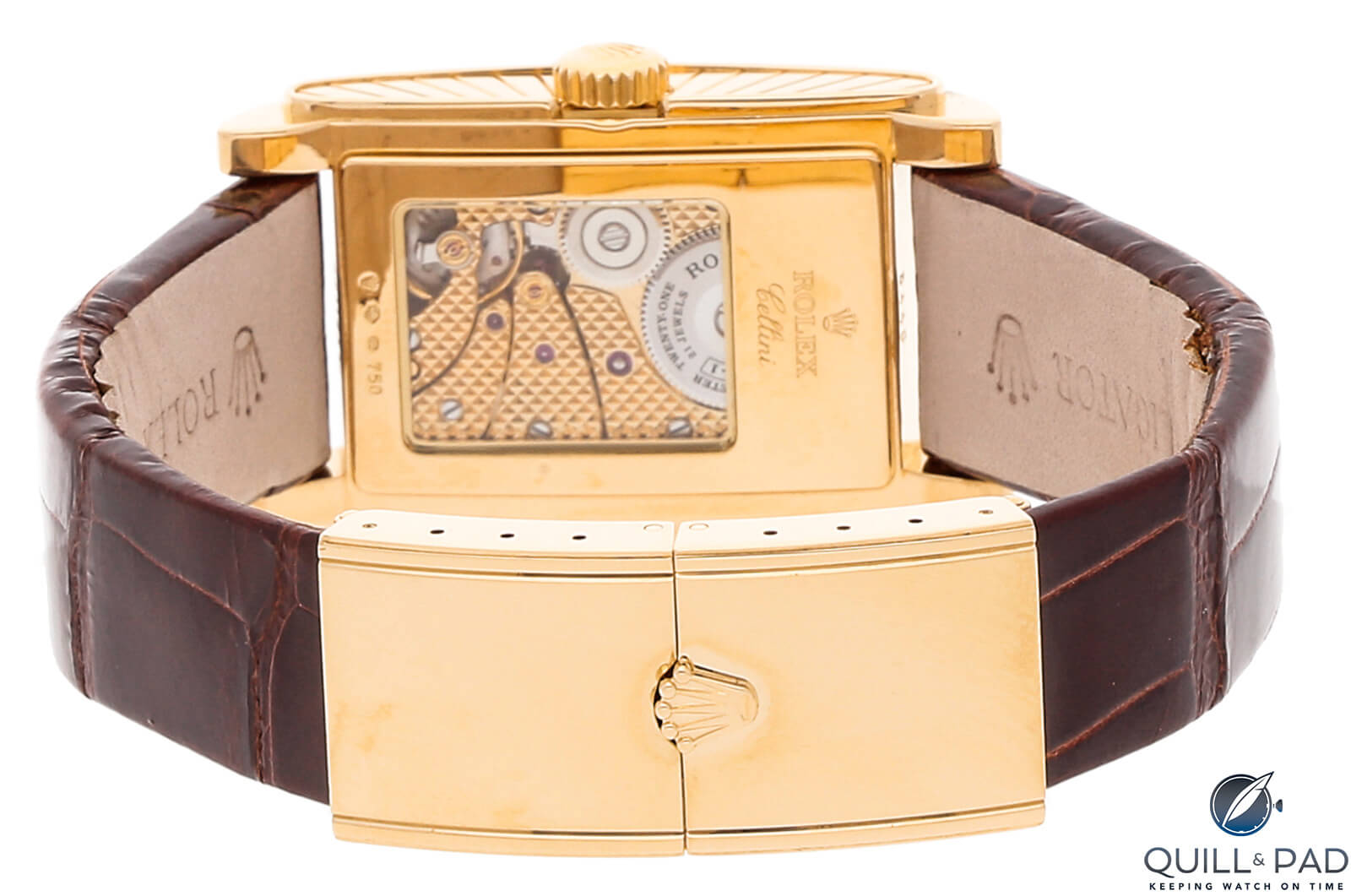
The sapphire crystal case back of Rolex’s Cellini Prince Reference 5440 (photo courtesy WatchBox)
Rolex drew on the Prince’s history and chose the manual-wind format expressly to make the 7040 a visible and forceful feature of the watch. Vintage-inspired “finger” bridges led the power train from a brilliantly polished ratchet wheel to the balance.
As a modern manual-wind Rolex caliber, the 7040 in all four versions is a rarity; this arrangement was chosen to maximize movement visibility, and Rolex carefully designed bridges for a manual caliber rather than leave structural relics by converting an existing automatic.

No corners were cut: the 70-hour power reserve was only Rolex’s second after the Daytona, each Cellini Prince was an officially certified C.O.S.C. chronometer, and each featured the same fundamental full-bridge/free-sprung balance architecture of the sports watches.
The second act awaits
While the in-house Daytona and the Cellini Prince broke dramatically with past Rolex practice, they were table-setters for the most dramatic developments in the company’s watchmaking since the mid-twentieth century.
Even as watch media descended on the reborn Prince collection at Baselworld 2005, Rolex patent filings suggested greater exploits awaited behind the crowned giant’s iron curtain of secrecy.
For more, please visit www.rolex.com.
Quick Facts Rolex Oyster Perpetual Cosmograph Daytona Ref. 116500LN
Case: 40 x 12.2 mm, stainless steel with ceramic bezel
Movement: automatic Caliber 4130 with blue Parachrom hairspring, 72-hour power reserve, 4 Hz/28,800 vph frequency, officially certified C.O.S.C. chronometer (white or black dials)
Functions: hours, minutes, hacking seconds; chronograph
Years of manufacture: 2000 through present
Price: €15,600
Quick Facts Rolex Cellini Prince, base Reference 544
Case: 46.3 x 28 x 9.8 mm, yellow gold
Movement: manual winding Caliber 7040, 70-hour power reserve, 4 Hz/28,800 vph frequency, officially certified C.O.S.C. chronometer
Functions: hours, minutes, hacking seconds
Years of manufacture: 2005-2014
Price as of 2015: $15,500-$17,000
You may also enjoy:
Rolex Milgauss Review – The Most Underrated Rolex?
Exceptional Movements In History: Rolex Caliber 1575, The Watchmaker’s Watch
Rolex Case Study: How Many Watches and How Much Money Does Rolex Make?
Rolex Submariner vs. GMT Master II: Small Differences, Difficult Decision
Is Silicon Here To Stay In (Rolex) Watch Movements?
A Look Inside The Rolex Caliber 3135


Leave a Reply
Want to join the discussion?Feel free to contribute!