
New Release: Laurent Ferrier Sport Traveller Slate Grey
At this year’s Watches & Wonders exhibition, the brand is presenting the Sport Traveller, arguably the most practical watch in its collection.
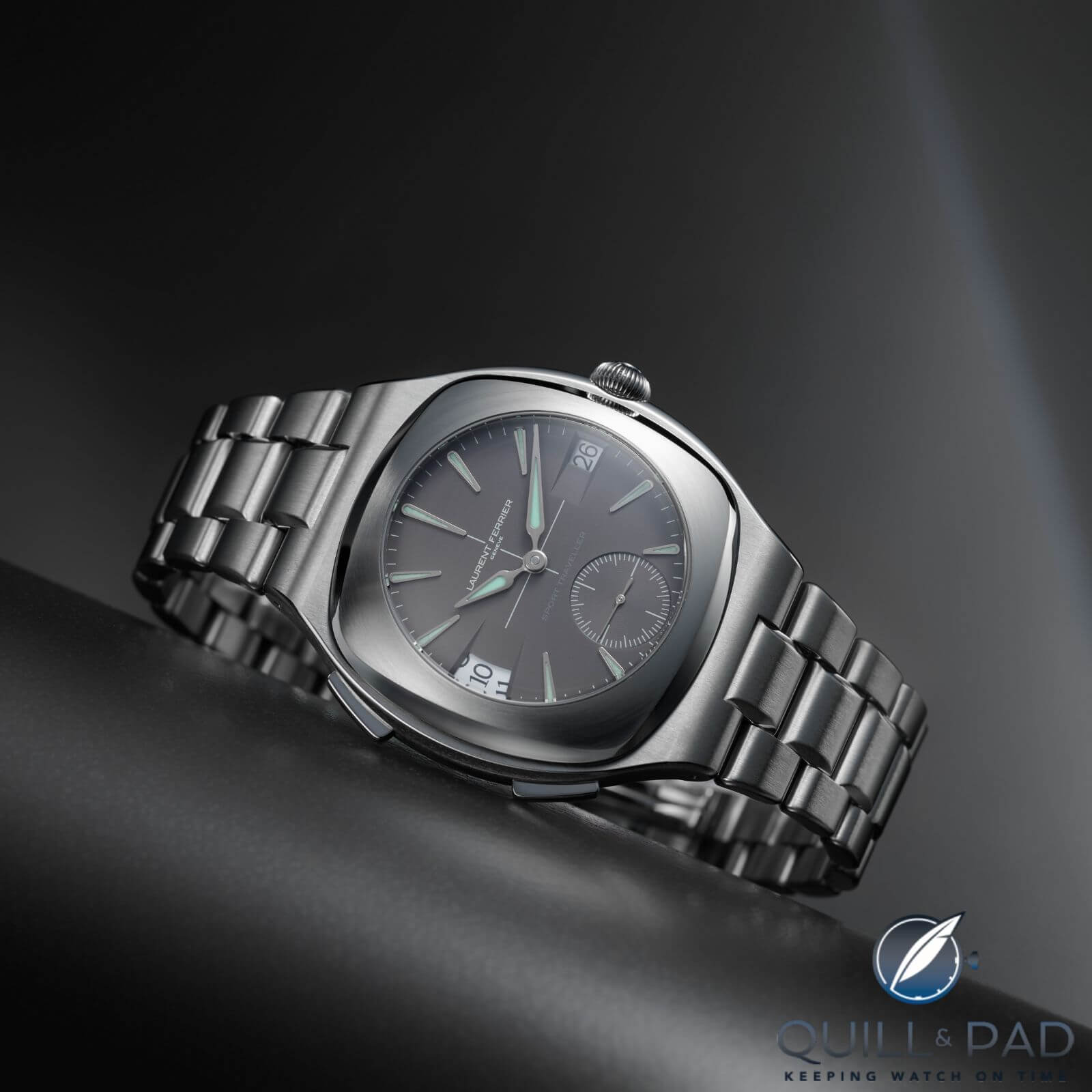
This practicality is evident in several ways. Firstly, there is the integration of the dual-time complication (which Laurent Ferrier calls the Traveller) into the Sport collection, featuring sporty models with an integrated bracelet. The Sport Traveller uses a mini-rotor automatic movement, which is a welcome development, although I would prefer a full-size rotor in a sports watch – something Laurent Ferrier does not currently offer. Finally, both the watch and bracelet are made of titanium – no further comment needed.
Some notes on the history of the dual time complication
Before we examine the watch in detail (I’ll try not to be overly intrusive), I would like to offer a brief history of the dual time complication – or GMT, as it is often called. Dual time watches, originally pocket watches, appeared long before the GMT system was officially adopted, with its more or less uniform division of the planet into 24 time zones, each spaced exactly one hour apart. In earlier times, watchmakers implemented this complication by installing an extra pair of hands, one for the hours and one for the minutes (recall the so-called captain’s watch). Rolex introduced this system to wristwatches with a second (24-hour) hour hand in the GMT-Master in 1954, but it was the Genevan watchmaker Louis Cottier who truly made it practical. He had collaborated with several renowned brands since the 1930s, most notably Patek Philippe. It was for Patek Philippe in the 1950s that he developed the first dual time mechanism for a wristwatch with a twin hour hand, one of which could be moved around the dial in one-hour increments by pressing two pushers. One pusher moved the hand backwards, the other forwards – a true breakthrough in time-zone watch technology at the time. Remarkably, switching the hour hand to another time zone did not affect the movement of the minute hand – the watch maintained accurate time throughout all such operations. Patek Philippe produced this watch, known as the Ref. 2597HU, from 1958.
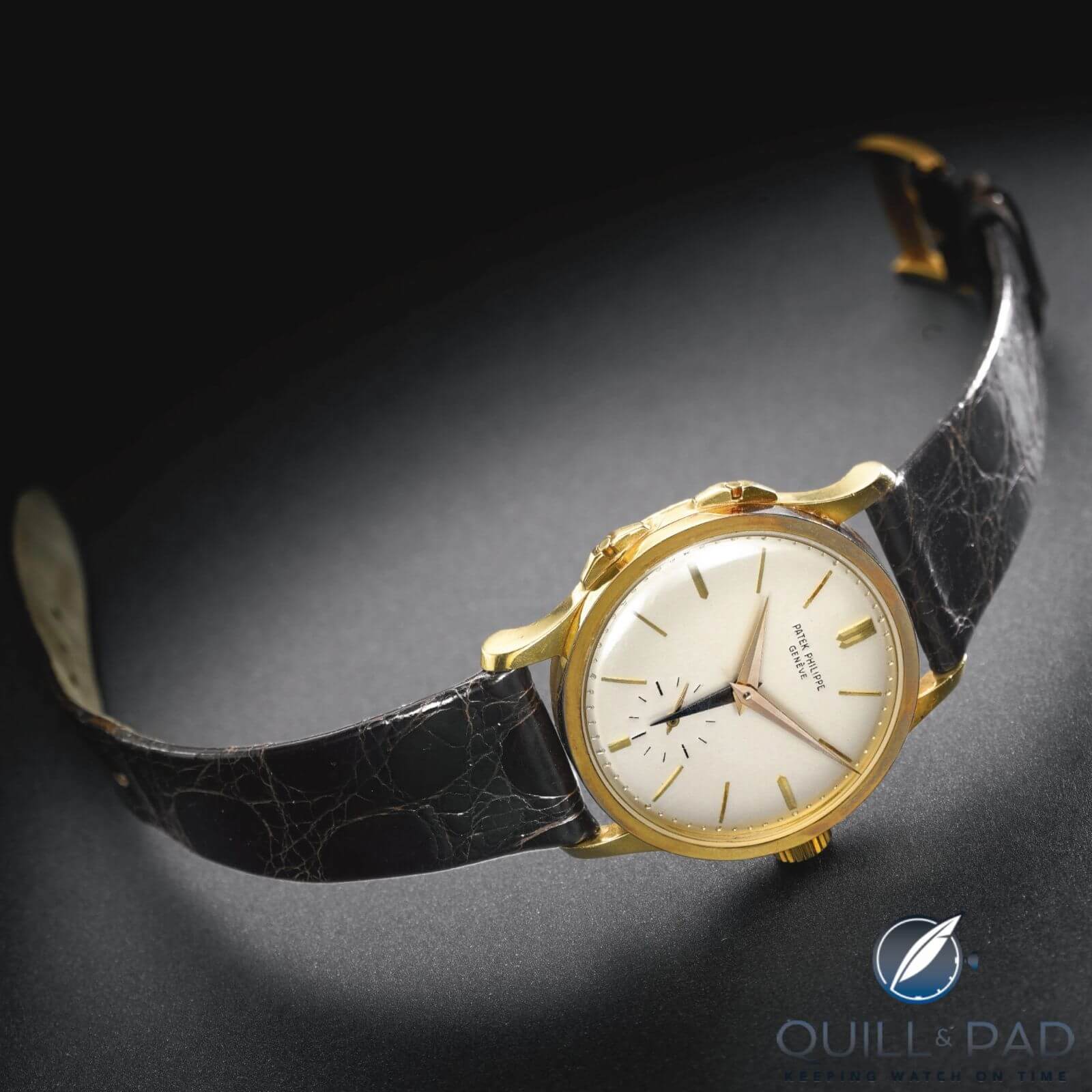
Patek Philippe Ref. 2597HU dual-time watch. Courtesy of Sotheby’s.
Louis Cottier’s system used a second hour hand to display the time in the home or standard time zone, which was unaffected by the pushers. However, this system had one weakness: the need to remember whether it was day or night in the home time zone, as its hour hand was a 12-hour hand, not a 24-hour hand. This issue was resolved in 1994 by Ludwig Oechslin, then a technical genius at Ulysse Nardin. For the GMT± model, he introduced two innovations that complemented Louis Cottier’s concept of dual-time control with two pushers. One of these innovations was expected, but the second was a technical surprise. The first breakthrough was a digital 24-hour indicator for the home time zone, making it easy to determine whether it was day or night there. The second, truly impressive breakthrough, was synchronising the date display with local time, indicated by the central 12-hour hand.
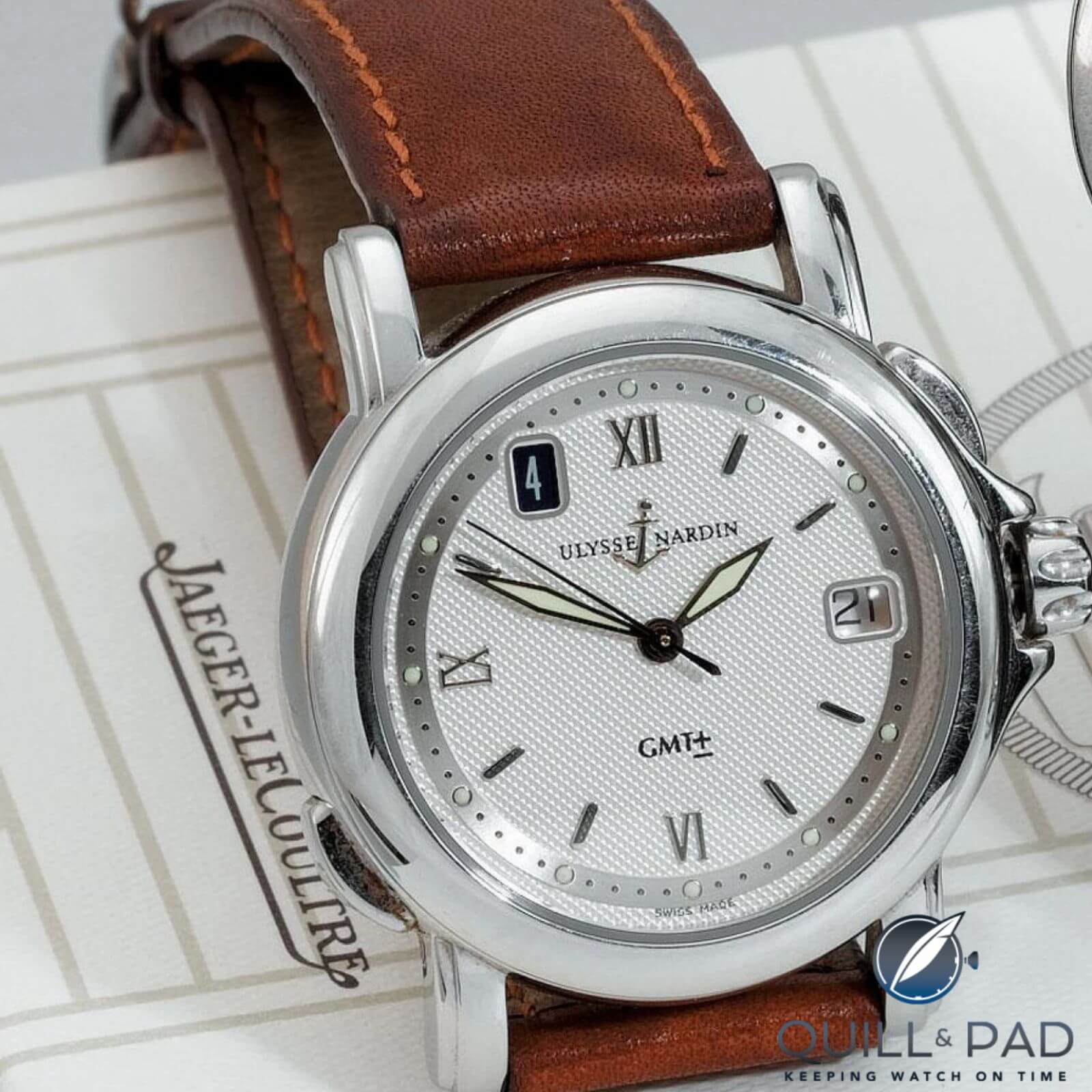
Ulysse Nardin San Marco GMT± circa 1998. Courtesy of Sotheby’s.
Dual time complication by Laurent Ferrier
In a sense, the Traveller complication by Laurent Ferrier continues this historical lineage, preserving the excellent legibility of the dial, which features only three hands – hour, minute, and small seconds – and two windows displaying the date at 3 o’clock and a 24-hour digital dual time indicator at 9 o’clock. It also maintains the practicality and convenience of switching the dual time indicator using two pushers: one for forward and one for backward adjustment.
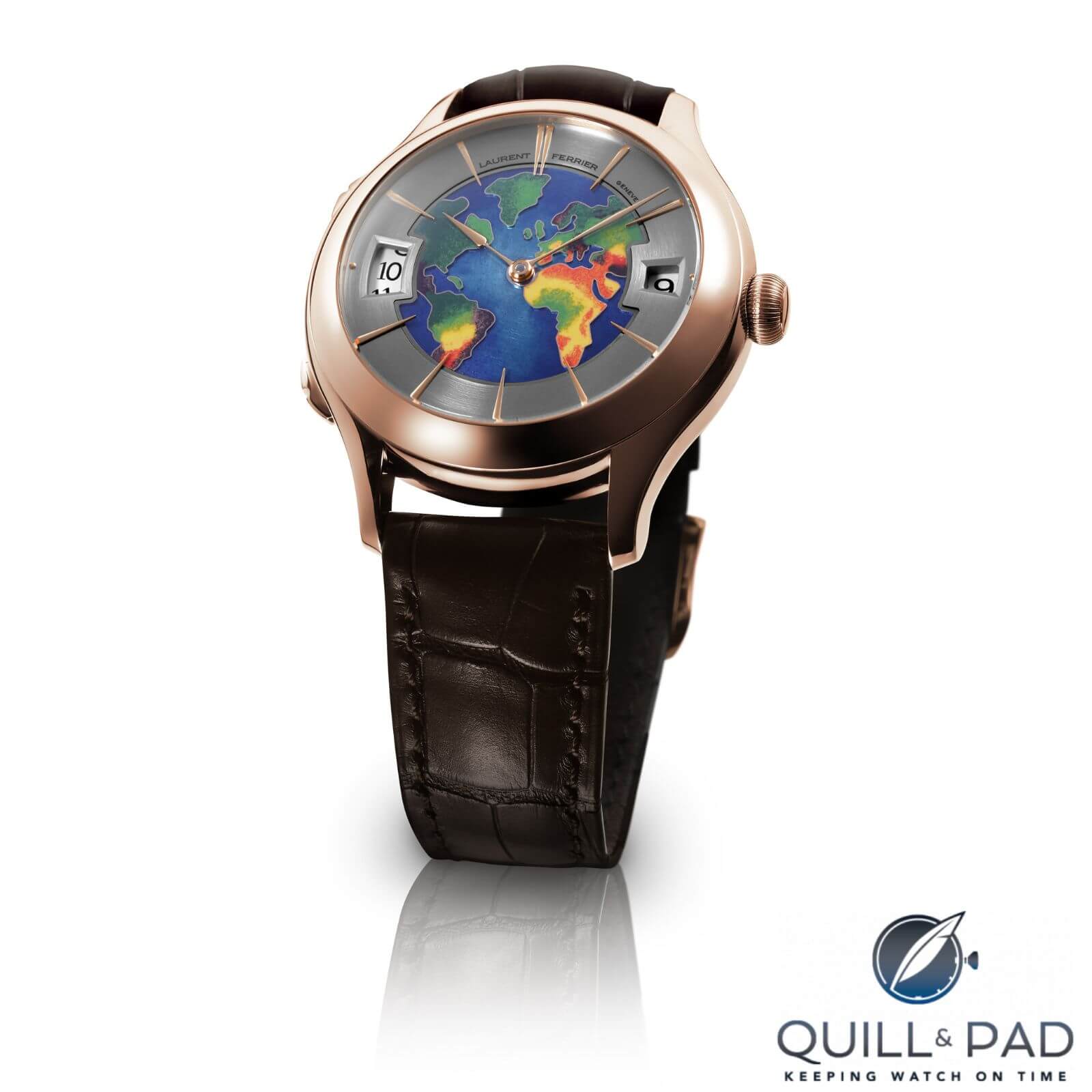
Galet Traveller watch, launched in 2015.
Previously, Laurent Ferrier offered its own dual-time complication, called the Traveller, only in watches from the Classic collection – known as Galet until 2019. The Galet Traveller was launched in 2015 as a small series of special editions, featuring a beautiful multicoloured cloisonné enamel dials. The movement with a mini-rotor, which forms the basis of the Galet Traveller, was first introduced in 2012 in the Galet Micro-Rotor, for which it was specially developed. Initially produced in collaboration with the complications atelier La Fabrique du Temps (now La Fabrique du Temps Louis Vuitton, part of the LVMH group), Laurent Ferrier is believed to have refined its complicated versions in-house. Until this year, Laurent Ferrier always combined the Traveller complication with the mini-rotor base caliber FBN229—with the complication, the movement is designated LF230. This movement operates at a frequency of 21,600 vibrations per hour (3 Hz) and is equipped with a natural escapement with two wheels, developed in the footsteps of Abraham-Louis Breguet’s échappement naturel.
Dual time goes sporty
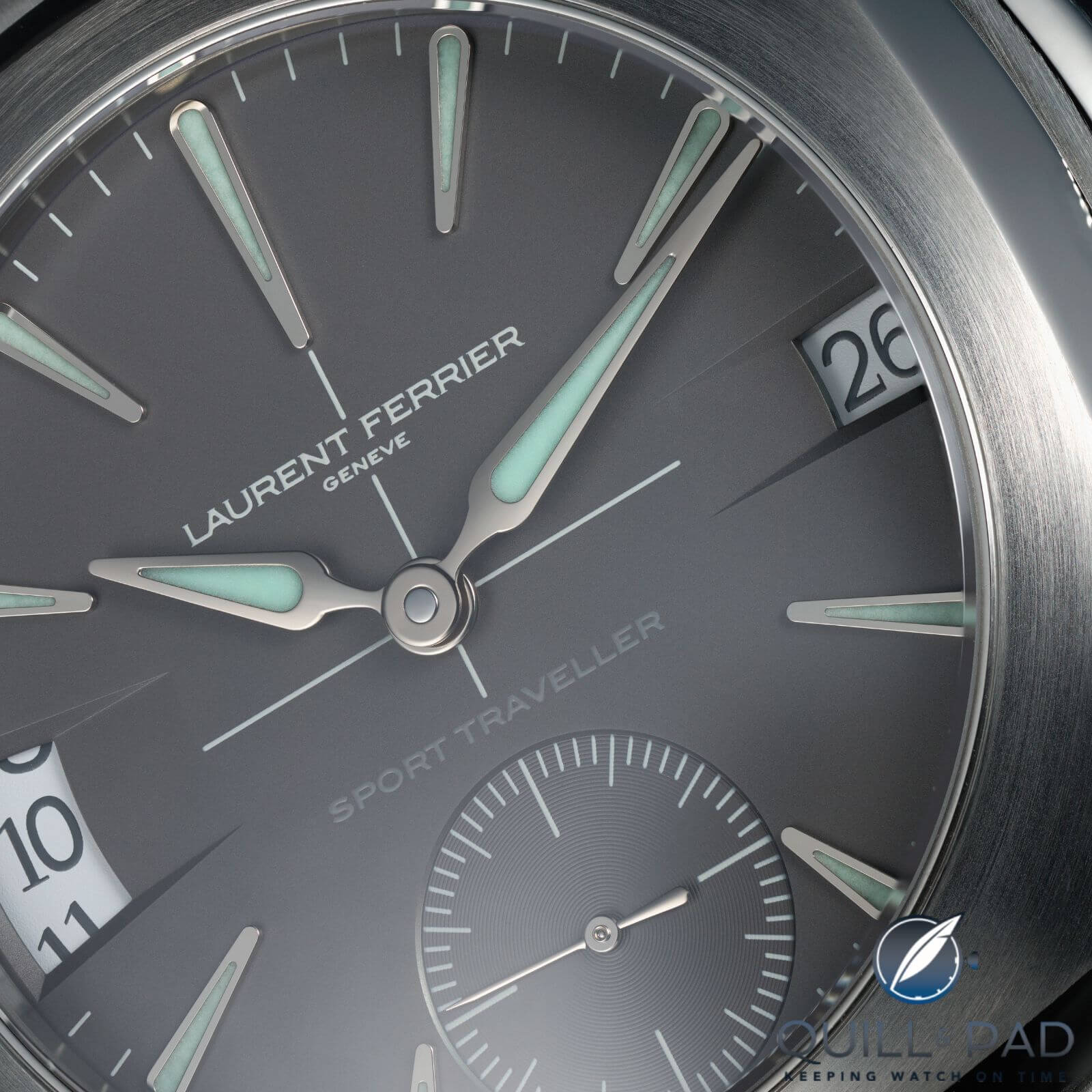
However, the situation has now changed. The brand remains silent about its effective abandonment of the FBN229 caliber, having developed a new mini-rotor LF270 caliber series. In the LF270, the brand replaces the natural escapement with a classic Swiss (club-tooth) lever escapement, also originally conceived by Abraham-Louis Breguet. Some publications, such as WatchesbySJX, suggest that the extremely precise tolerances required for a natural escapement preclude its use in sports watches. Laurent Ferrier himself, albeit implicitly, contradicts this view by, for example, equipping the Classic Auto Horizon watch from the current collection (note, this is a classic-style watch, not a sporty one) with the new mini-rotor caliber LF270 featuring a lever escapement. It is also worth noting a change in naming: models with the LF270 are called Classic Auto, not Classic Micro-Rotor, which feature the FBN229.
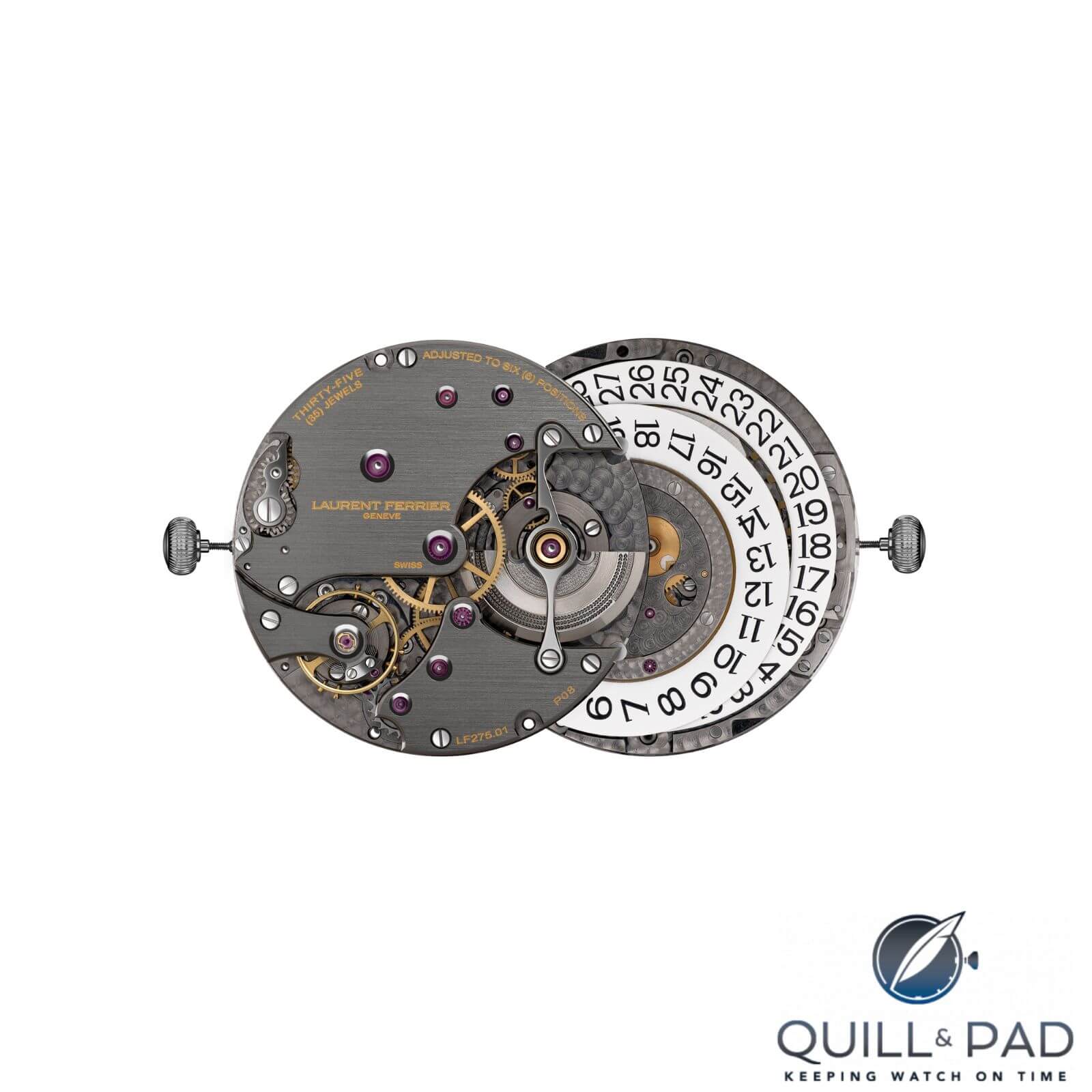
As a result, the new Sport Traveller features the caliber LF275, a dual-time version of the LF275, with a tried-and-tested Swiss lever escapement. Interestingly, Abraham-Louis Breguet’s experience with these two escapements followed a similar pattern: he produced several pocket watches with a natural escapement but ultimately chose more reliable alternatives, primarily lever and cylinder escapements. It is generally accepted that a natural escapement is more energy efficient; however, despite increasing the frequency from 21,600 vibrations per hour in the FBN229 with a natural escapement to 28,800 vibrations per hour in the LF275 with a lever escapement, the latter maintains the same comfortable 72-hour power reserve.
An unexpectedly understated style for a sports watch.
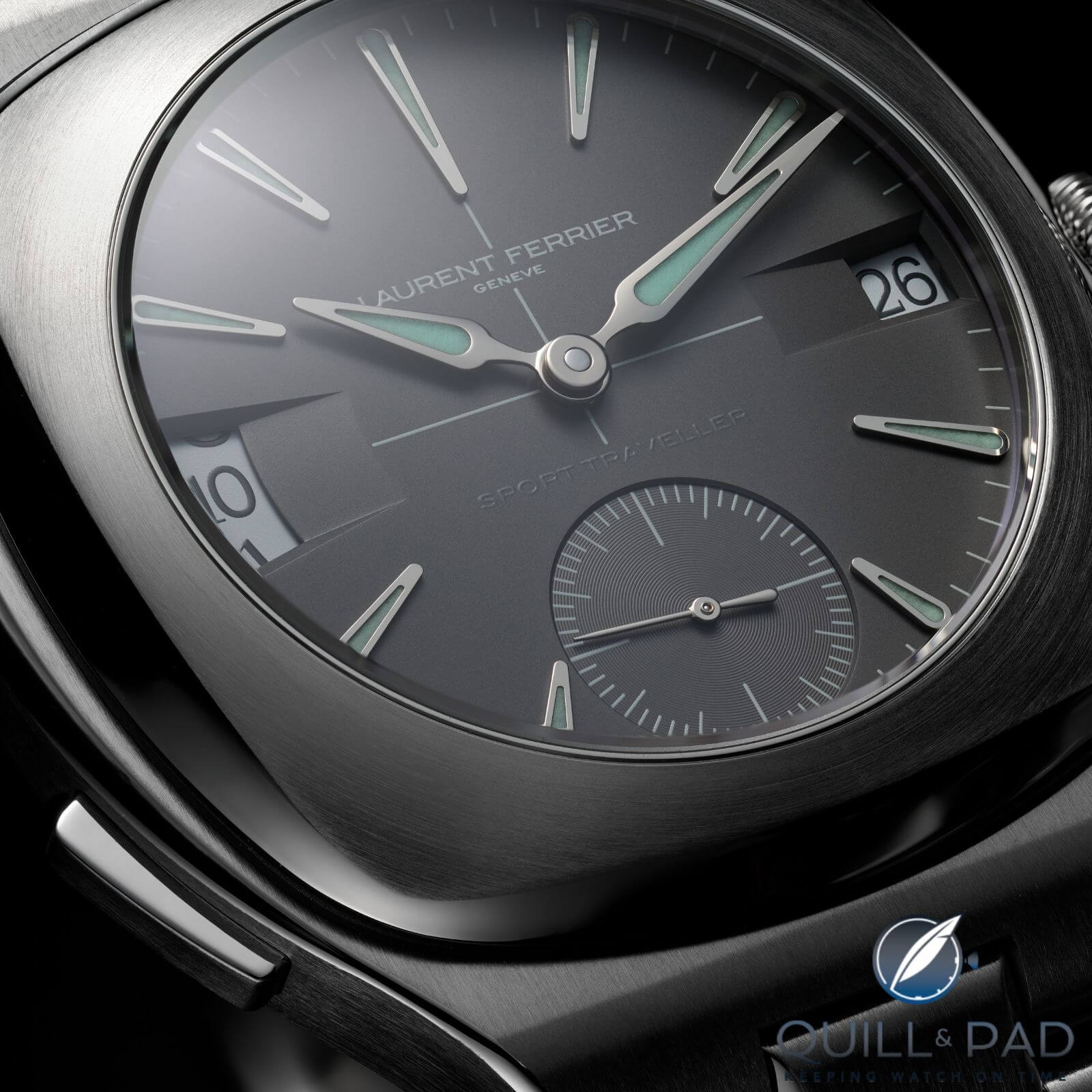

Sports watches are typically known for their striking, vibrant appearance with bold highlights and accents, but the Sport Traveller features a discreet, largely monochrome design. The Traveller’s journey within the Laurent Ferrier collection began with a decorative model featuring an enamel dial with a stylised globe depicted in coloured cloisonné enamel – a highly distinctive watch produced since 2015, which many readers will remember. In contrast, the new Sport Traveller is extremely understated.
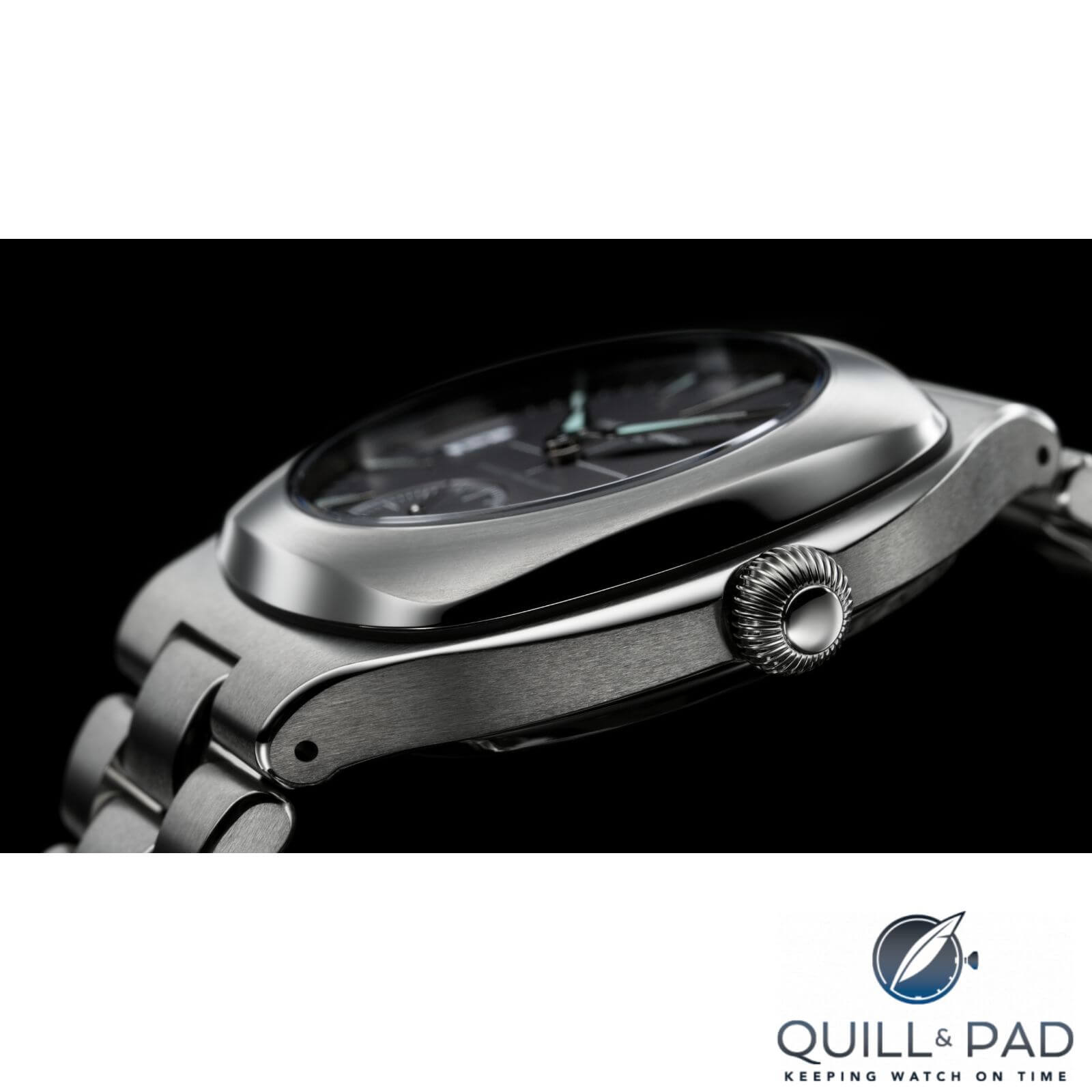
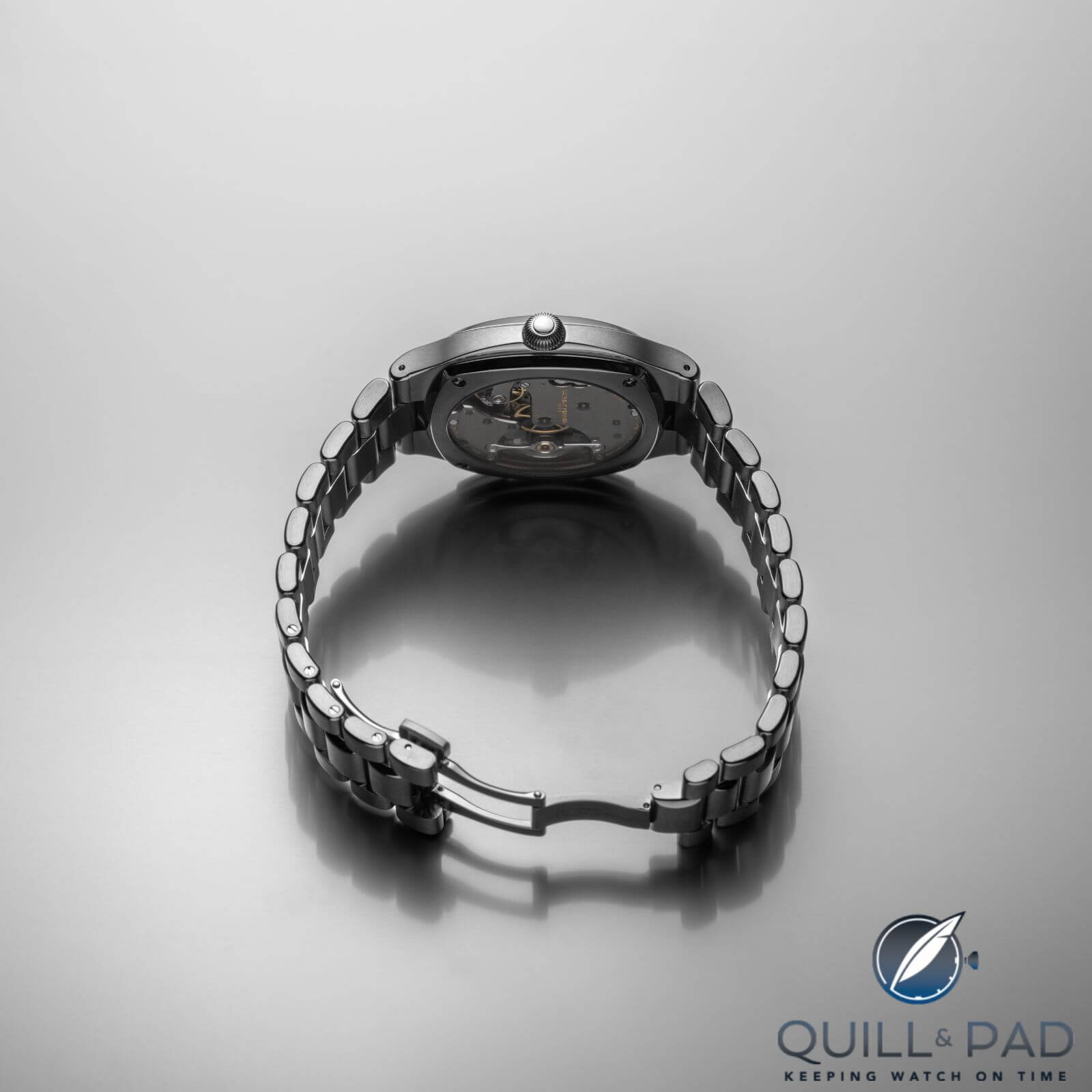
The watch’s monochrome character starts with the grey tones of matte-finished titanium. Both the case and the three-piece bracelet are made from this material, which has a strong technical character. The relatively small polished bevels on the cushion-shaped bezel, caseband, and bracelet links add a touch of luxury – just enough to prevent the watch from appearing too glamorous, making it suitable for both casual wear with a sweater and jeans, as well as a formal suit.
The monochrome theme continues with the dial, which the brand describes as “slate grey with an opaline finish,” with the only colour accents being the luminescent markings on the indexes and hands. Even the “Sport Traveller” model name on the dial is printed in a slightly lighter grey – a superb design trick that results in a barely noticeable inscription, a recognisable feature from the brand’s first launch in 2010, the Tourbillon Double Spiral watch. This design continuity is commendable and undoubtedly increases the brand’s following. The original assegai-shaped hands, essentially a stylised and refined version of the traditional spade and whip hands, also seen at the launch of the Tourbillon Double Spiral in 2010, have become significantly wider in the Sport collection watches, including this Sport Traveller, losing their delicate relief and moving closer to the classic Alpha shape. Both the hands and teardrop-shaped indexes are crafted from white gold and coated with a light green Super-LumiNova luminescent material, ensuring perfect readability day and night – a must for a good sports watch.
Also read:
Good Vibrations: Armin Strom reveals the Minute Repeater Resonance 12:59 First Edition
Old-World Guilloché vs. The Geneva Tradition: Breguet and Patek Philippe Compared

