
The Nivada Grenchen F77 MKII: Refining the Integrated Ideal
By Nina Scally
The late 1970s were a wildly transitional era for horology, one where the delicate, fragile elegance of the dress watch was shoved aside for the bold integrated steel sports watch. Watchmakers realised that their wealthy clientele wanted something they could wear on the deck of a yacht in Saint-Tropez, without having to change it before dinner. Nivada Grenchen, a historic Swiss marque with an eye for the zeitgeist, responded to this cultural shift in 1977 with the release of the original F77, complete with an octagonal bezel, exposed screws, and a woven dial to boot.
When the brand was recently resurrected under the passionate guidance of Guillaume Laidet, the F77 made a prominent return. The modern reissue, often referred to as the Mark I, was an instant success, capturing the charm of the 70s luxury sports watch category albeit at an accessible price point. Yet, resting on one’s laurels is a dangerous game in watchmaking, and the vintage-inspired watches segment is crowded, which means that listening to consumer expectations is more important than ever. That’s why Nivada Grenchen has launched the new Nivada Grenchen F77 MKII. Rather than a total redesign, it carefully files off the rough edges for a more refined look. And collectors appear to absolutely love it.
Sculpting the Steel Silhouette
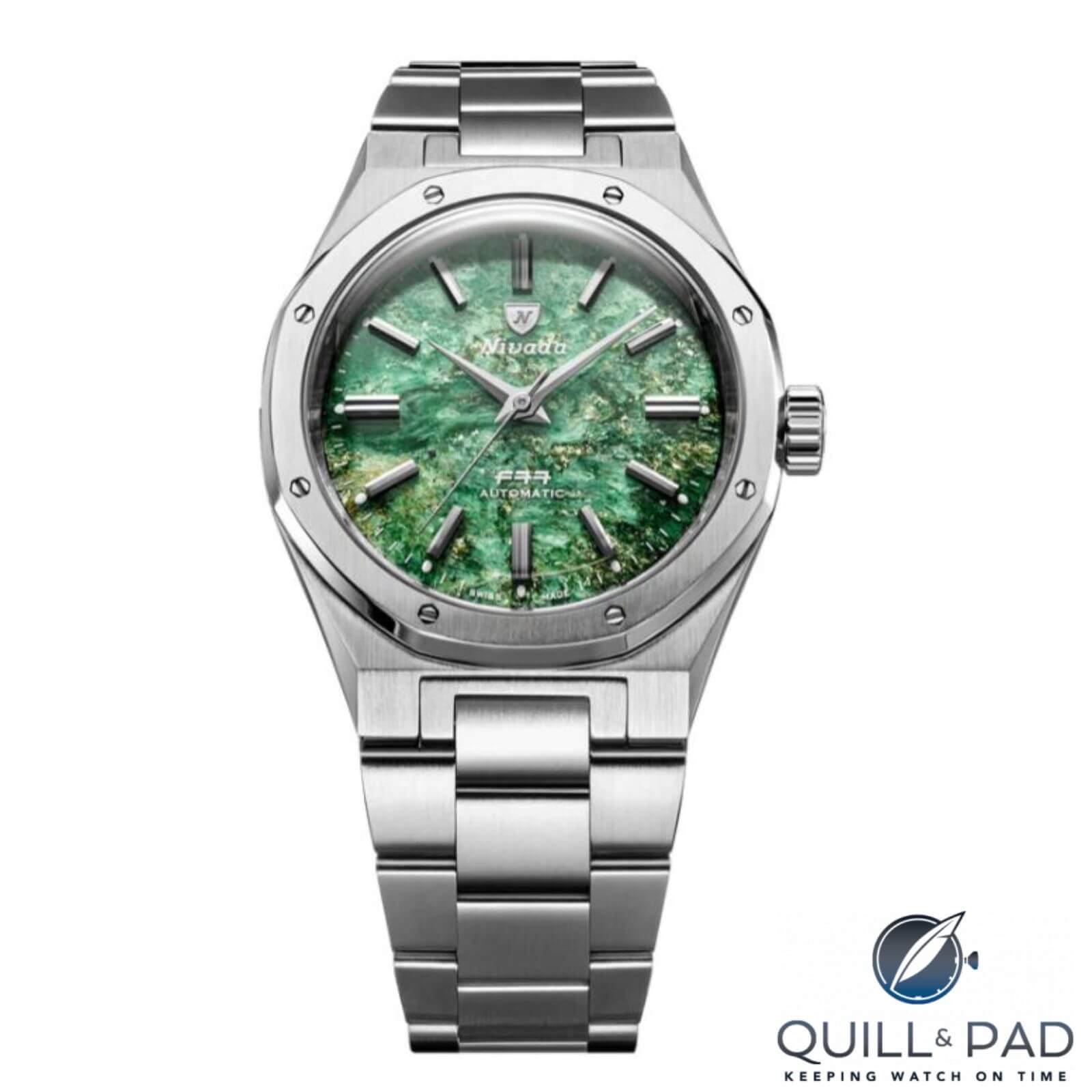
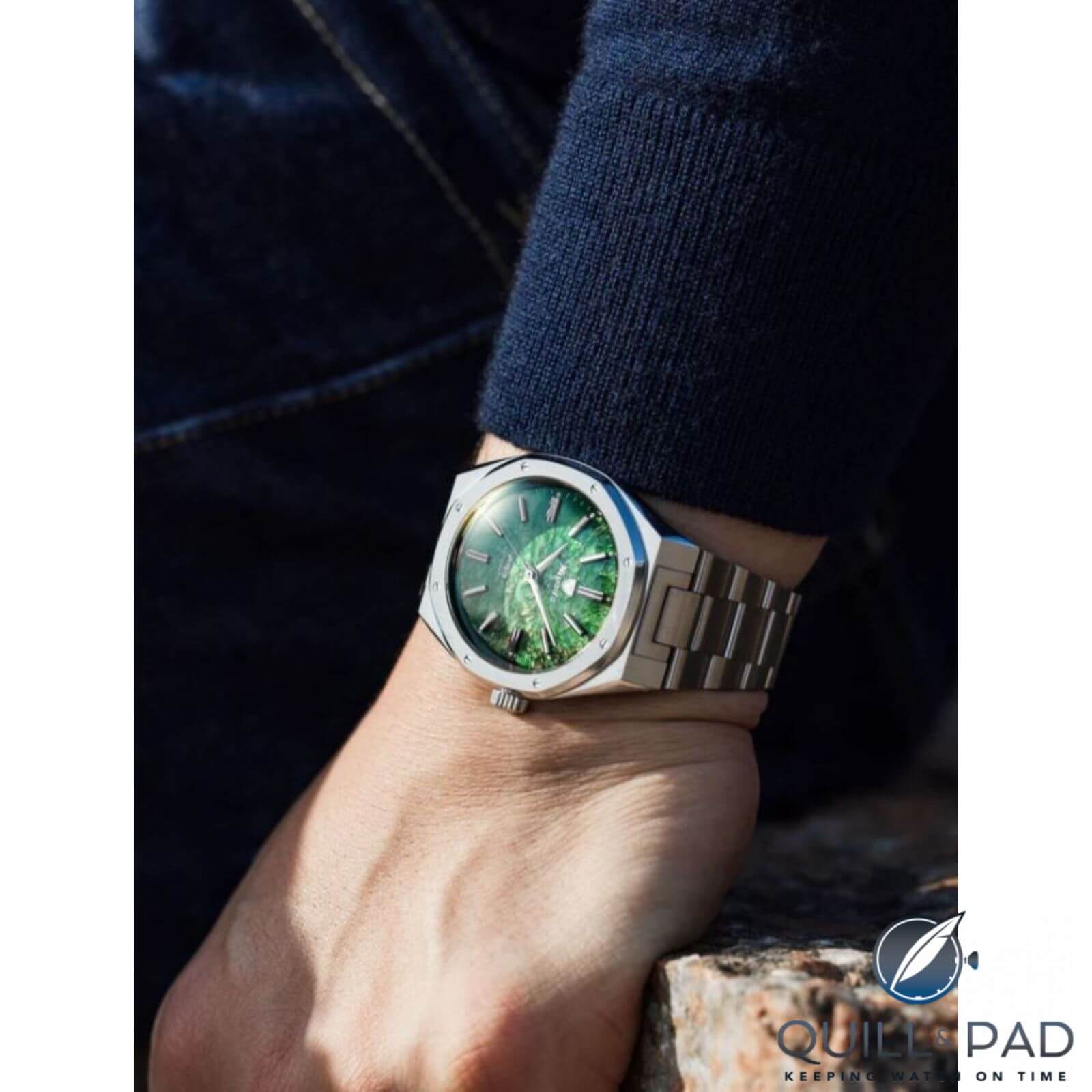
paper, the case of the Nivada Grenchen F77 MKII retains its highly wearable 38mm diameter and possesses enough architectural presence to satisfy those who usually prefer something more like a 40mm footprint. The lug-to-lug distance remains a compact 46.2 millimetres, while the engineering team has managed to shave the overall thickness down from 12.65mm to a much sleeker 12.2mm. While half a millimetre might sound like nothing to an outsider, anyone who has spent time obsessing over watch cases and their dimensions knows how such a reduction can completely alter how the metal sits and interacts with the wrist.
Beyond the raw numbers, the lugs themselves have been subtly re-profiled. I mentioned earlier that they remain the same distance apart, but they now feature a more pronounced downward curve. Naturally, this gives the wrist a tighter hug. The brushed finishes on the flat surfaces of the 316L stainless steel case contrast sharply with the high-polish chamfers, enabling the watch to feel more like a vintage piece that has somehow benefited from modern machining tolerances.
Another important upgrade is the inclusion of the drilled lugs, which makes it much easier to swap the steel bracelet out for a rubber strap – a feature that many integrated sports watches lack.
“… a captivating world of exotic stone”.
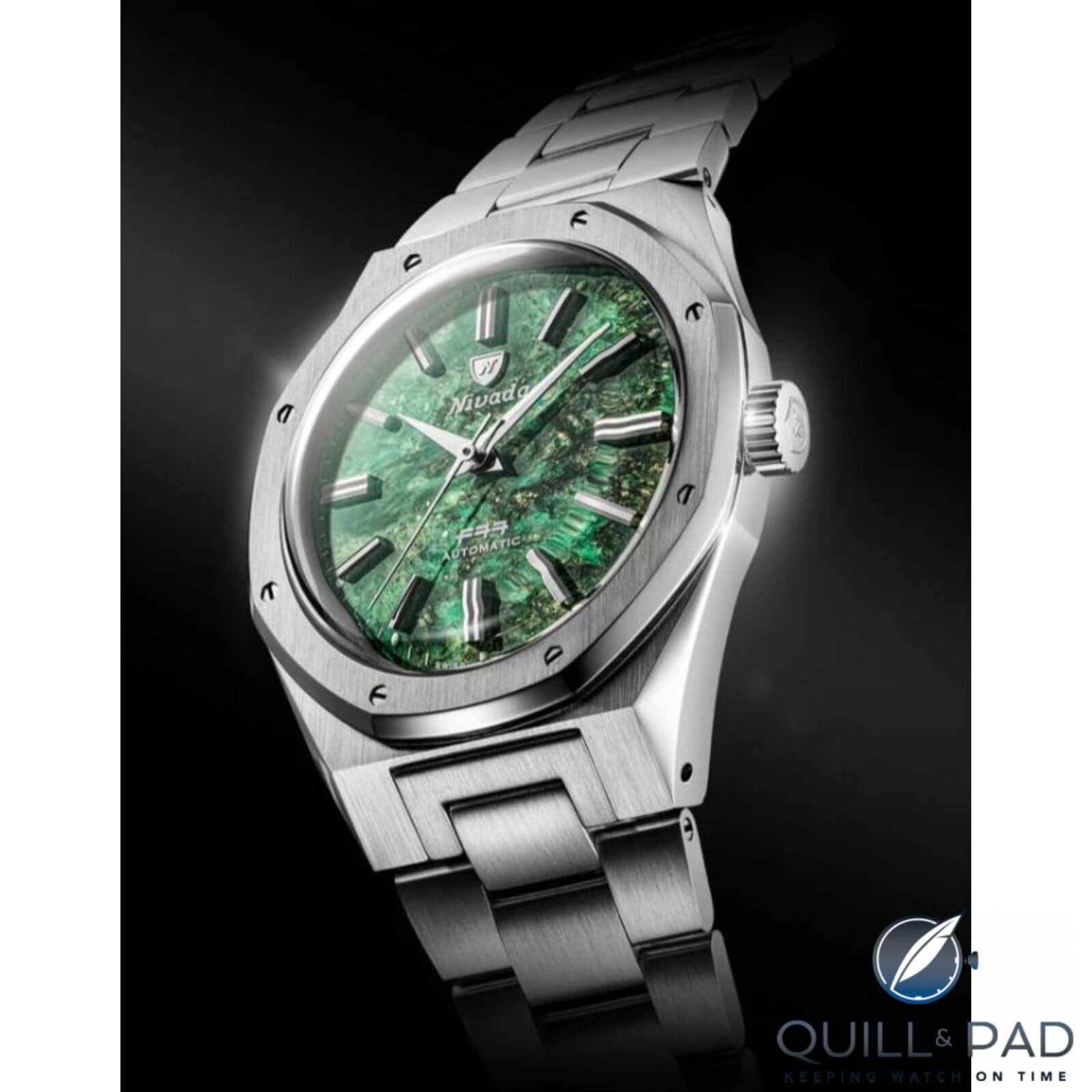
While the case adjustments improve the physical wearing experience of the F77, the new dial colours are bound to get collectors talking. The original reissue leaned heavily on a classic stamped texture mimicking a basket-weave, tressed pattern, which is still very much available, but the brand has now ventured into the captivating world of exotic stone. The natural black Onyx dial is quite the spectacle, absorbing light rather than reflecting it – its surface so rich and dark it resembles a pool of spilt ink.
For those looking to fully embrace the 70s aesthetic, the Onyx dial is also available housed in an 18ct yellow gold-plated steel case. If the deep void of Onyx is too sombre, however, the green Aventurine offers a vastly different mood, and is famed for its natural shimmer. The microscopic inclusions within the stone catch the light, creating a refined sparkle that feels alive on the wrist. And then there’s the meteorite option, displaying the crisscrossing Widmanstätten patterns formed by millions of years of slow cooling in the vacuum of space.
To complement these new, cleaner dial surfaces, Nivada Grenchen has chosen to completely overhaul the handset, replacing the blocky baton hands seen in the first generation with some elegant Dauphine-style hands that gracefully sweep across the dial. Their sharp, faceted edges catch ambient light beautifully, while a generous application of Super-LumiNova ensures excellent legibility long after the sun has set.
The Soprod P024
Nivada Grenchen has sensibly chosen not to overcomplicate the mechanics of these F77 MKII. The Soprod P024 sits beneath a steel caseback, beating at a standard frequency of 28,800 vibrations per hour and ensuring a smooth sweep of the central seconds hand. While its 38-hour power reserve is perhaps considered a little pedestrian by some, it’s entirely adequate for a timepiece designed for daily wear. For those who enjoy watching the dance of a mechanical movement unfold, Nivada Granchen also offers ‘Open Heart’ variations of the MKII, featuring a fractured dial aperture and an exhibition caseback that reveals the oscillating weight and the beating balance wheel within, all while upholding a water resistance of 100 metres.
The Refined Bracelet
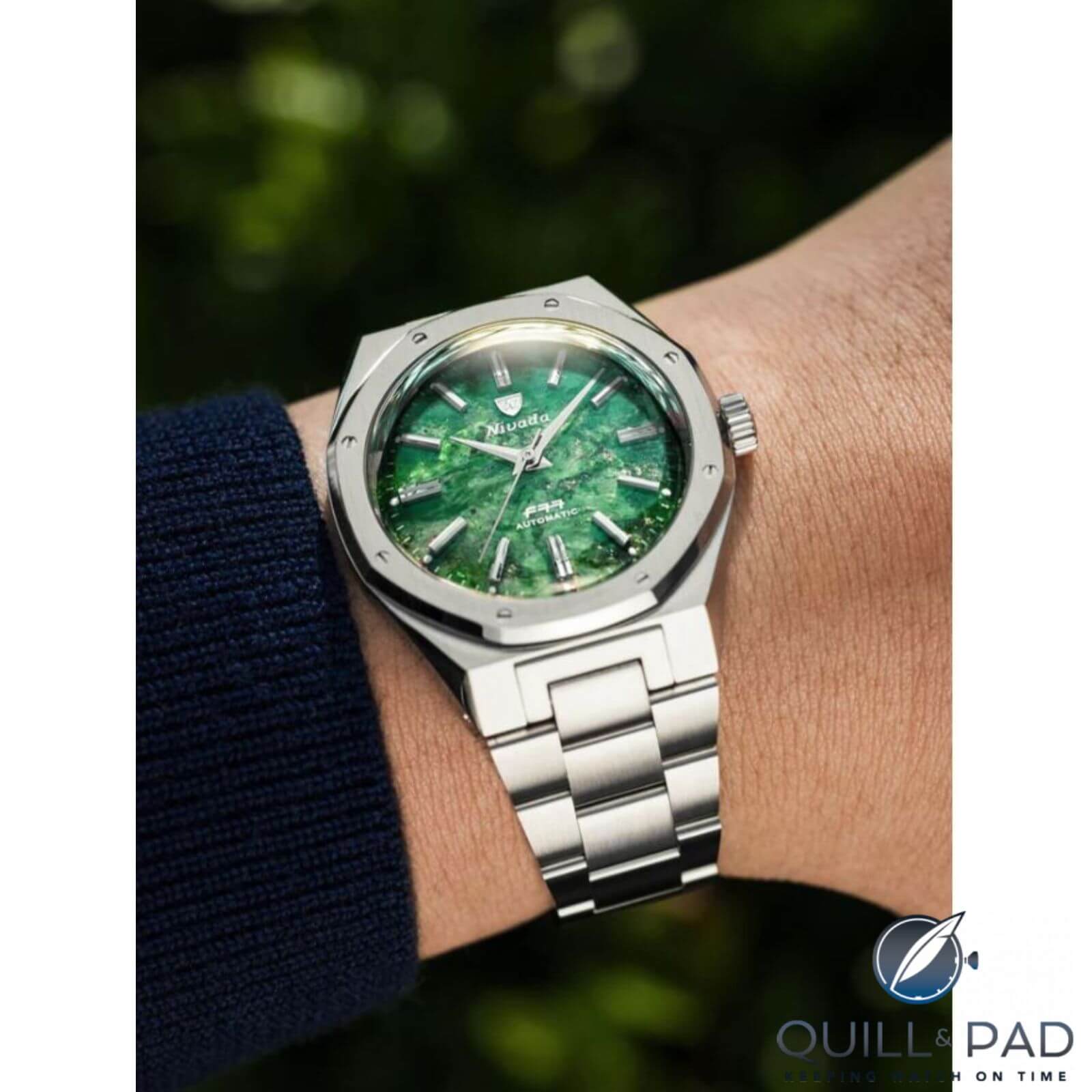
The success of an integrated sports watch lives and dies by the quality of its steel tether, and in this case, the MKII introduces a redesigned three-link structure focused entirely on improving physical ergonomics. The articulation between the links feels smoother, allowing the metal to drape over the contours of the wrist. The finishing appears to match the case closer than ever in this new generation of F77 watches, with heavy vertical brushing offset by highly polished bevels on the outer edges of the links.
Final Thoughts
Iterating on a super popular design is always a delicate task for any manufacturer. Change too little, and collectors claim you’re simply resting on your laurels too much. Change too much, and you risk alienating your core fanbase. With the Nivada Grenchen F77 MKII, the brand has navigated this tightrope with remarkable poise, trimming the case thickness and re-profiling the lugs for a leaner profile. Introducing the elegant Dauphine hands and leaning into natural stone dials are two more incredibly smart moves by the watchmaker, proving that elevating the F77 from a great vintage reissue to a contemporary sports watch has well and truly paid off. Ultimately, the F77 MKII tips its hat to its nineteen-seventies roots without ever feeling trapped by them, stepping up to answer the exacting standards of today’s enthusiast. Frankly, this thoughtful evolution could not have been timed any better.

Also read this

