
Hong Kong: It’s All About Energy
Trade fairs remain a powerful tool for commerce in many industries, especially when it comes to fashion of all kinds, including watches. Not all fairs are alike; each has its own personality, often reflective of the local ecosystem. While the Geneva Watch Days seem at times akin to a religious ritual, all carpeted floors, hushed conversations, and Gallican solemnity, on the other side of the world, the Hong Kong Watch & Clock Fair offers something else entirely: a raucous, high-energy experience somewhat akin to a large, open-air market. Or, as one might say, a party with benefits.
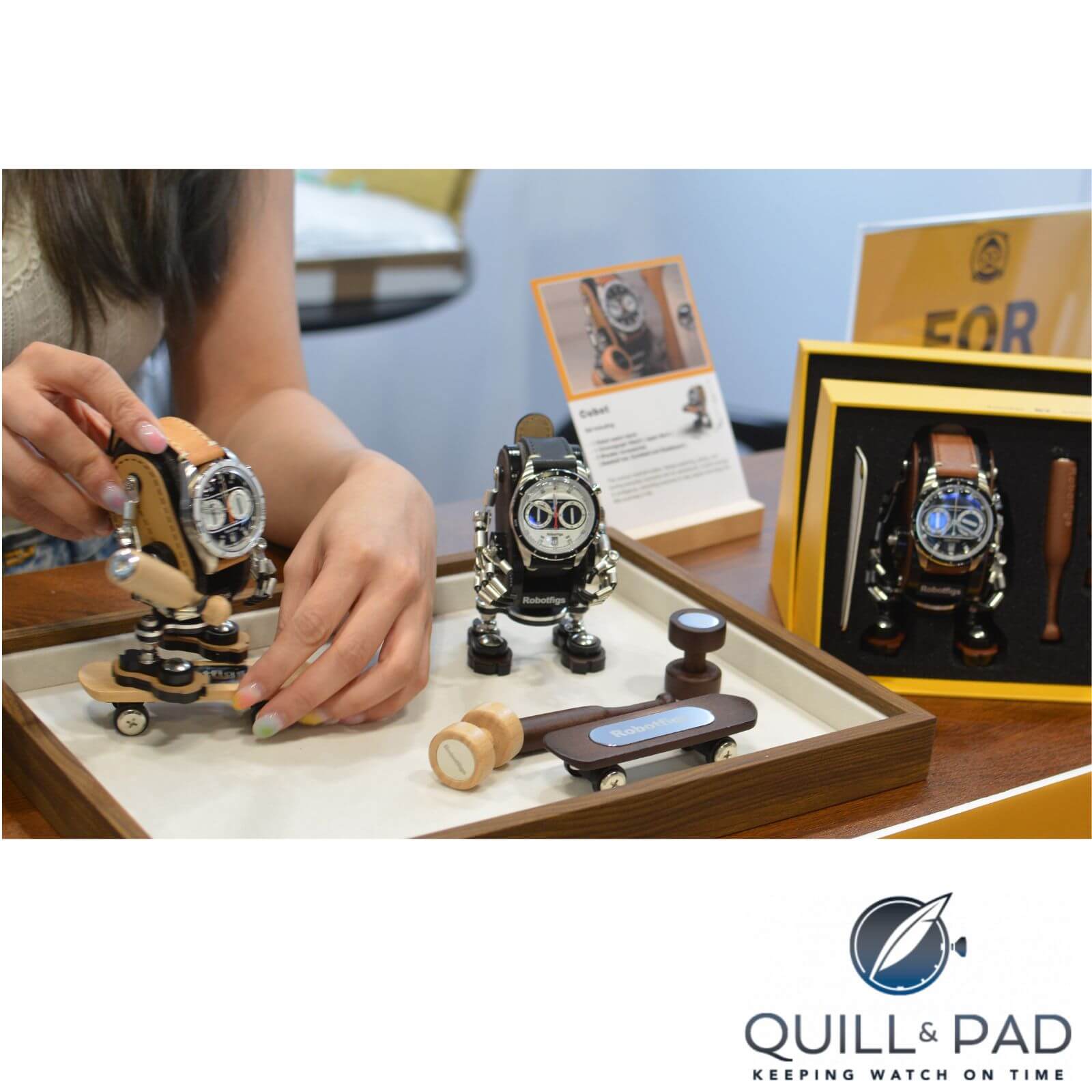
Robotfigs: attracting the young and bold
As mentioned in an earlier piece, this fair is not just about the finished products. It is about the value chain and, in some ways, about the consumer experience itself. This might explain why, on the first floor of the Convention Centre, a sprawling hall houses hundreds of enterprises cheek by jowl. Here, small businesses selling watch peripherals, such as straps, winders, and display cases, sit alongside industrial powerhouses like the movement-builder Peacock. You will find tool-makers, strap shops, specialists in sapphire crystal products, makers of imaginative and occasionally kitschy packaging solutions, and, of course, row upon row of manufacturers specializing in OEM/ODM products: customizable watches, ready for any occasion, made quickly and in volume.
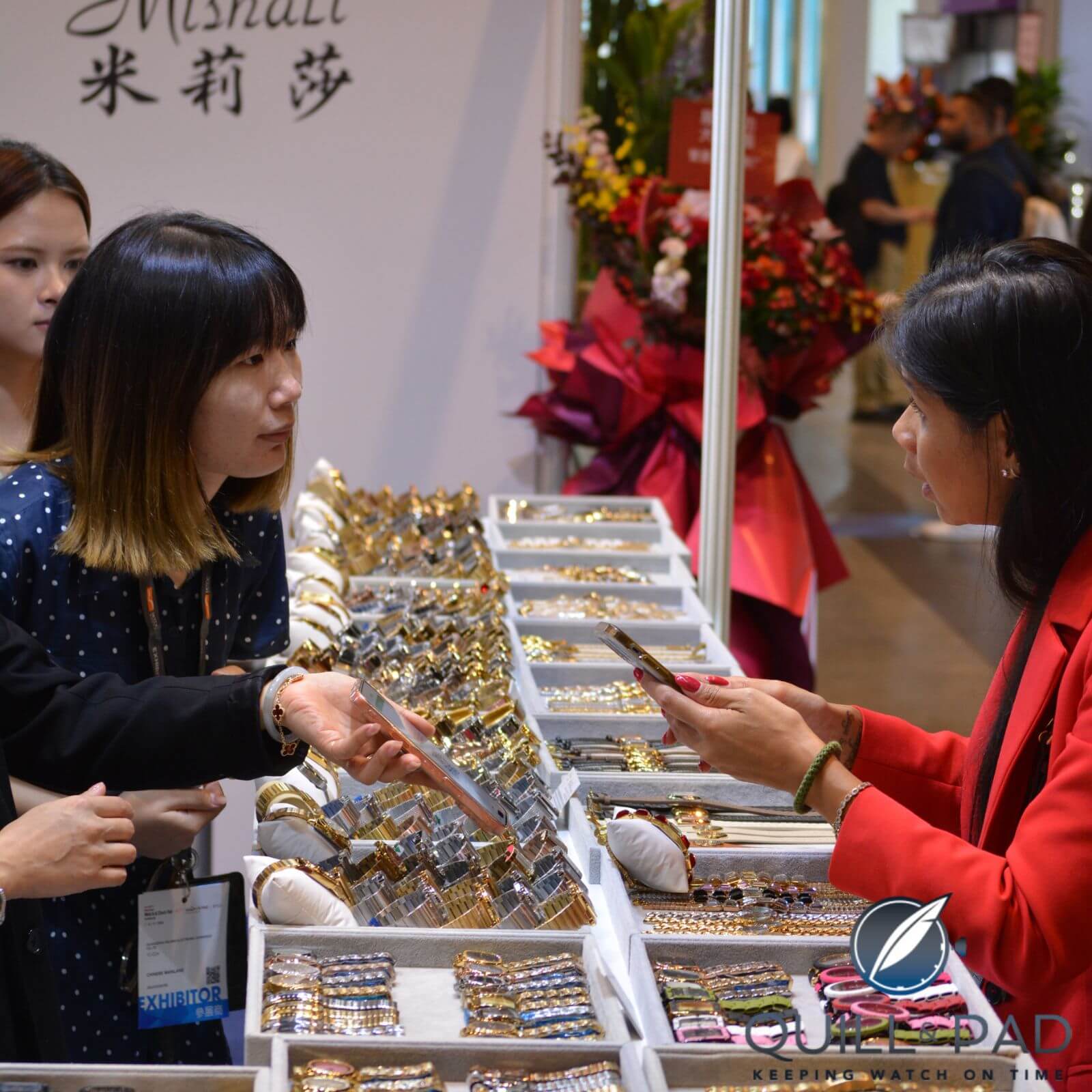
OEM and ODM companies are still at work
Changing focus
Three years ago, at my first fair, OEM/ODM was still the dominant topic of conversation. For those not in the know, it is essentially the term for the white-label manufacturing that has long been Hong Kong and China’s claim to fame, a claim that had a deleterious effect on the nation’s reputation as the source of cheap things, including watches. Nowadays, however, the spotlight has shifted. More focus is on finished products and the Salon de Time, where brands actually present themselves, not just their production capabilities.
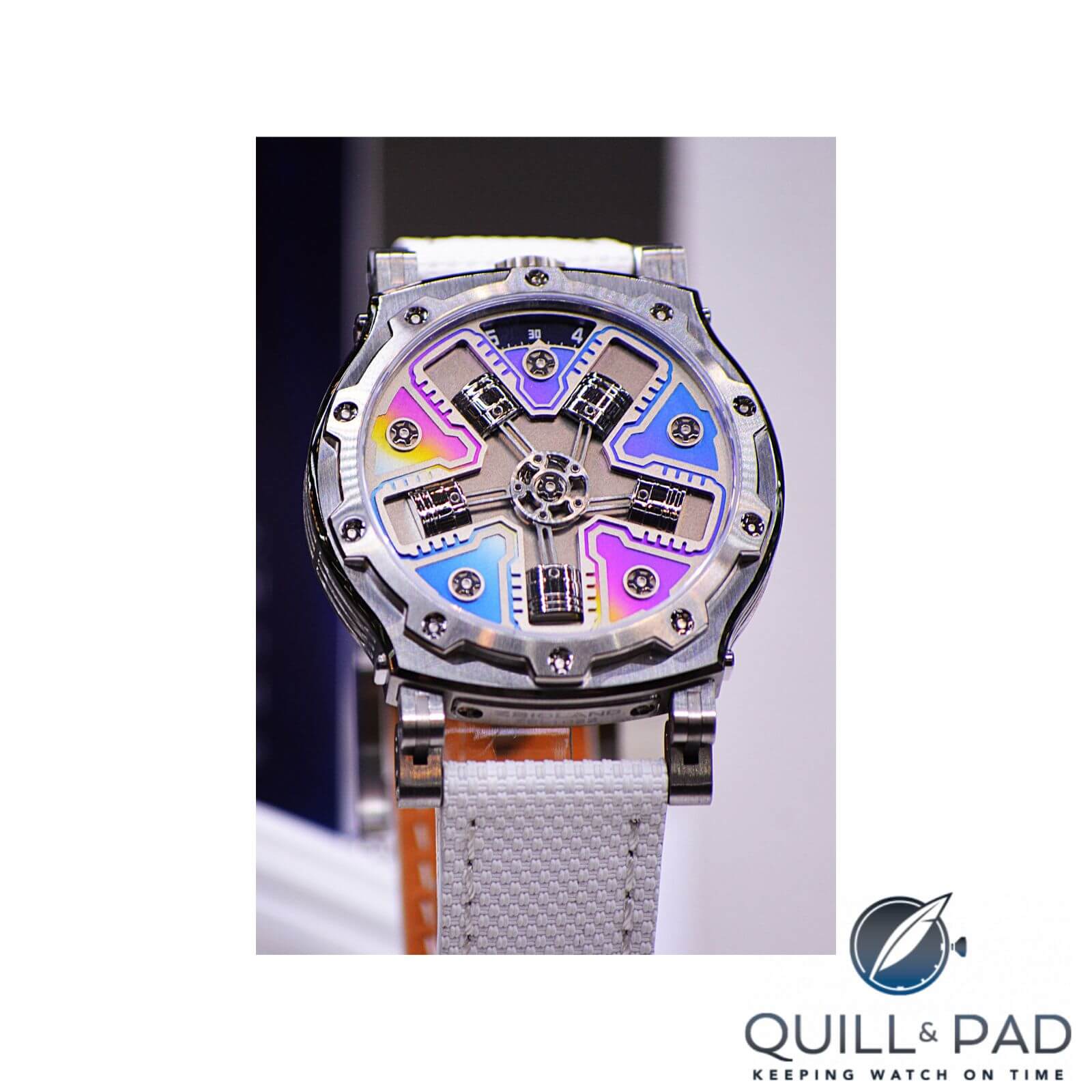
Sbioland’s homage to the radial airplane engines- on its way to this year’s GPHG
That shift is not accidental. According to Martin Ko, a veteran of the industry and a wholesale distributor of small Swiss brands like Berney and ZRC, with over three decades of experience, the transformation in Chinese watchmaking runs deep. “I’ve been in business for more than 30 years,” he told me, “and there is a trend and a fact that they are really improving, be that the movement, the design, and the production quality.” Ko points out that Hong Kong and China have long served international brands by supplying high-quality components such as cases, bracelets, dials, and crowns for many top luxury labels. But now, medium-tier brands are also beginning to source from Chinese factories. More significantly, Chinese enterprises are no longer content with simply producing for clients. “They will start their own brand,” Ko observes. “And I really see that they’re improving in design, creativity, and quality. That’s why they have the confidence to believe that this is the role for them to move on like this. It’s not only about doing production for the clients; this is more long-term for their own brand. They start to have their own distribution channel because the domestic market is very strong.”
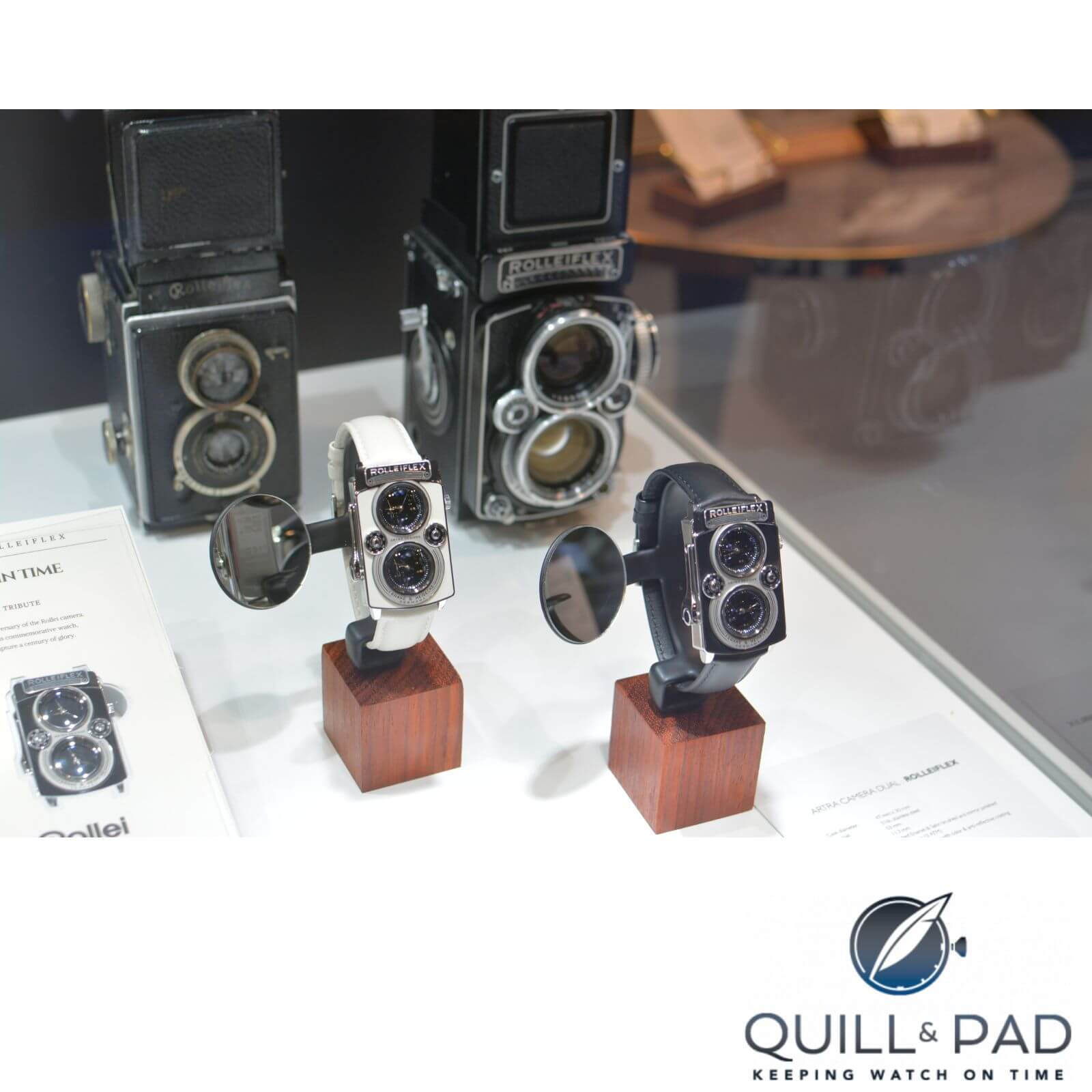
Rolleiflex watch by Artra Designs
Two elements are driving the rise of Chinese watchmaking besides simple improvements in manufacturing, and they were visible at the fair. The first is the sheer creativity of many young entrepreneurs who focus heavily on design. Take Artra Designers, for example, which was founded in 2018 by a group of photographers, architects, and product designers in Hong Kong. The Camera One features a simple animation: a shutter that can be opened with a crown at 11 o’clock, while the bezel and the flange show the ISO values, shutter speeds, and f-stops, respectively. Their recent watch is a collaboration with Rolleiflex, which is celebrating its 100th anniversary. The idea is clever, since the two iconic lenses of the old camera are ideal for two time-telling functions.
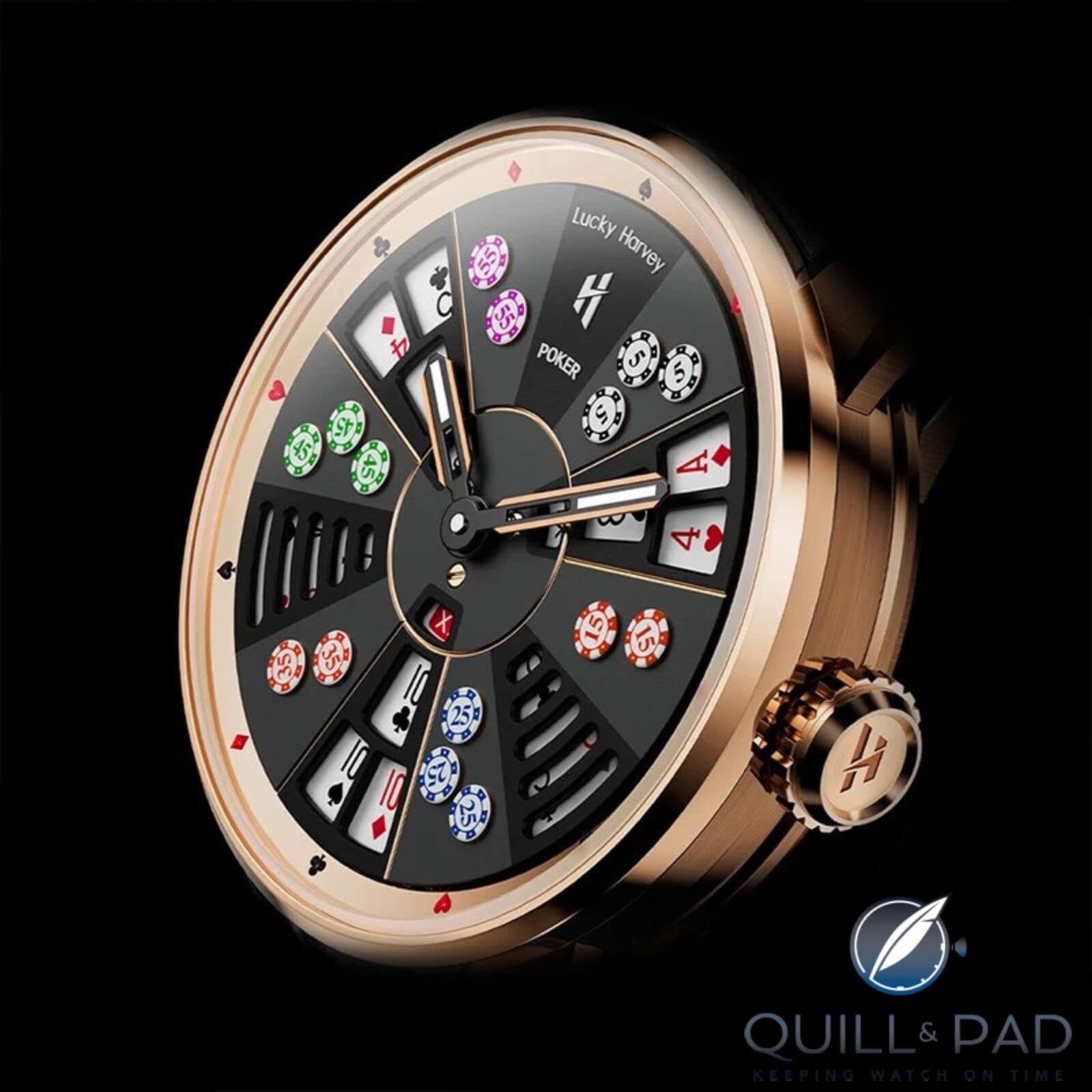
Lucky Harvey-The three-card poker watch
There are many others, of course. As one representative for Lucky Harvey explained, every watch comes with some sort of animation, like a dragon dropping a pearl out of its mouth once an hour, or a game of roulette, or an hour repeater. And all at affordable prices. You can’t go wrong.
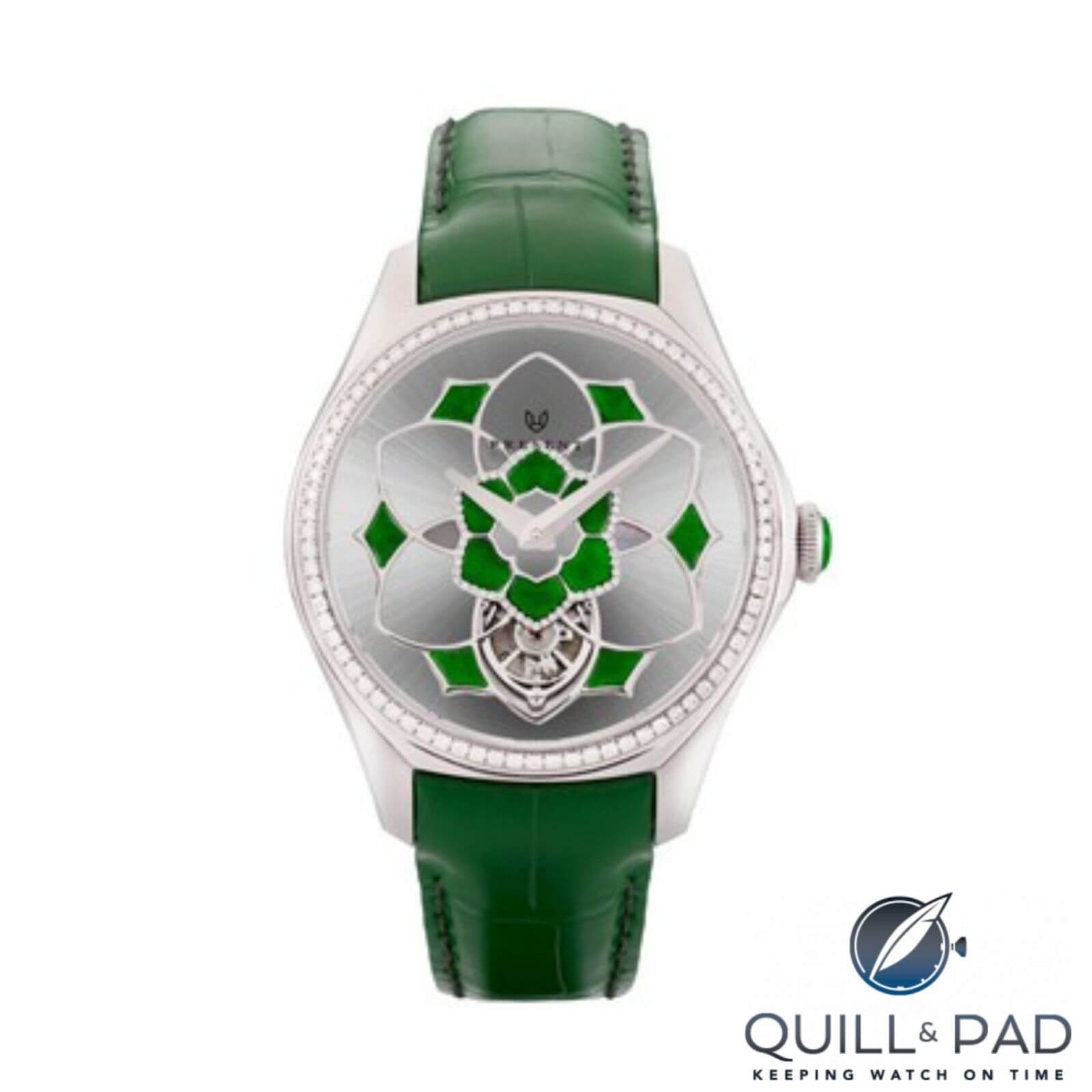
A national wave grabbing the attention-Present’s Lotus watch
The second element is known as guochao and was referred to by the China Daily as “China chic,” though it is much more than that. Translated as “national wave,” this trend finds its roots in anything from streetwear to museums. I would define it more as a natural evolution in design, when a country gains greater confidence in its own culture. It was visible in many different brands. Some are quite obviously China-specific, like the country’s oldest brand, Shanghai Watch.
Founded in 1955 as the result of a competition among cities for which could produce the first genuinely Chinese watch, Shanghai has made a name for itself with artistic pieces featuring paintings and, more recently, watches with métiers d’art that celebrate the city. In addition to celebrating a merger with Sea-Gull, maker of movements and originally one of Shanghai’s rivals in the 1950s, the brand also presented their latest model in the Originate line, which recalls the recently restored old City Hall, a large square building with gently indented corners.
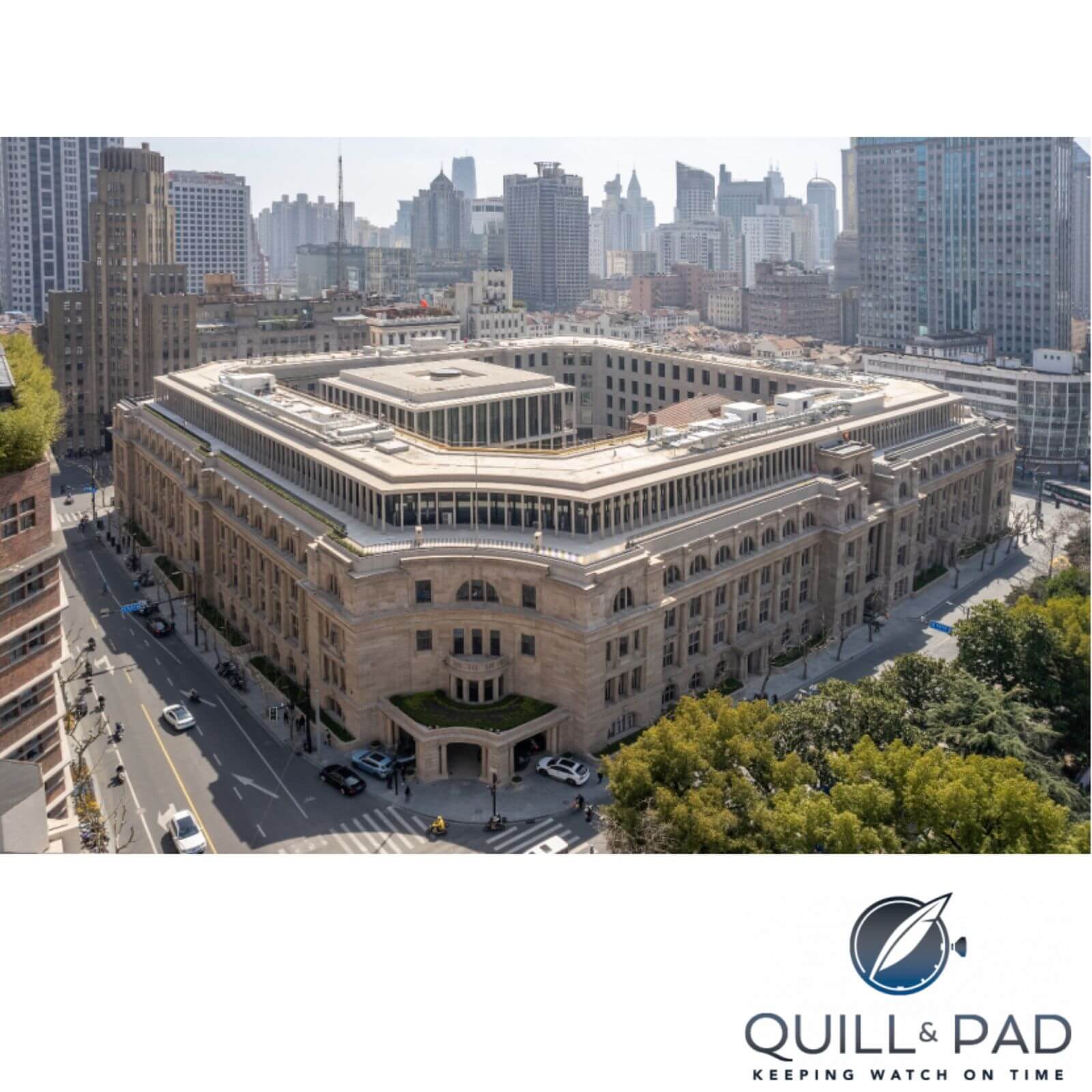
Shanghai City Hall
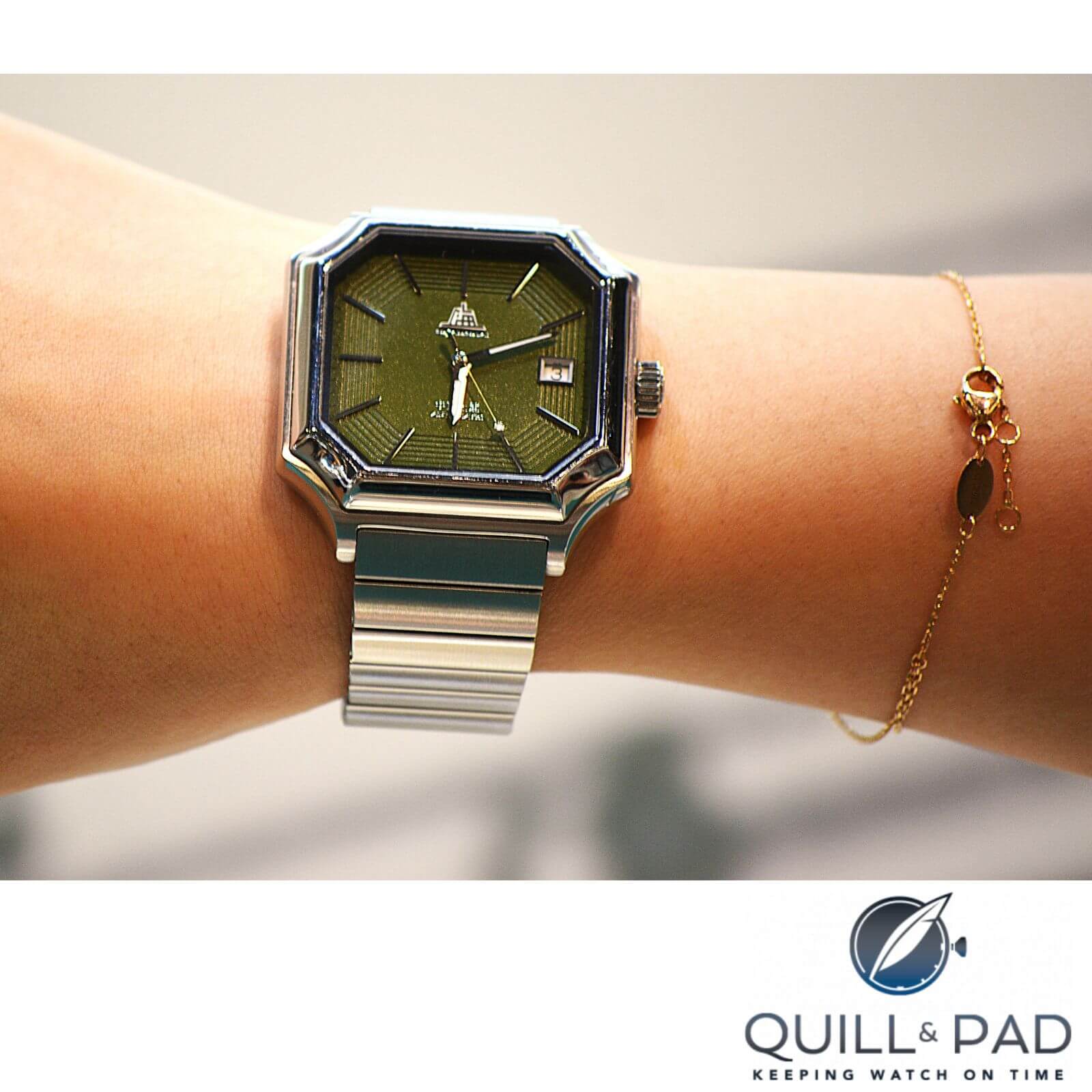
Originate watch
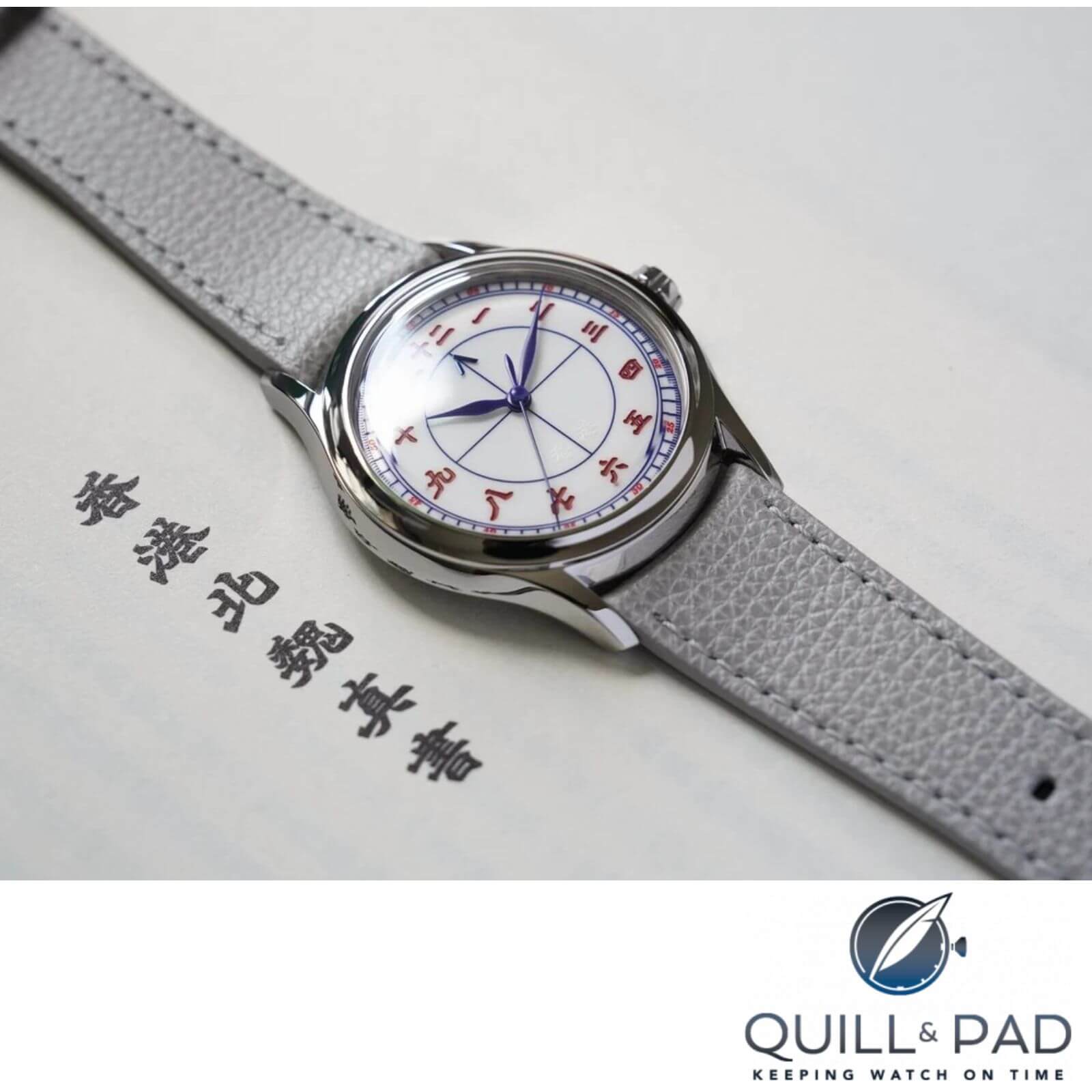
There are other brands, of course, that celebrate cities, some more subtly. Thomas Lee, young founder of Aision, saw images of Hong Kong’s colorful street signs from the 1960s and decided to use their font for the numerals of his latest model, placing them on a sector dial. Hidden in a far corner of the Salon de Time, too, I found Hipine and a watch that tells time with two lateral disks on the dial, which is occupied by a replica of the Beijing Palace.
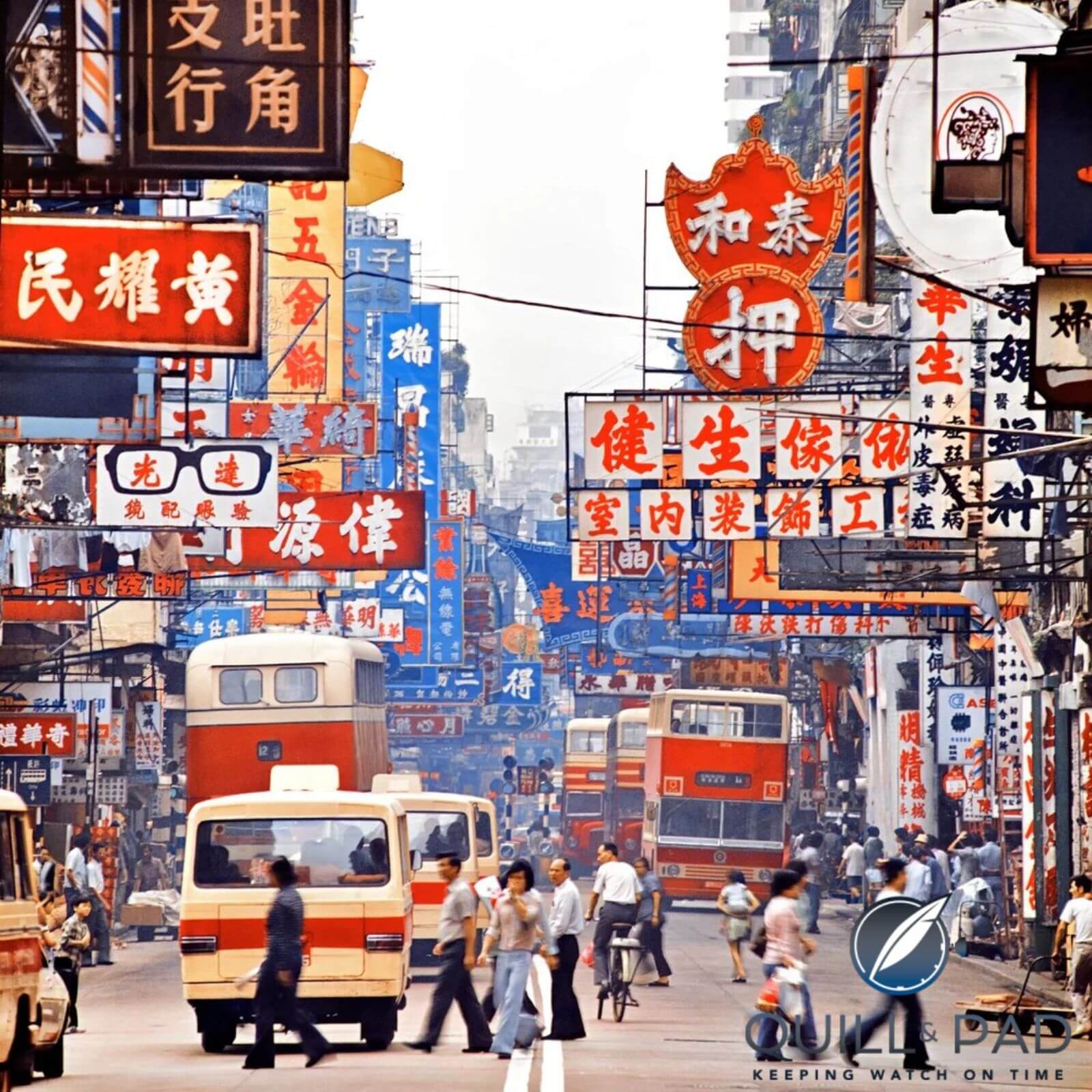
Aision Zansyu-remembering Hong Kong in the 60s PLEASE ADD Hong Kong shop signs
Hipine Beijing Palace watch
Influencers, Lights, and “Stand-Around Advertising”
One thing is sure: while China boasts an ancient culture and a great respect for tradition, its young people do not let themselves be tied down by creaky customs. In the Salon, the influencer economy was in full motion. Content creators set up small stations with ring lights and gimbals, staging mini-presentations for their followers, gesticulating and speaking vigorously in a way that is reminiscent of megachurch pastors in rural America.
One influencer I spoke to is very much tied to a brand called Boderry, founded by a man named Gary, and offers affordable field watches with special “survival” straps built with a whistle, a tiny saw, ropes, and more. This is a far cry from the polished luxury of Geneva, but perfectly in tune with the fair’s democratic, anything-goes spirit.
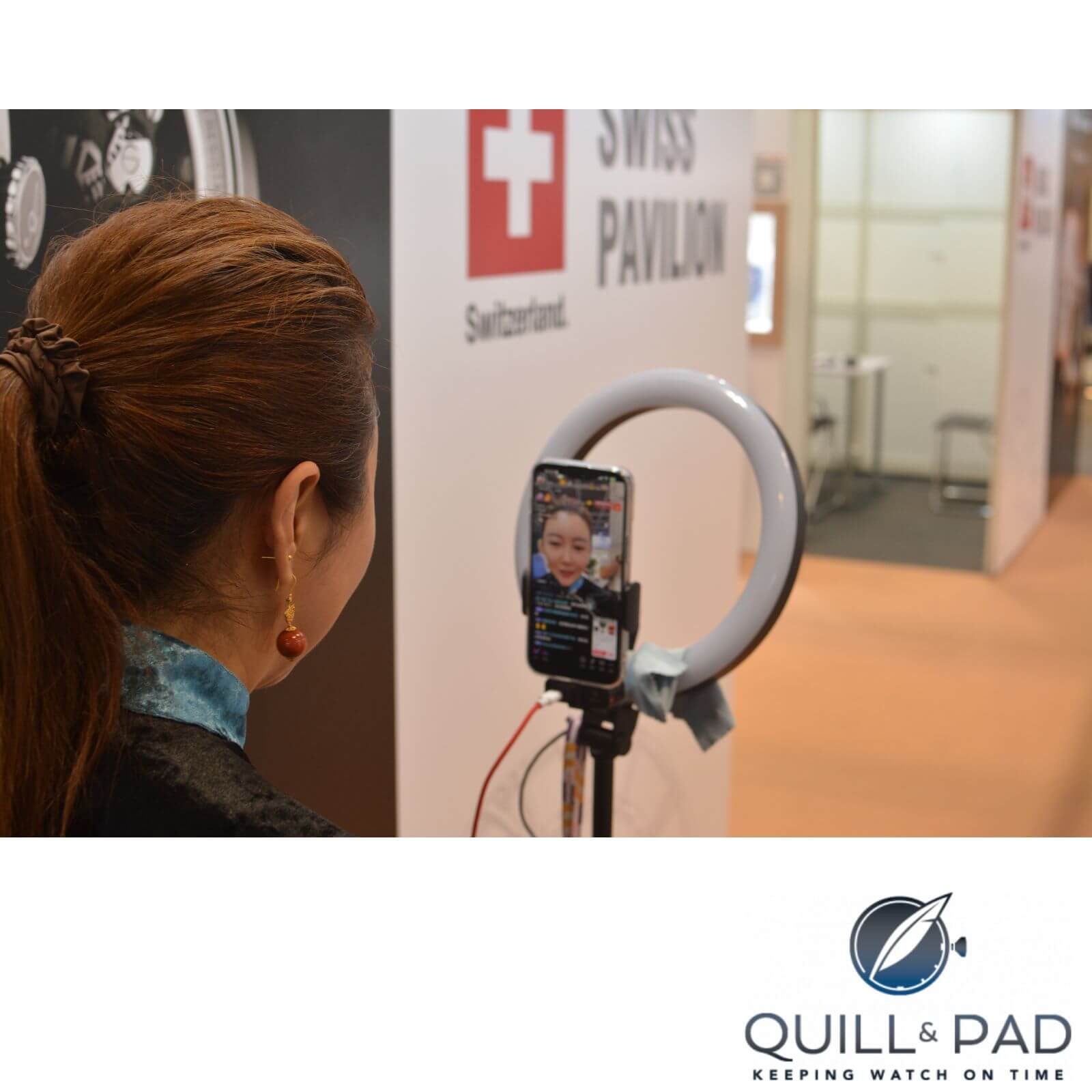
Influencer at work

One afternoon, great screams filled the Salon from the stage in the corner. The groupies of local singer Vic Teo had gathered, phones raised, shrieking as their idol promoted a tourbillon watch, the FaLa La (a play on the word fly) jointly created with the local brand Memorigin. For a moment, the fair felt less like a trade event and more like a rock concert. It was a far cry from what many of us who track watches are used to. Whether this is the future of watch fairs or merely a passing sideshow is anyone’s guess. But one thing is certain: the HKWCF has never been boring.
The HKWCF has always been a more democratic affair than its European counterparts, less velvet rope, more elbow room. The contrast with the Swiss Independent Watch Pavilion, which remained a friendly and sober affair, was palpable. It stood there with its fourteen brands as a reminder of the summit of what the industry can achieve when it takes the time to really work out the details.
And while the Chinese watches are gradually finding greater favor with local buyers, Tamdi Chonge Foster, owner of Epos, told me that the respect for the craftsmanship that goes into mechanical watches still holds the favor of Asian buyers. This means, too, that there is still market share to be had. Indeed, at the Asian Watch Forum, Prudence Lai, senior consultant for Euromonitor, unpacked data that suggested that with the rise in prosperity and in spite of dark economic predictions, the desire for watches is still growing, especially in countries like India and the Philippines. And so, the show went on. Deals were struck, components sourced, connections made. And watches were sold.
Read more like this:
A good way to make a watch last forever. Well, almost.
A World in Platinum: The Andersen Genève Communication 45 and the Art of the Worldtimer
Hong Kong: Watch-World’s Other Hub
League of severe decorative style, thanks to the preserved gold part of the 7750
