
Energy Management in Mechanical Watches: The Pulse of Precision
The ticking of a mechanical watch is more than just a sound; it is the heartbeat of time itself. Each tick is a testament to centuries of craftsmanship, where tiny gears, springs, and levers work in perfect harmony.
Beneath the watch’s dial lies a world of intricate mechanics driven by energy.
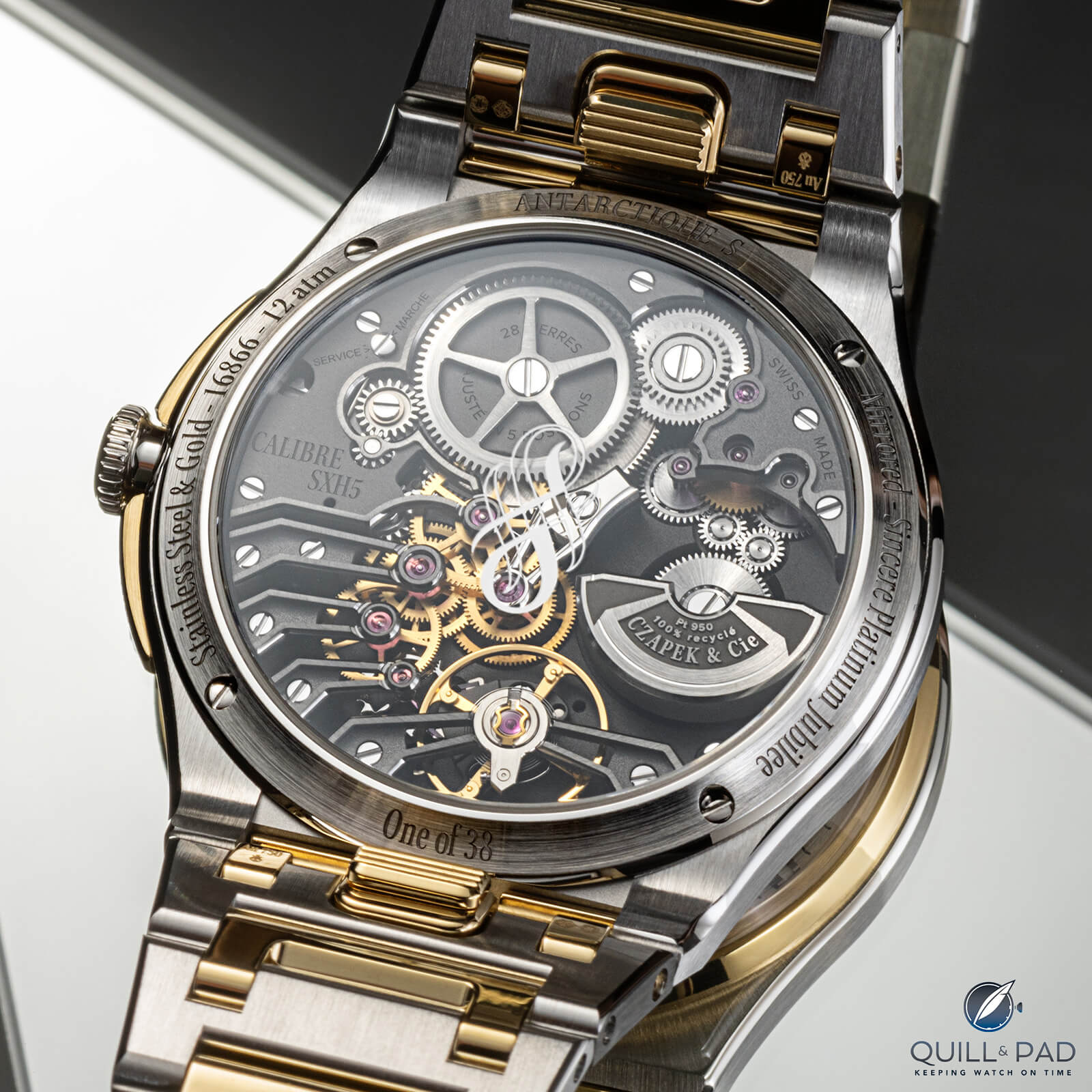
View to the movement through the display back of the Czapek Antarctique S Mirrored Sincere Platinum
This energy is carefully managed to ensure the hands move with unerring accuracy. In this article, we will explore how energy is managed in a mechanical watch, from its creation to its journey through the movement, and how modern innovations have enhanced this timeless craft.
The management of energy in a mechanical watch refers to the control and distribution of the power generated by the mainspring. It is the invisible force that keeps the watch’s gears turning, the balance wheel oscillating, and the hands moving.
Without this controlled energy, a mechanical watch would fail to keep time accurately, its hands faltering or racing ahead.
A watch is only as accurate as its ability to manage energy consistently. If the flow of energy is too strong, the hands will speed up, leading to a fast-running watch. If the energy is too weak, the watch will slow down, lagging behind the true time.
Thus, managing energy is not just about keeping the watch ticking; it’s about ensuring that each tick aligns perfectly with the passage of time.
————————————————————————————————————–



—————————————————————————————————–
Energy in a mechanical watch is created through the simple act of winding. When the wearer turns the crown, the mainspring—a thin, coiled strip of metal—tightens, storing potential energy.
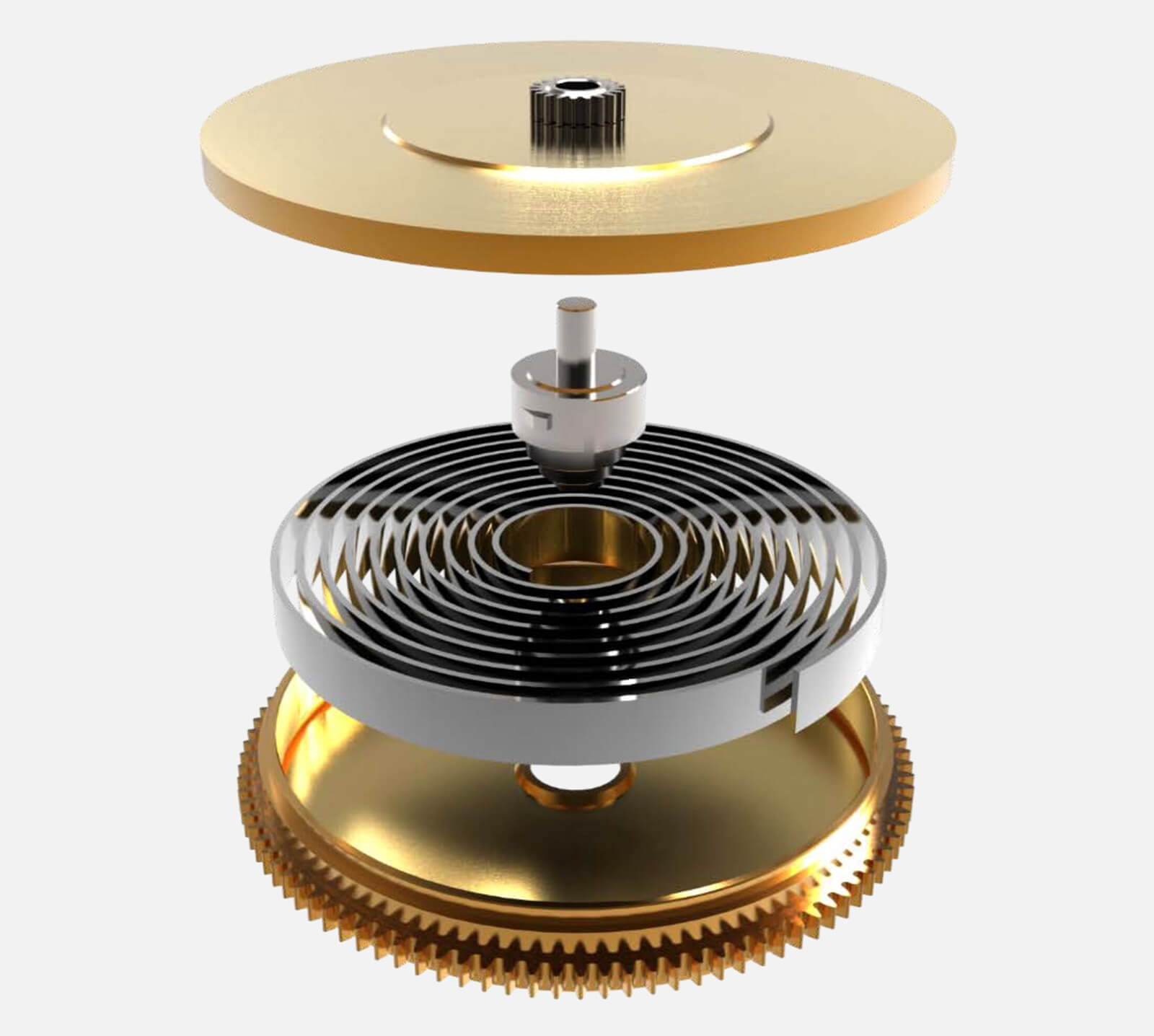
Watch mainspring and barrel
This coiled mainspring is like a wound-up spring toy, ready to release its energy in a controlled manner.
As the mainspring slowly unwinds, it releases this stored energy, which then powers the watch’s movement. The act of winding is the first step in the watch’s energy journey, setting the stage for the precise dance of gears and springs that follows.
In an automatic (or self-winding) watch, energy is created through the movement of the wearer. Inside the watch, there is a small, semi-circular metal weight called a rotor.
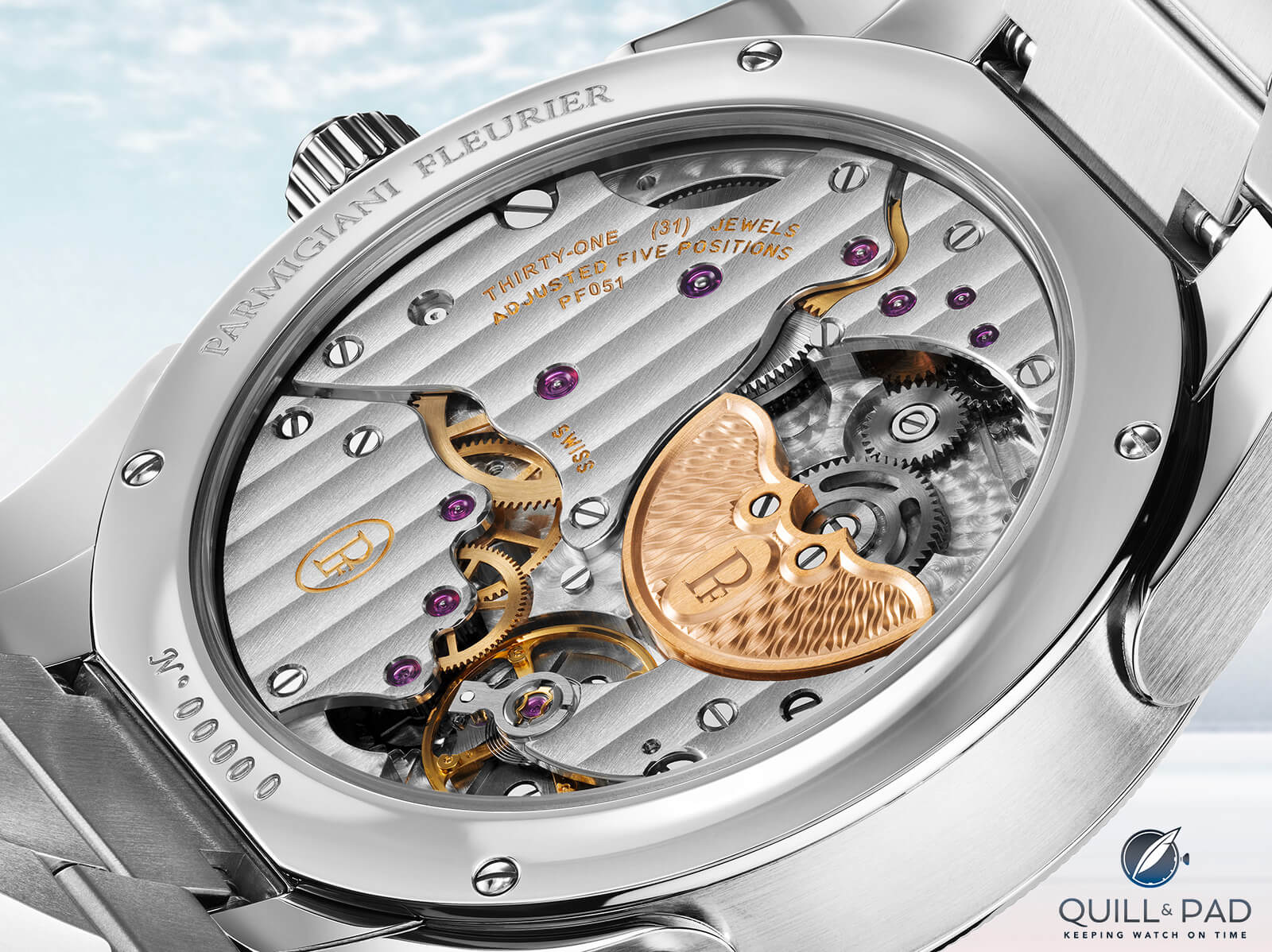
Back of the Parmigiani Fleurier Tonda PF GMT Rattrapante with its gold micro rotor
As the wearer moves their wrist, the rotor spins. This rotor is connected to the movement mechanism and can rotate freely and either winds in one or both directions.
The movement of the rotor winds the mainspring. The rotor needs to have enough mass to rotate efficiently with wrist movement but not be too heavy, as that can cause excessive wear on the movement components.
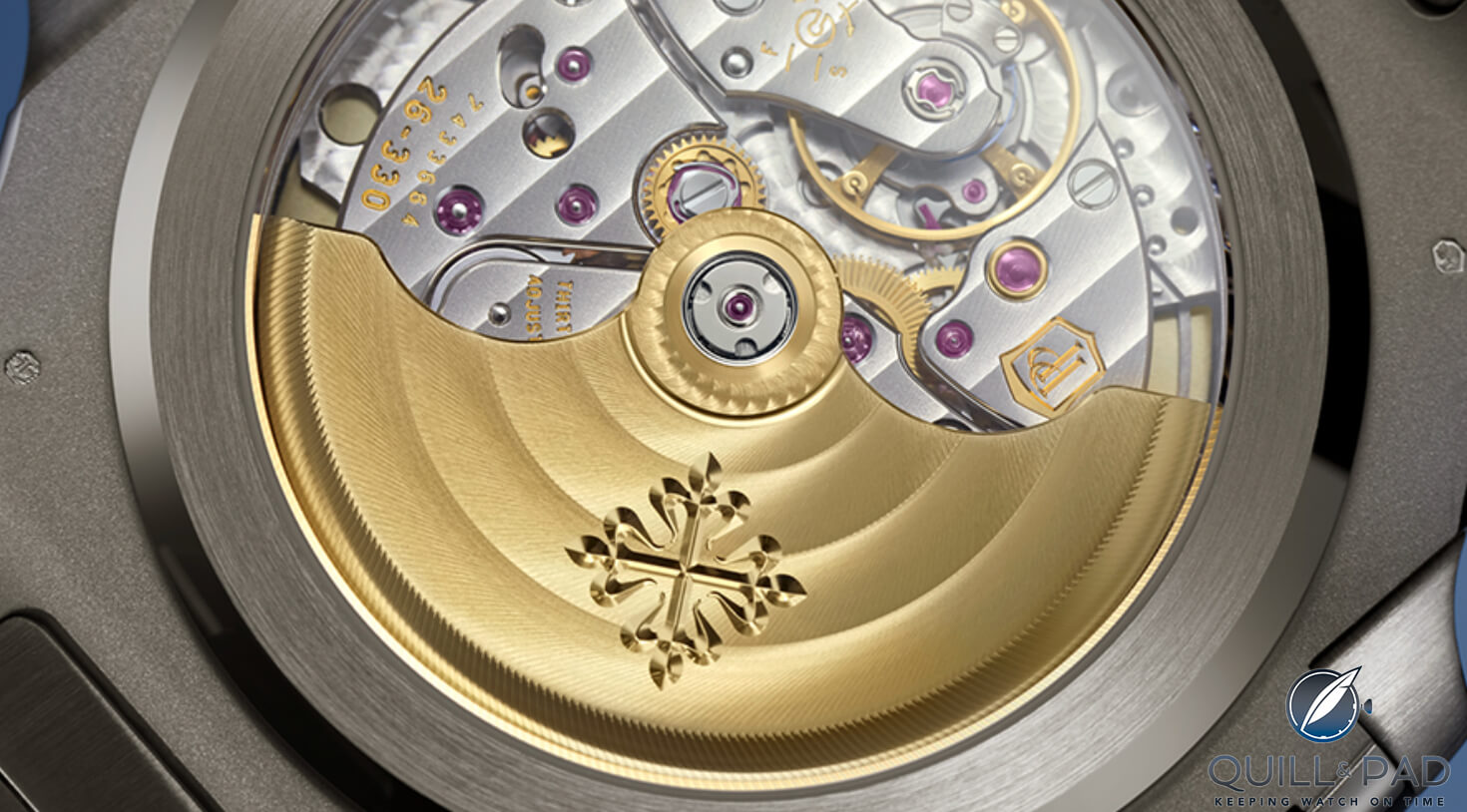
21k gold central rotor by Patek Philippe. The higher density of gold increases the weight and the inertia of the rotor, making it more efficient in winding the mainspring
A well-balanced rotor ensures that it can spin smoothly in either direction without wobbling or creating unnecessary resistance, leading to more efficient winding. Rotors are typically made of durable metals like brass, tungsten, steel, or gold, which provide efficient mass and longevity.
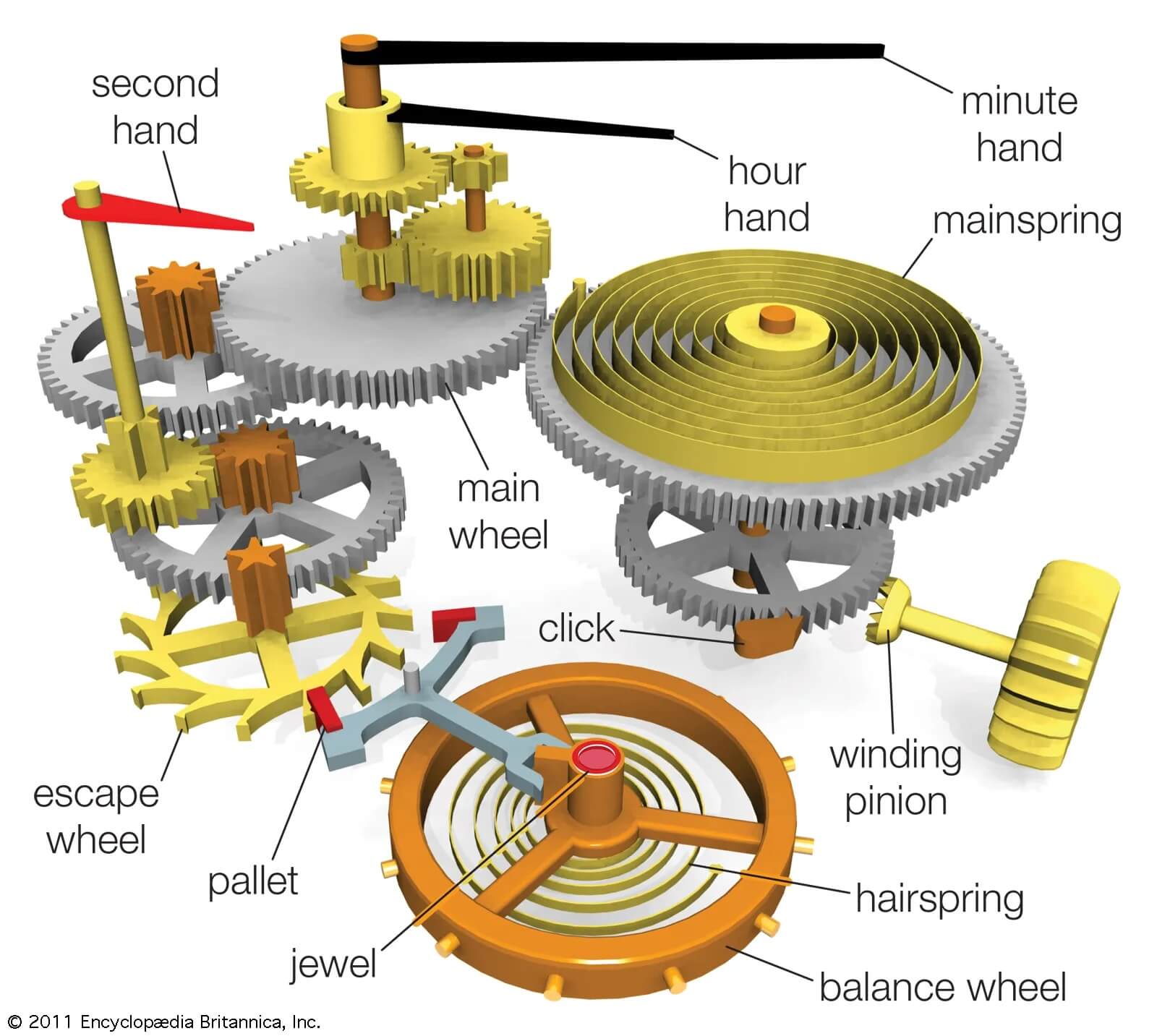
Components of a mechanical watch (image courtesy www.britannica.com)
However, not all of the energy created by the mainspring makes it to the watch’s hands. As energy travels through the watch’s intricate mechanism, it encounters resistance. This resistance comes from friction between the gears, the drag caused by the jewels, and the tension within the balance spring.
These frictional forces act like tiny thieves, stealing away bits of energy as it moves through the watch. This lost energy dissipates as heat, a natural by product of mechanical movement. Minimizing this energy loss is critical for maintaining the watch’s accuracy.
The less energy lost to friction; the more energy remains to drive the hands at a steady, reliable pace.
—————————————————————————————————–


—————————————————————————————————–
Mechanical watches use synthetic jewels (typically rubies or sapphires) as bearings at key pivot points in the movement to minimize friction between moving parts.
Jewels are extremely hard, smooth, and wear-resistant, allowing for smoother movement and less energy lost to friction.
Special watch oils are applied at key points in the movement to reduce friction.
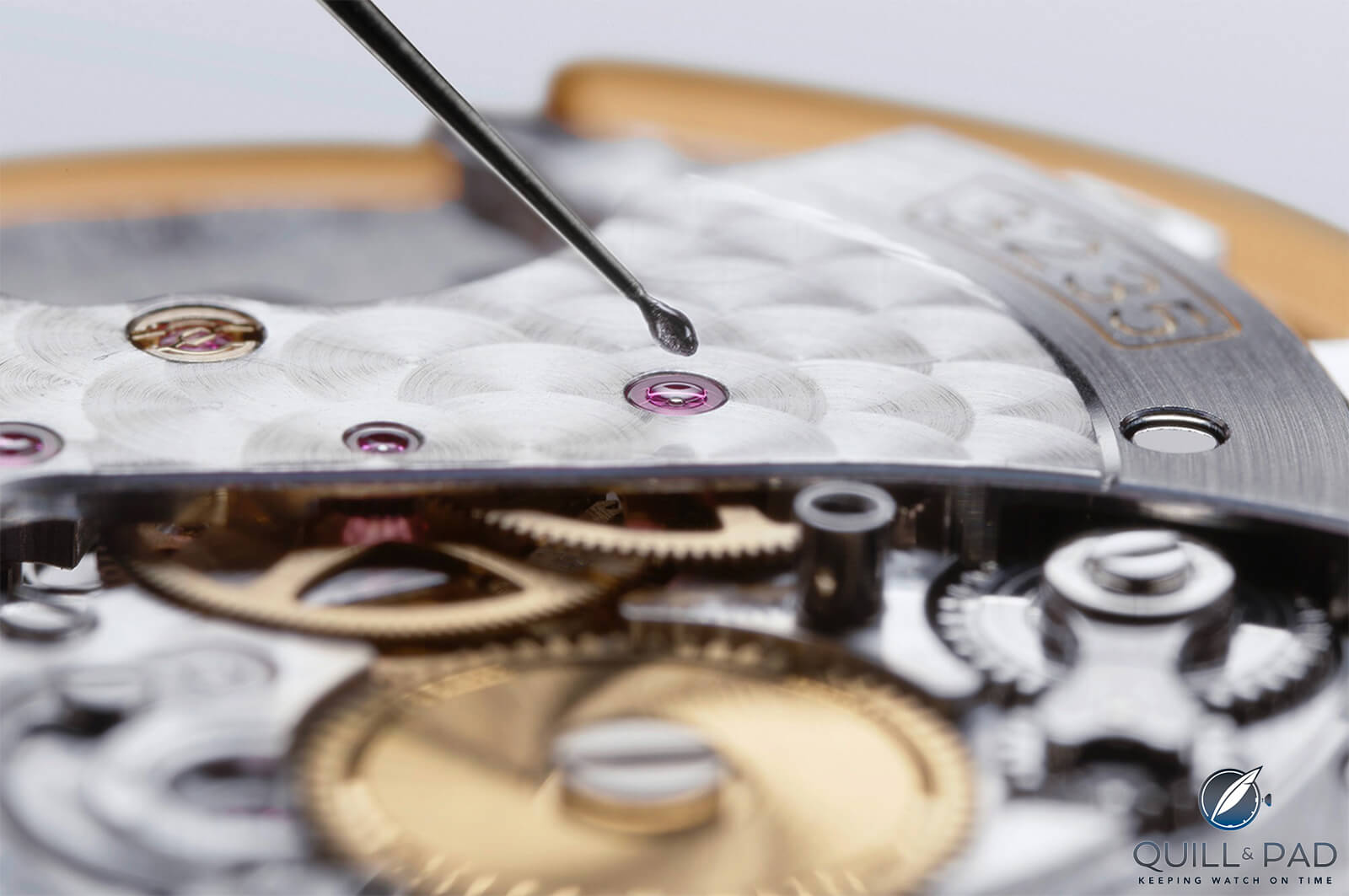
Oiling a jewel at Rolex. High-performance lubricants are used in the watch’s movement to ensure that the various components run smoothly and accurately.
Over time, oils can dry out,degrade, and move out of position, so regular servicing ensures that the watch remains properly lubricated and reduces wear and energy loss. Using gears with high precision, smooth surfaces, and fine teeth reduces friction as they mesh. The smoother the interaction between gears, the less energy is wasted.
Continuing in its journey, the energy first moves to the center wheel, which turns once per hour, driving the minute hand. From the center wheel, the energy flows to the third wheel, and then to the fourth wheel, responsible for driving the seconds hand.
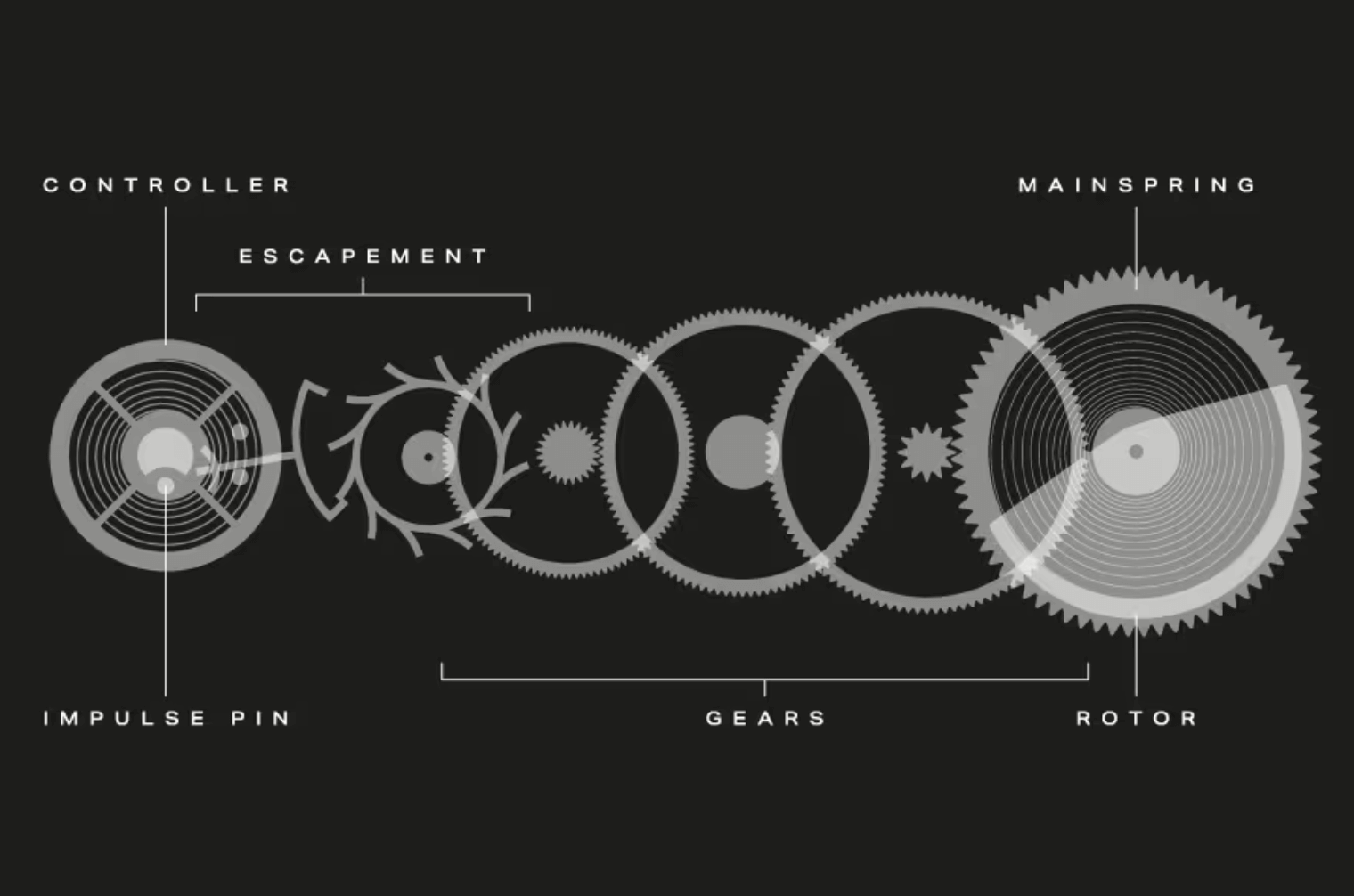
The gear train is a series of interlocking gears (center wheel, third wheel, fourth wheel, escape wheel) that transmit energy from the mainspring to the escapement (image courtesy watches-of-switzerland.co.uk)
Each wheel is meticulously designed, engineered and crafted to control the speed and force of the energy, ensuring that the hands move smoothly and at the correct speed. This controlled flow of energy is what allows a mechanical watch to keep time with such precision.
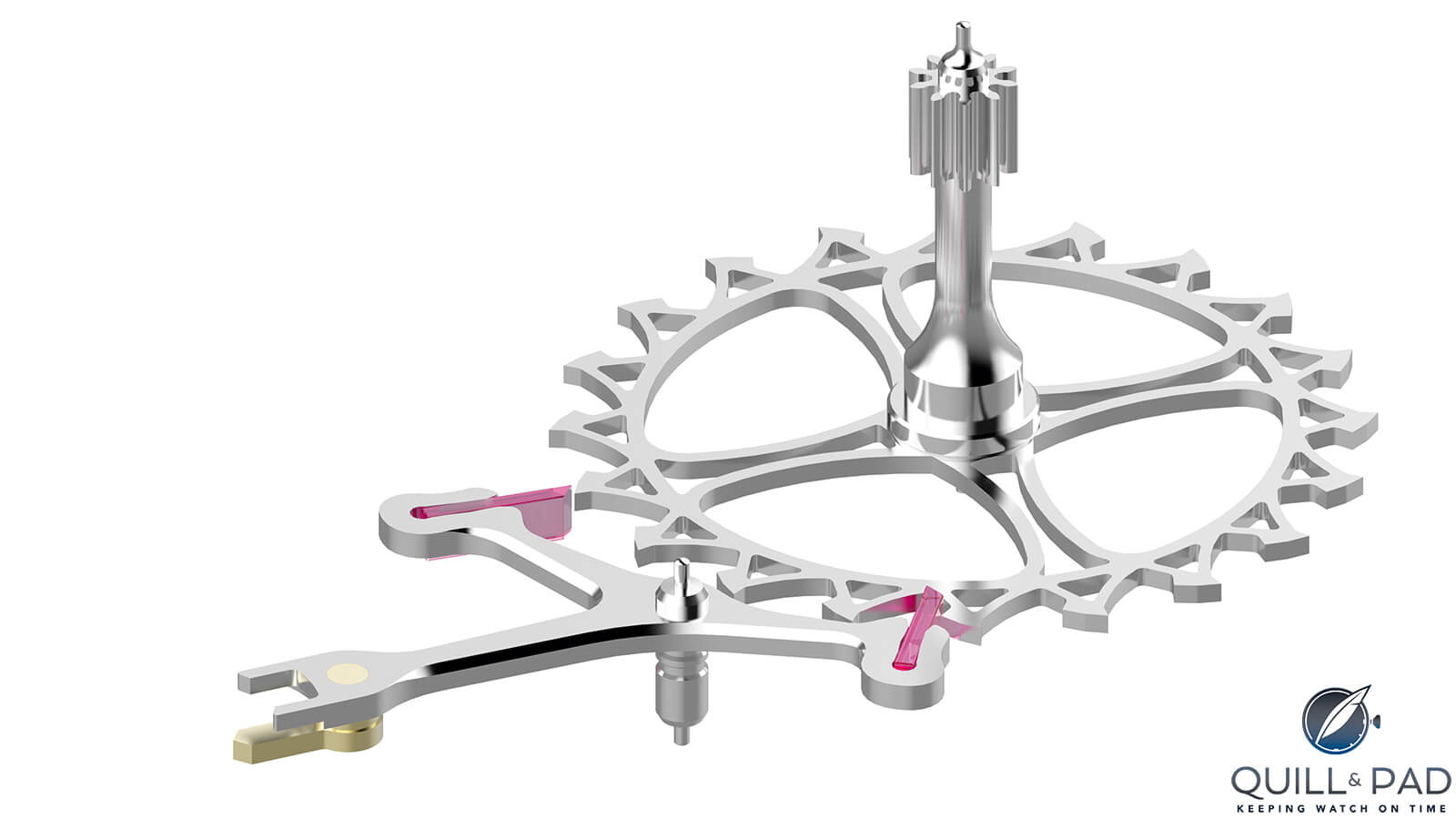
Rolex Chronergy escapement
The escapement is the key regulator of this energy flow. It acts like a gatekeeper, allowing only a precise amount of energy to pass through with each oscillation of the balance wheel. The balance wheel, a small, oscillating wheel, swings back and forth, driven by the energy released from the escapement.
The oscillation of the balance wheel moves the pallet fork back and forth, which locks and unlocks the escape wheel. It is the tiny jewels on the pallet fork hitting the escape wheel that produces the ticking sound of a mechanical watch.
Each regular (isochronical) swing of the balance wheel allows the gear train to rotate by a tiny, measured amount, ensuring that the hands move in perfect synchronization with the passage of time.
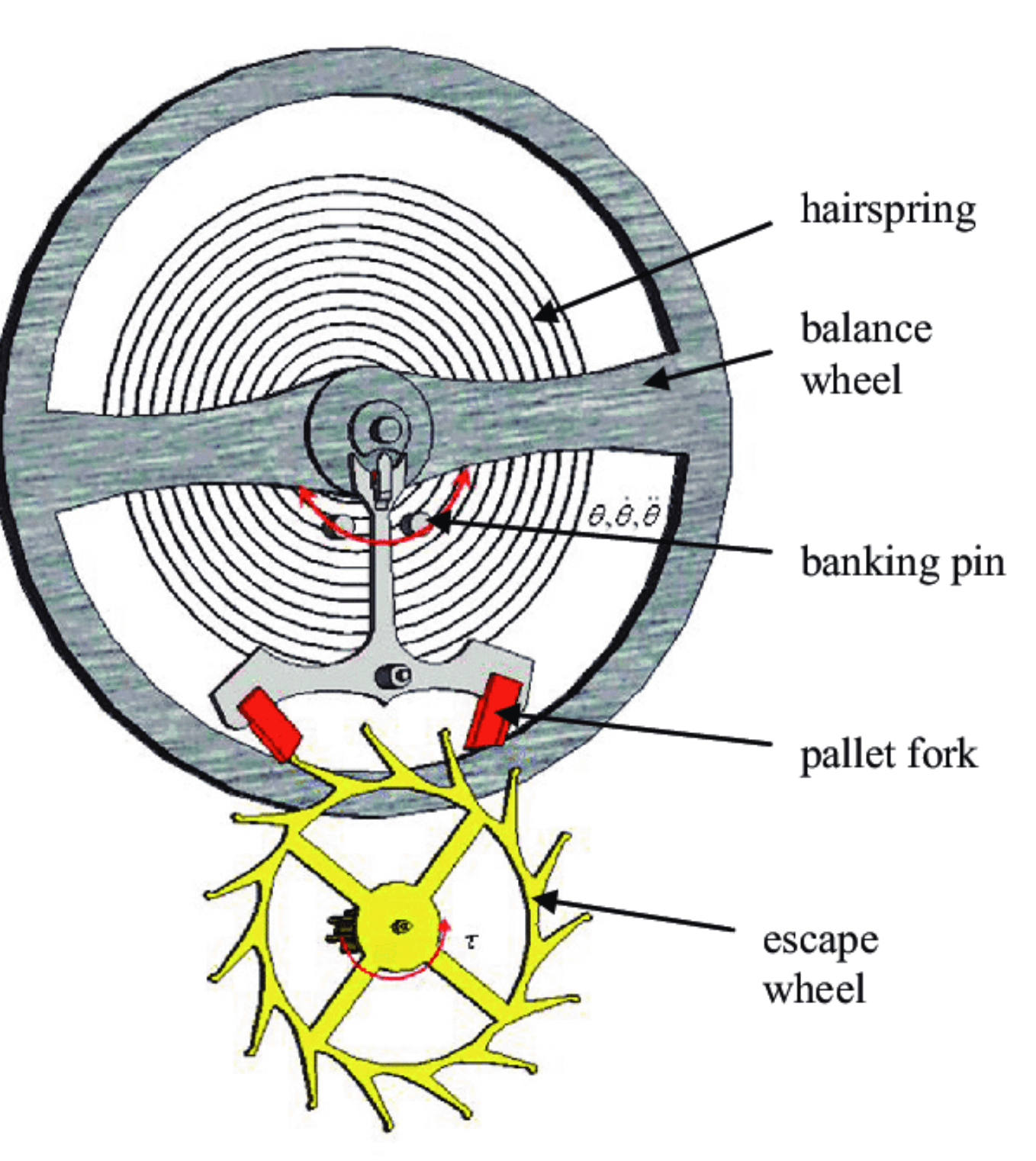
The escapement and the balance wheel work together to create consistent oscillations that regulate the movement of the gears, and the watch’s hands (image courtesy researchgate.net)
—————————————————————————————————–
—————————————————————————————————–
In the 21st century, innovations in watchmaking have significantly improved the management of energy in mechanical watches. Advances in materials, such as silicon, have transformed the way energy is managed.
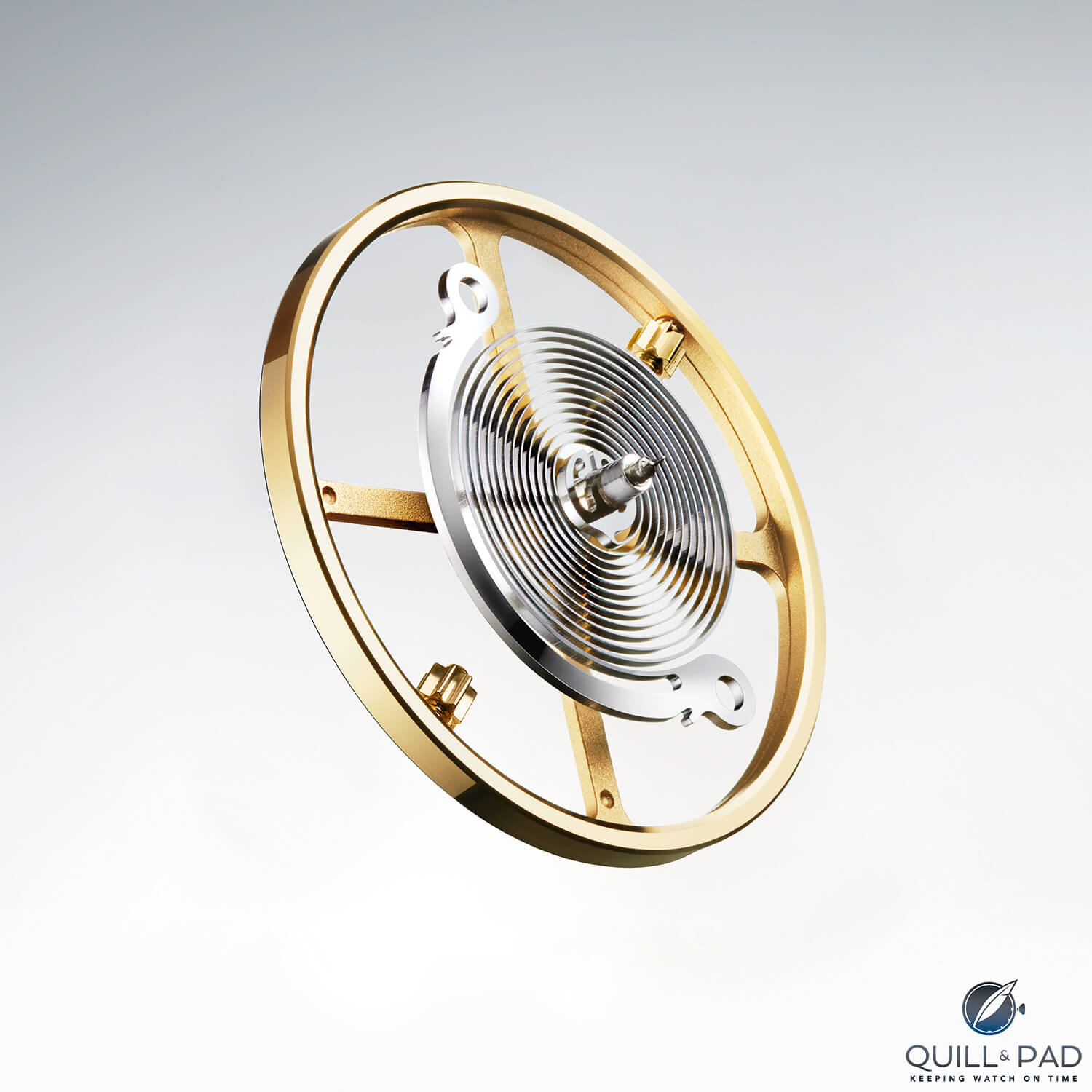
Rolex Syloxi silicon hairspring
Silicon components, used in escapements and balance springs, are lighter and more resistant to wear and temperature changes. This reduces friction and increases efficiency, allowing energy to flow more smoothly through the watch’s movement.
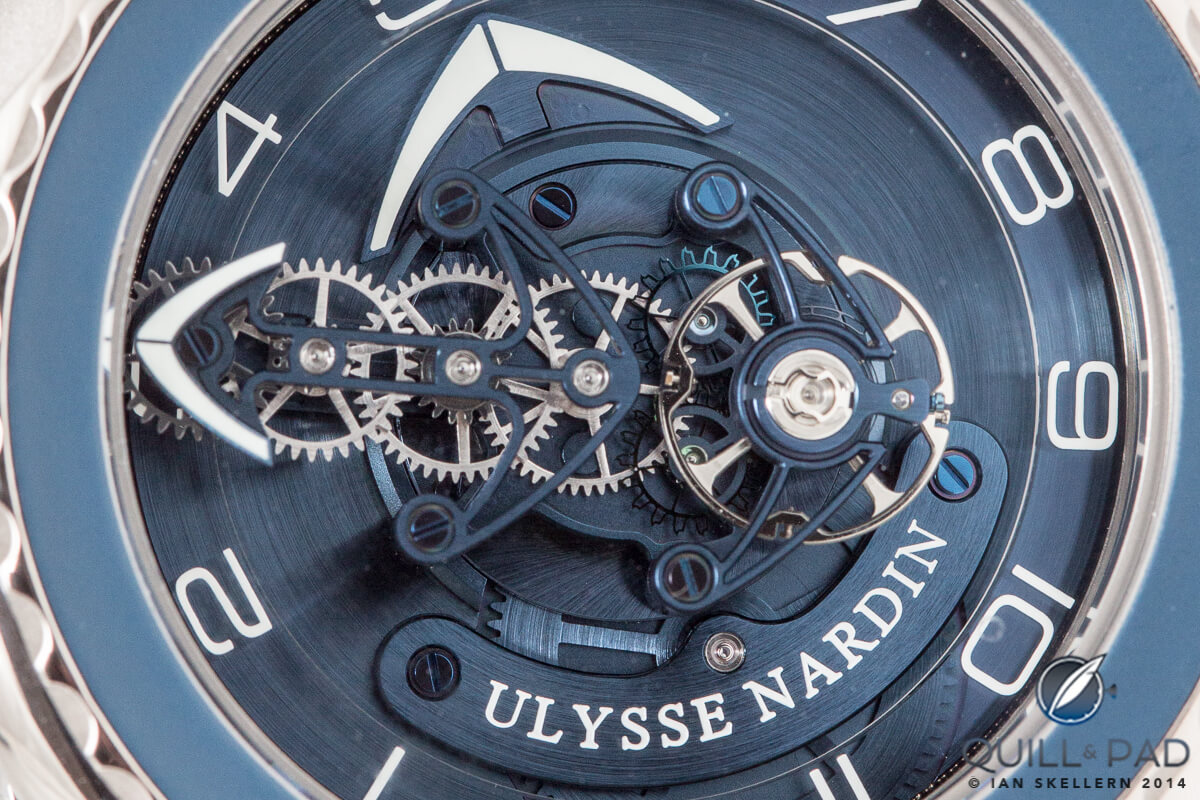
Close up look at the gear train indicator of the Ulysse Nardin Freak-Blue Cruiser

Additionally, new designs in gear trains and mainsprings have optimized energy transfer, reducing energy loss and improving power reserves. Modern mechanical watches often feature power reserves lasting several days (even weeks and months), a testament to these advancements.
These innovations have allowed watchmakers to create watches that are not only more accurate but also more reliable over time.
In conclusion, the management of energy in a mechanical watch is the essence of its operation. From the initial winding of the mainspring to the precise ticking of the escapement, every component relies on a carefully controlled flow of energy.
This energy is created by winding the crown, stored in the barrel, and channeled through the gear train to the hands.
Along the way, some energy is lost to friction, but modern innovations have minimized this loss, allowing for greater accuracy and longer power reserves.
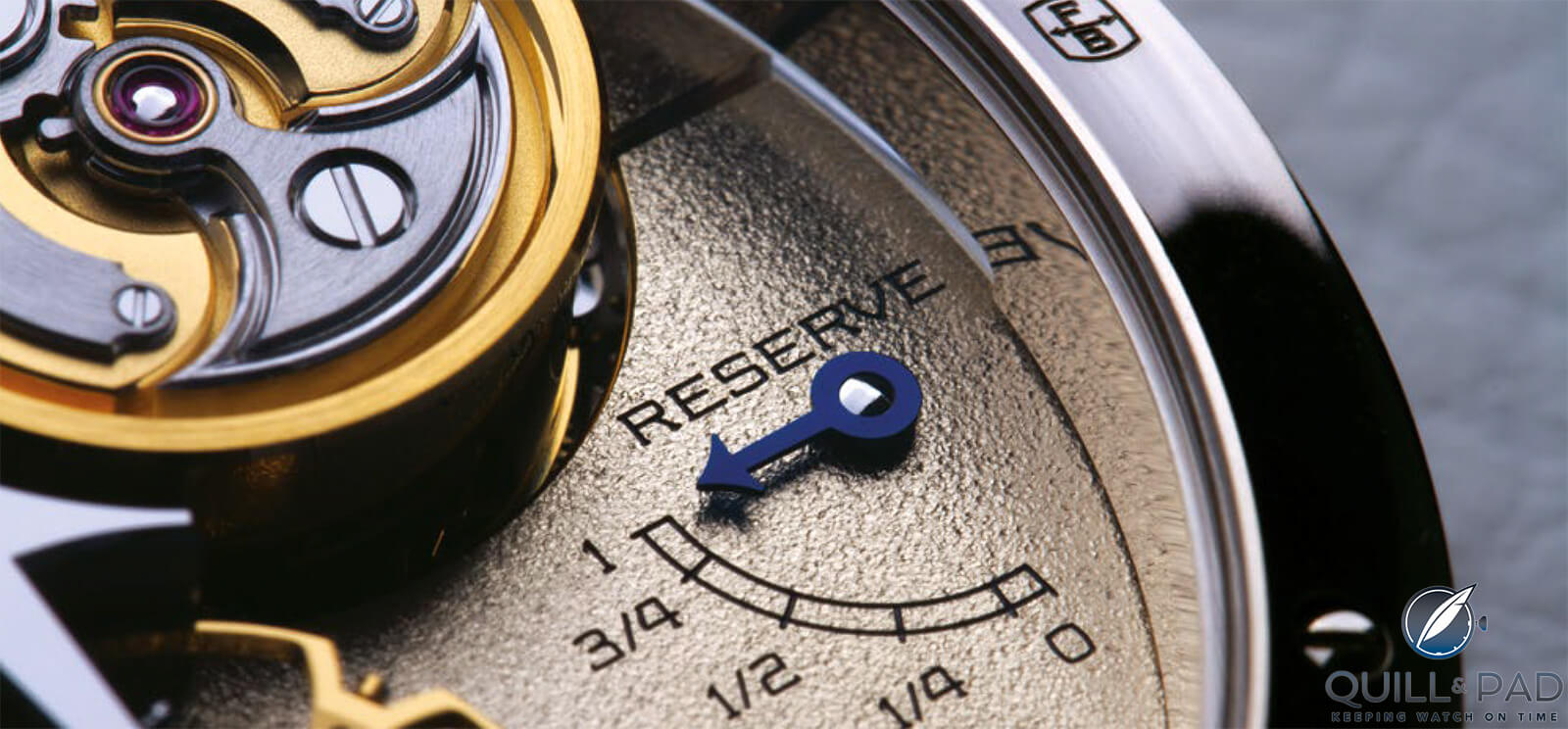
Ferdinand Berthoud FB2RE2 power reserve indicator
The next time you hear the ticking of a mechanical watch, remember the intricate dance of energy that makes it possible, a dance that has been refined over centuries and continues to evolve with each new innovation.
You might also enjoy:
Here’s Why: Manual Winding Watches are for Horological Connoisseurs
Automatic Watches are for Watch Enthusiasts: A Counterpoint Here’s Why


Leave a Reply
Want to join the discussion?Feel free to contribute!