Quill & Pad
  • Shop Pre-Owned
  • Home
  • Articles
  • About
  • Glossary
  • Contact
  • Click to open the search input field Click to open the search input field Search
  • Menu Menu
You are here: Home1 / Watch Brands & Horology2 / Ressence3 / How Do They Do That? The Ressence Type 3

How Do They Do That? The Ressence Type 3

by Ian Skellern

A few years ago at Baselworld, Ressence founder Benoît Mintiens showed me a prototype of a new watch he was working on.

Mintiens explained that, while looking at a bottle of water on his table, the back of the label, which was on the opposite side of the bottle to him, looked as though it was on his side of the bottle. Curious, he discovered that this effect is caused by the eye being fooled because it is used to seeing light passing through glass/air rather than glass/water.

And he wondered if the same optical illusion effect might work for a watch.

As Mintiens passed me the watch, I noticed that the dial looked superficially similar to Ressence’s first watch, but this proposed new model was obviously a little larger and had a more rounded case and crystal.
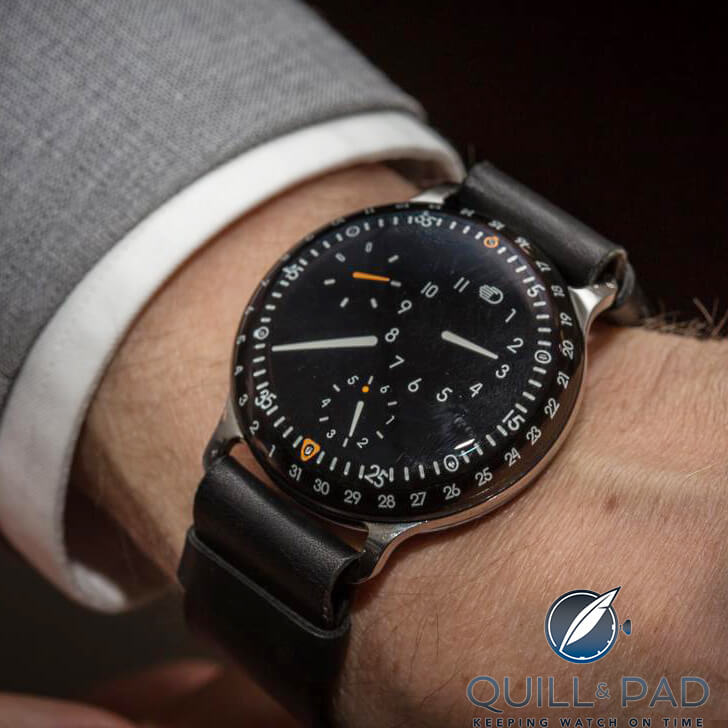
Ressence Type 3 on the wrist

Ressence Type 3 on the wrist

As I held it a bit closer, Mintiens explained that the concept was to fill the dial space entirely with fluid so as to minimize refraction. This should have the effect of making the indications appear as though they are on the surface of the sapphire crystal rather than below on the dial.

While I was examining the watch, Mintiens stressed to me not to judge too critically as this was just a first prototype. I laughed and replied, that there is no need to remind me that it’s a prototype as it is obvious that he has just glued a photo of the dial onto the crystal to simulate the effect he wanted to demonstrate.

My jaw dropped when he replied, no, this is actually a dial bathed in fluid and that is the optical effect I was seeing.
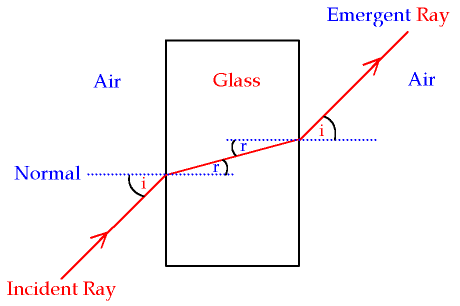
How light bends passing through air/glass interfaces
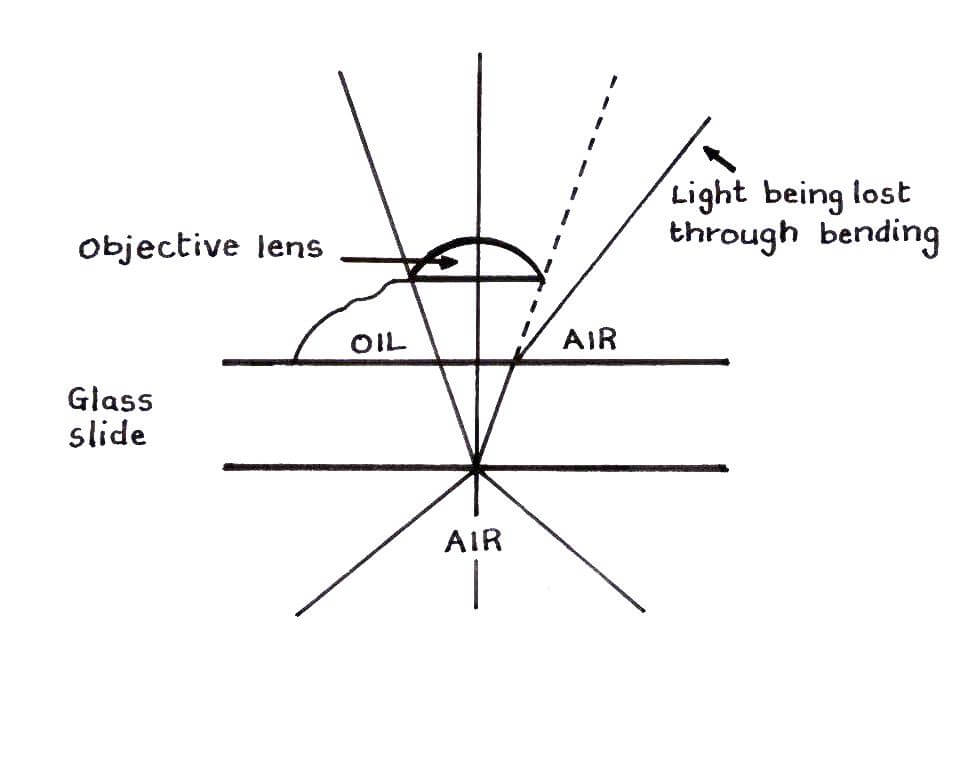
How light bends passing through air/glass interfaces

Light passes in a straight line from glass to oil, but bends from glass to air

Light passes in a straight line from glass to oil, but bends from glass to air

Unlike air, the fluid above the dial (and flooding the mechanisms in the indication module) has a very similar refractive index as the glass. The eye is used to seeing light bend as it is passes from the dial of a watch to the eye and our brains automatically use that information to gauge the distance between dial and glass.

Seeing is not believing

When the eye sees no bending of light, the brain decides that is because there is no space between crystal and dial and we see what our brain expects us to see, rather than what is actually in front of our eyes.
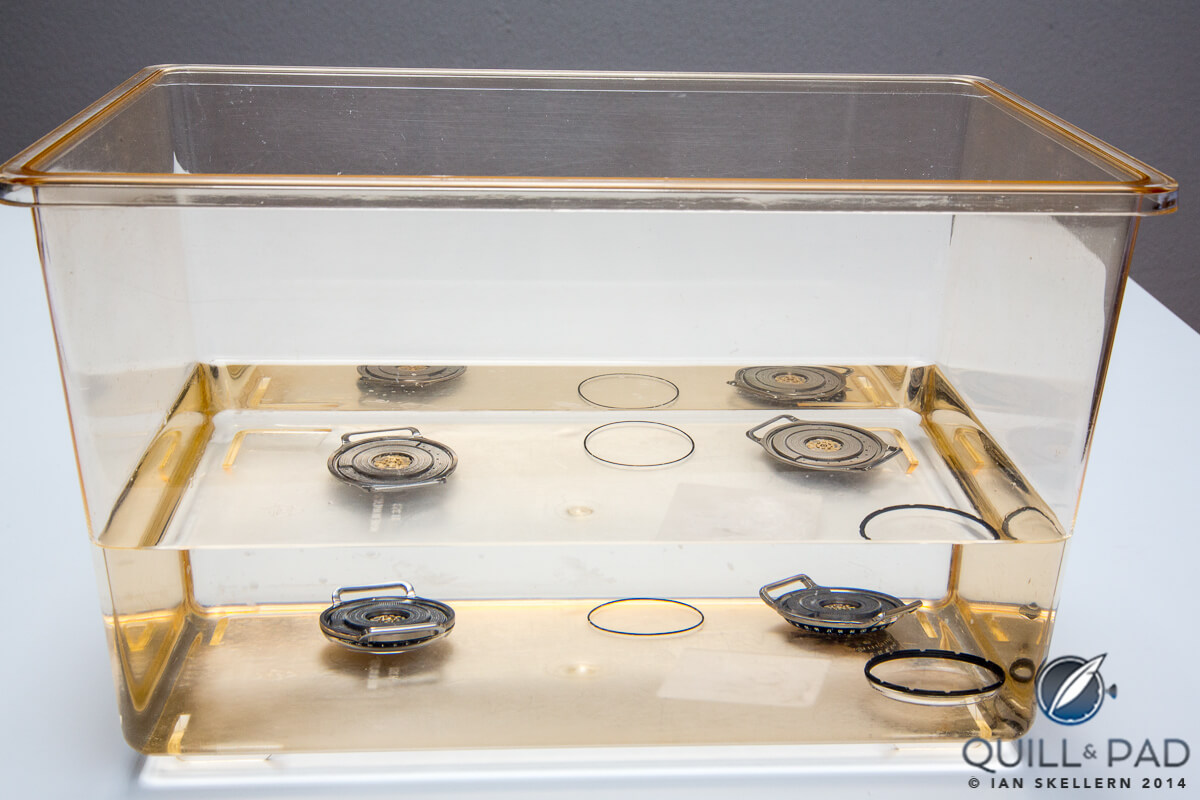
How many movements are in the fluid? Only two: the top is a reflection (not refraction) of the two below. The dial modules rest in fluid for days to ensure that there are trapped air bubbles. The sealing plate sandwiched between the top fluid-filled module (housing the dial) and dry bottom section (housing the movement) is attached under the fluid so avoid air entering

Though it looks like more, only two movements are in the liquid: the top is a reflection (not refraction) of the two below. The dial modules rest in fluid for days to ensure that there are no trapped air bubbles. The sealing plate sandwiched between the top fluid-filled module (housing the dial) and dry bottom section (housing the movement) is attached under the fluid to avoid air entering
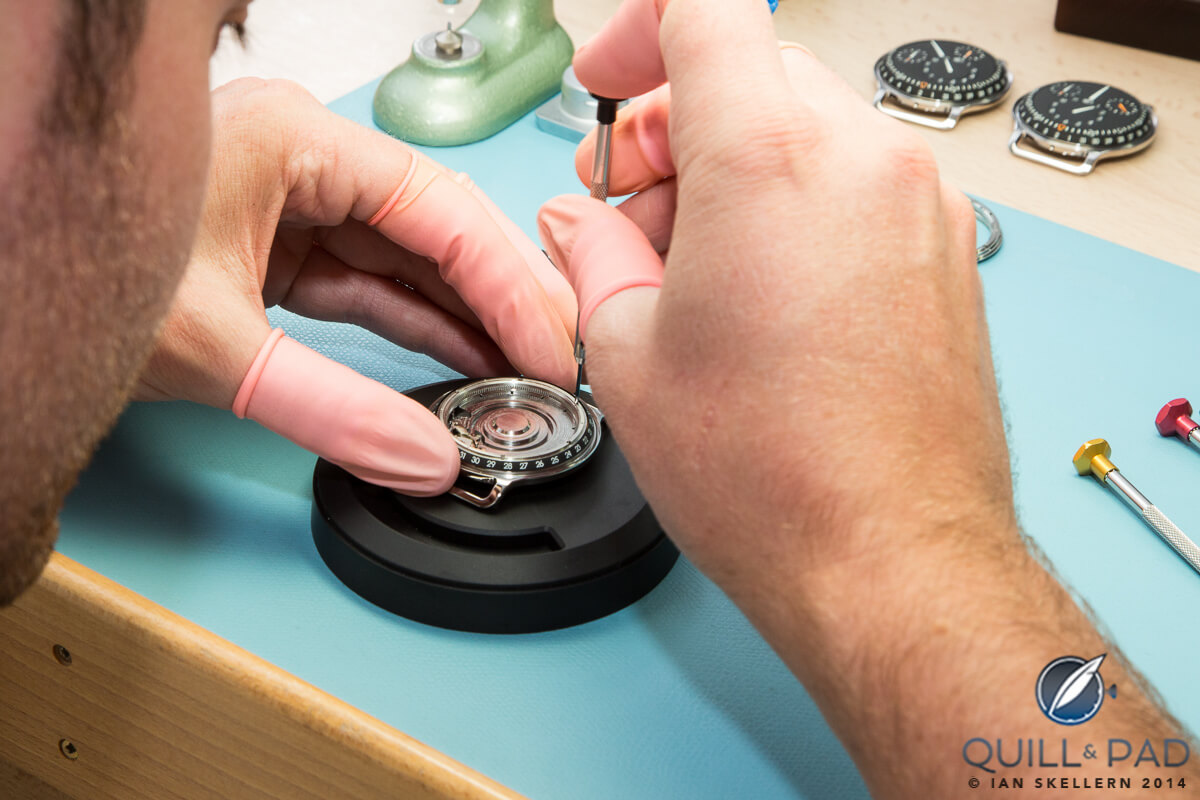
Assembling a Ressence Type 3

Assembling a Ressence Type 3

Surprise me once, surprise me twice

The Ressence Type 3 is really in a class by itself and I knew, or thought that I knew, just how different it was to other mechanical timepieces. But on a recent visit to an atelier in Switzerland where the Type 3 is assembled, I was profoundly surprised (yet again) at just how dissimilar many of the components in the Type 3 were to those found more “normal” mechanical watch movements.
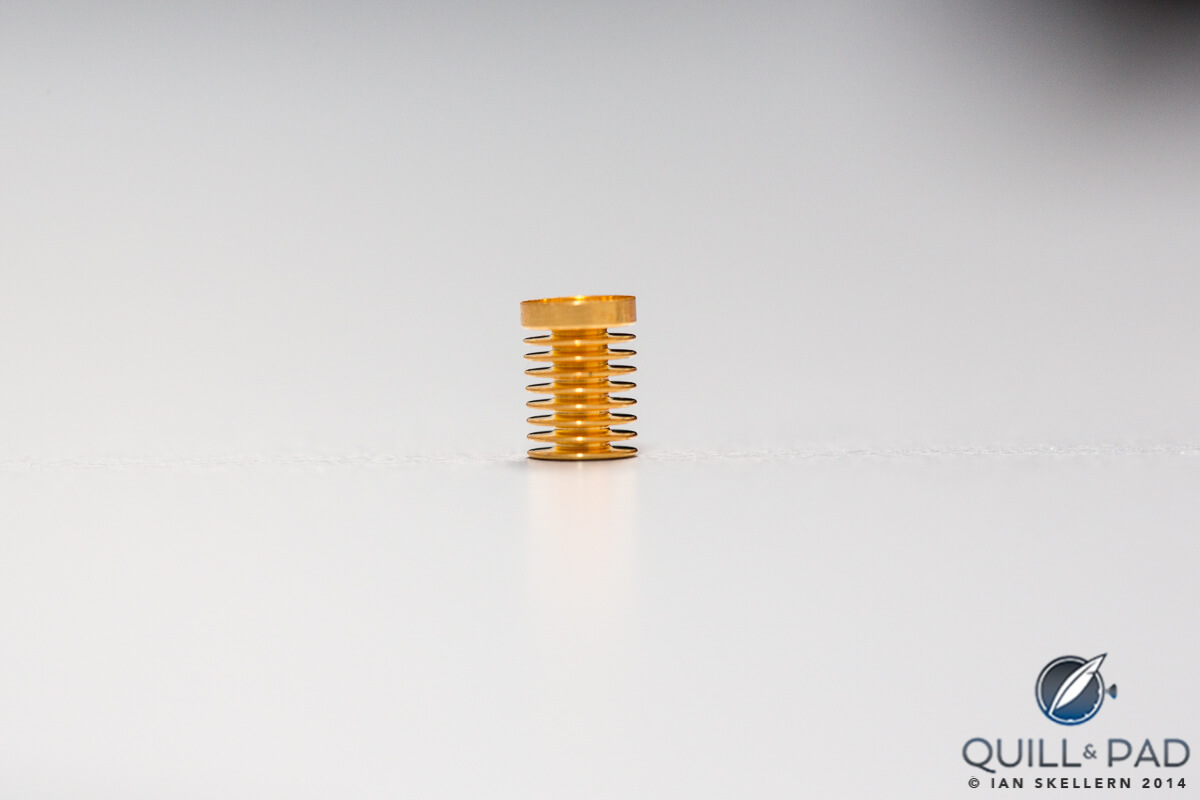
Not the kind of component you usually see in a watch movement, but the Ressence Type 3 requires quite a few of them
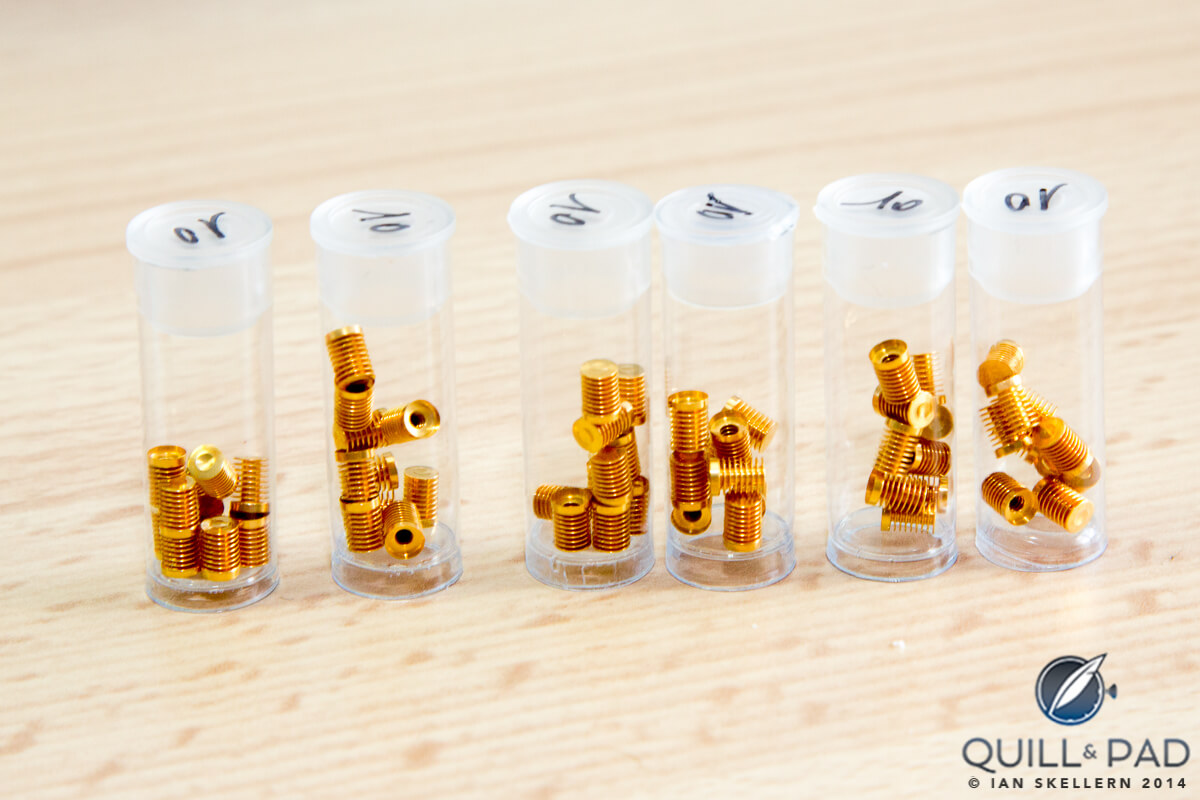
Not the kind of component you usually see in a watch movement, but the Ressence Type 3 requires quite a few of them

Small concertina pressure valves
Small concertina pressure valves

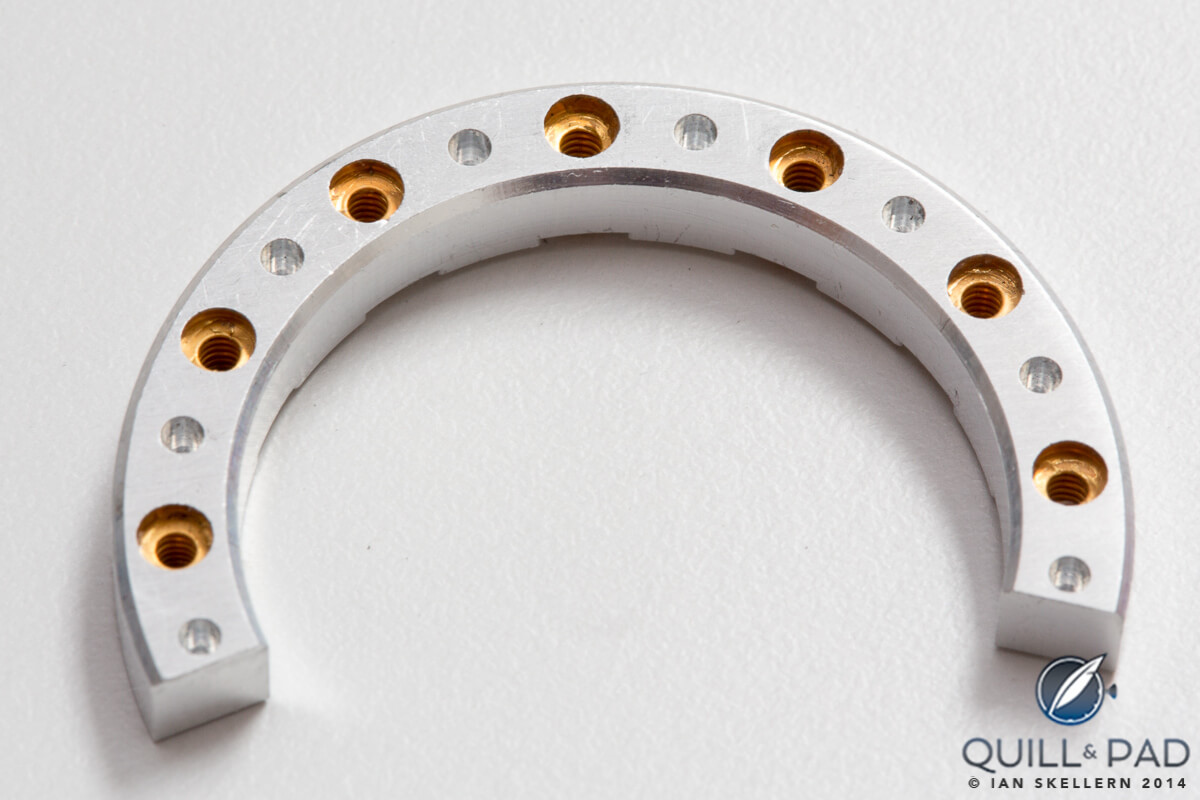
Unusual

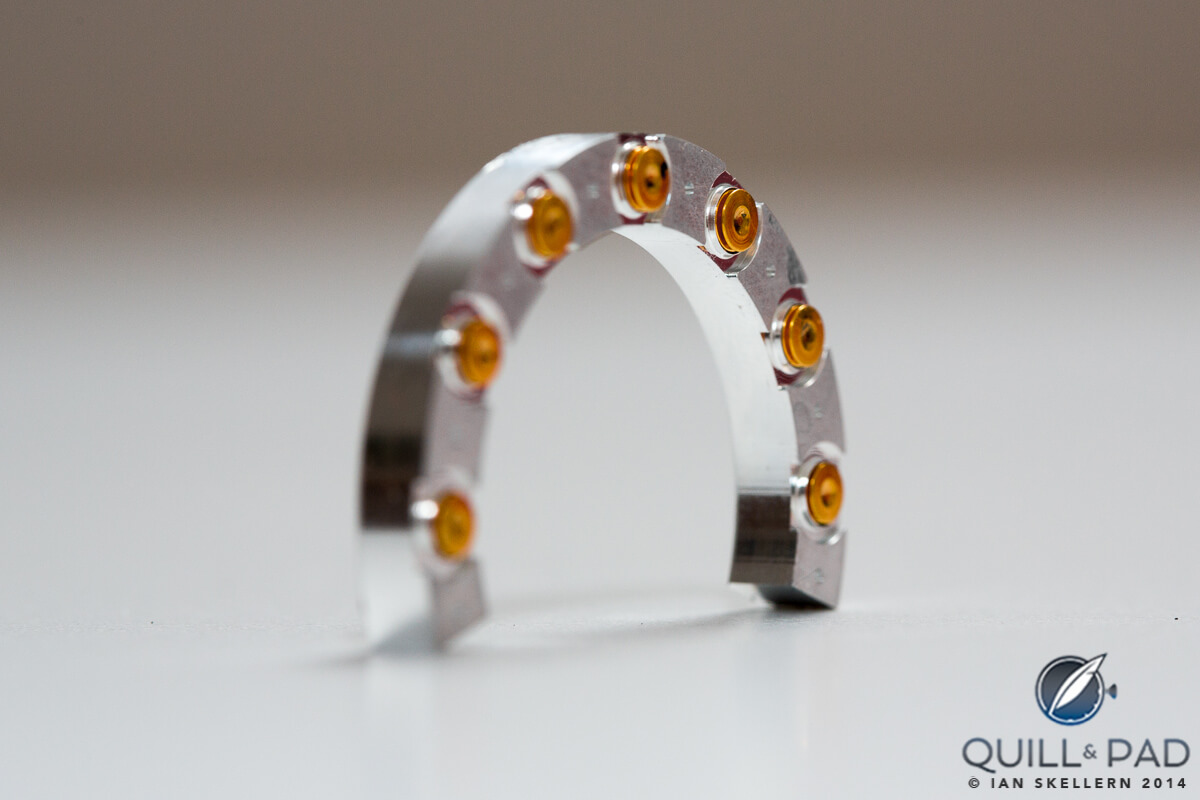
Unusual “horseshoe” component from the Ressence Type 3 indication module
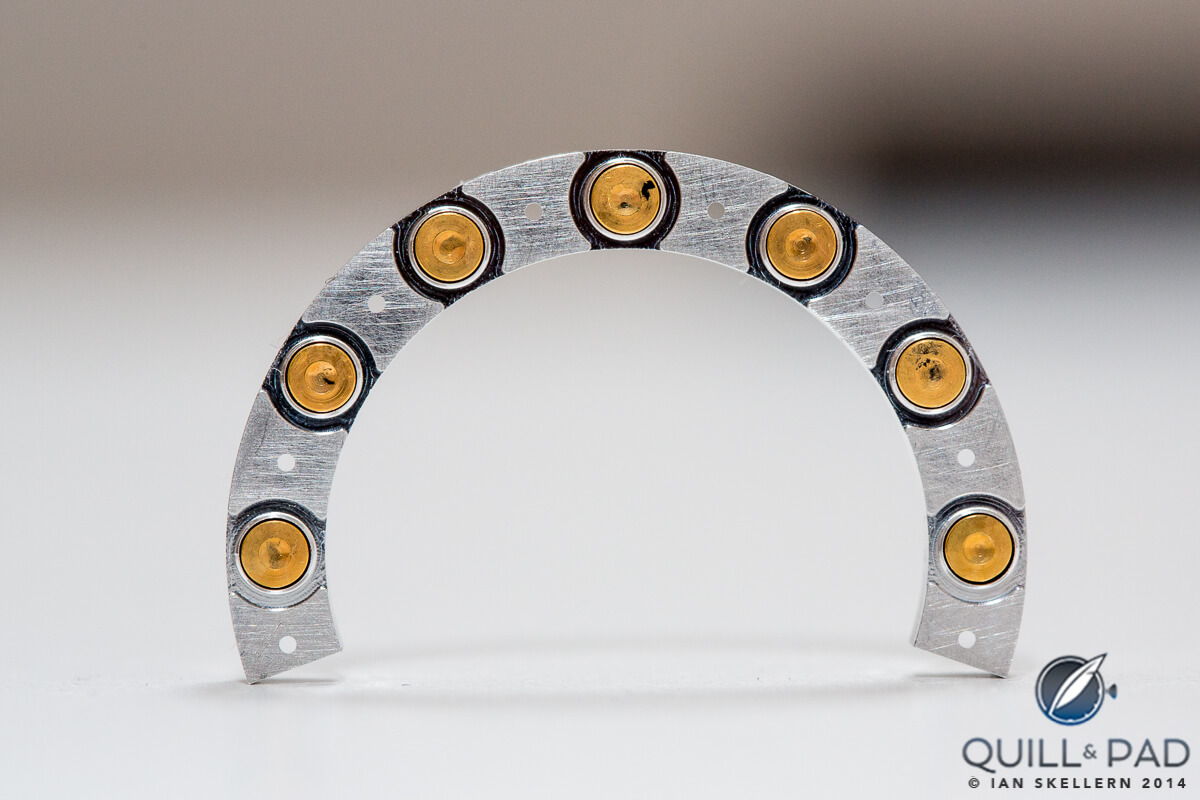
The Ressence Type 3

The Ressence Type 3 “horseshoe”

The Ressence Type 3

The Ressence Type 3 “horseshoe” with pressure valves fitted

Look, Ma, no hands!

With his first watch, the Series One, Mintiens replaced physical hands with graphical representations of them in the form of lines printed on rotating disks set flush with the dial. And because graphical information is usually two-dimensional to be easier to understand, Mintiens set all of the disks at the same level, with no overlaps.
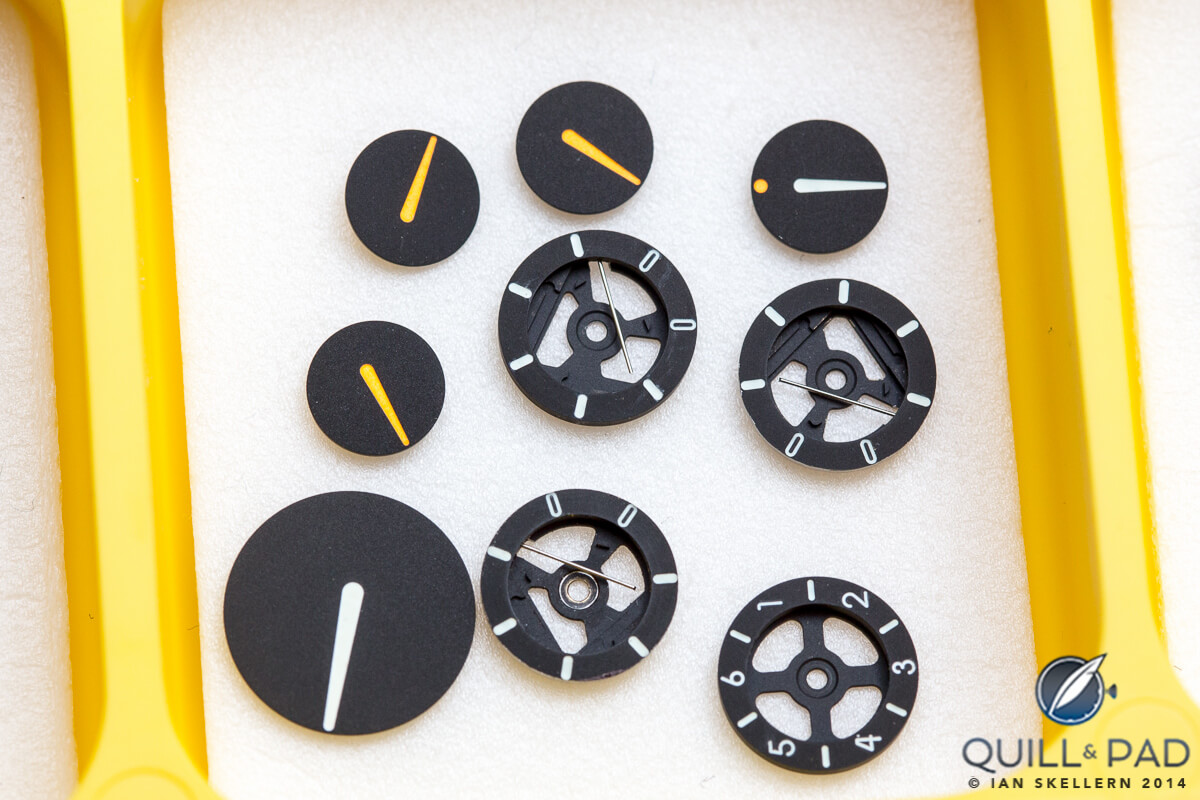
A few of the indication subdials for the Ressence Type 3
A few of the indication subdials for the Ressence Type 3

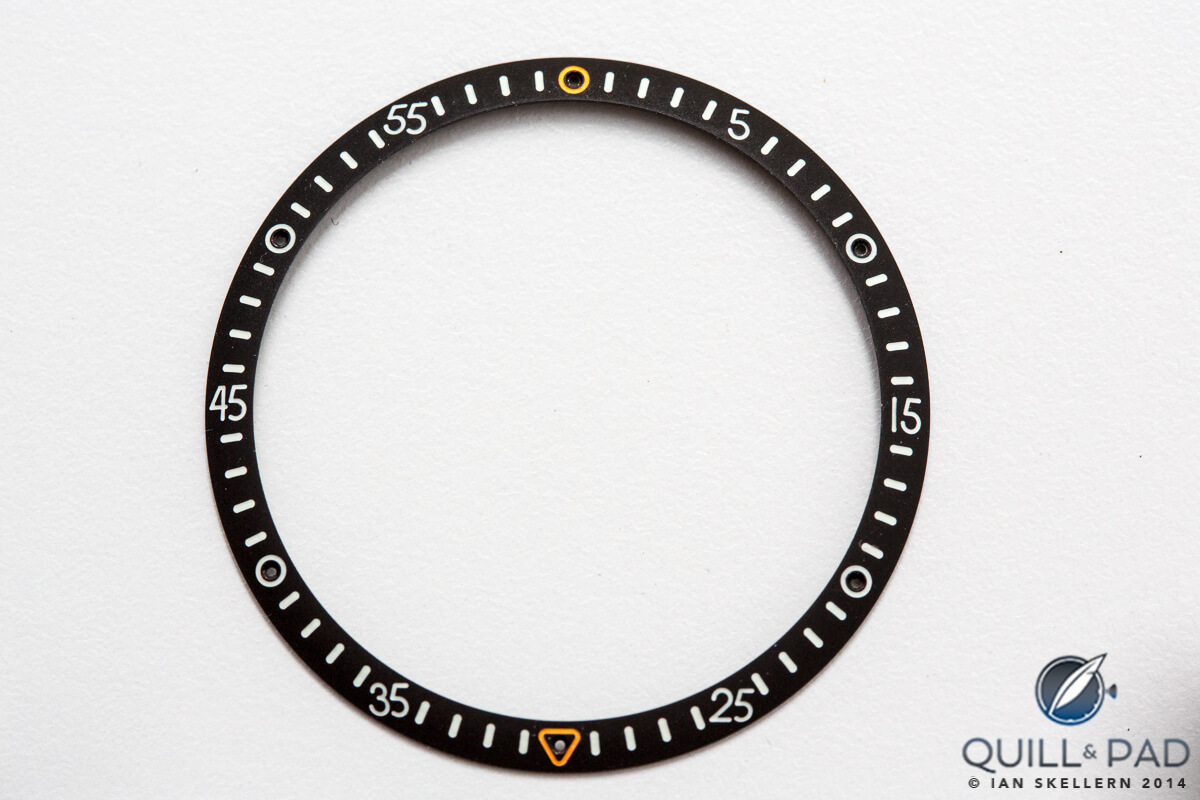
The minute chapter ring which circles the dial of the Ressence type 3. The small orange arrow at the bottom points to the date

The minute chapter ring, which encircles the dial of the Ressence type 3; the small orange arrow at the bottom points to the date
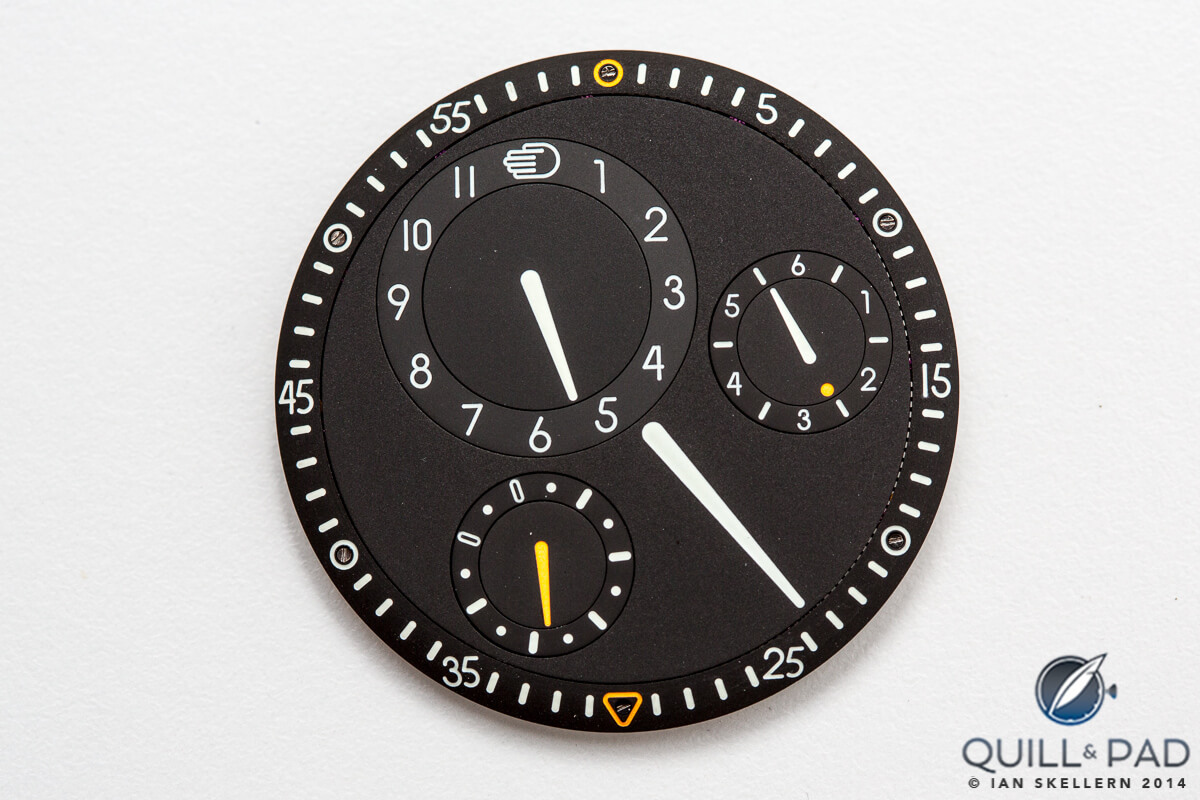
The dial of the Ressence Type 3: while it looks flat from this angle, the dial is actually curved to a slight dome shape

The dial of the Ressence Type 3: while it looks flat from this angle, the dial is actually curved to a slight dome shape

The optical effect of indications apparently displaying on the surface of the crystal of the Type 3 is only possible because Ressence watches have no hands, so the crystal can be much closer to the dial than normal watches.  It was only due to the two-dimensionality of the dial on the Series One that Mintiens was able to − optically at least − eliminate the vertical distance altogether on the Type 3.
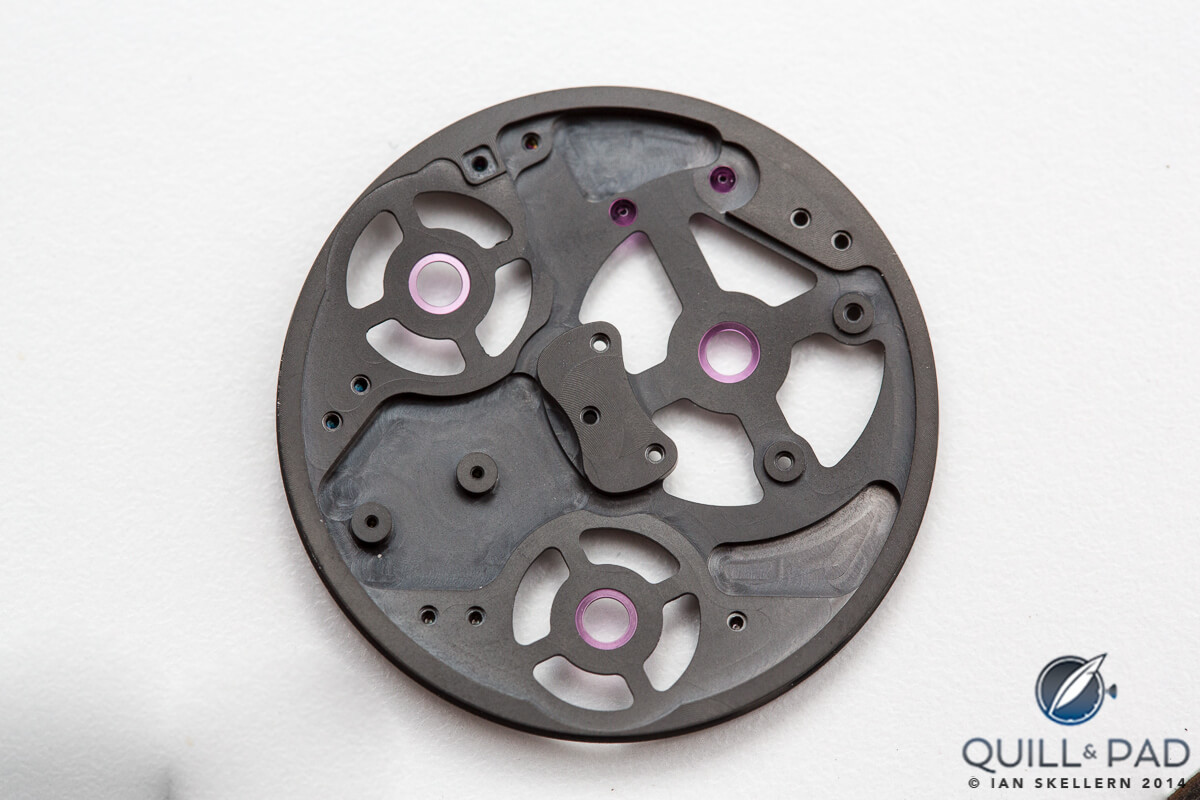
The complex shapes machined into the component underneath the main dial of the Ressence Type 3
The complex shapes machined into the component underneath the main dial of the Ressence Type 3

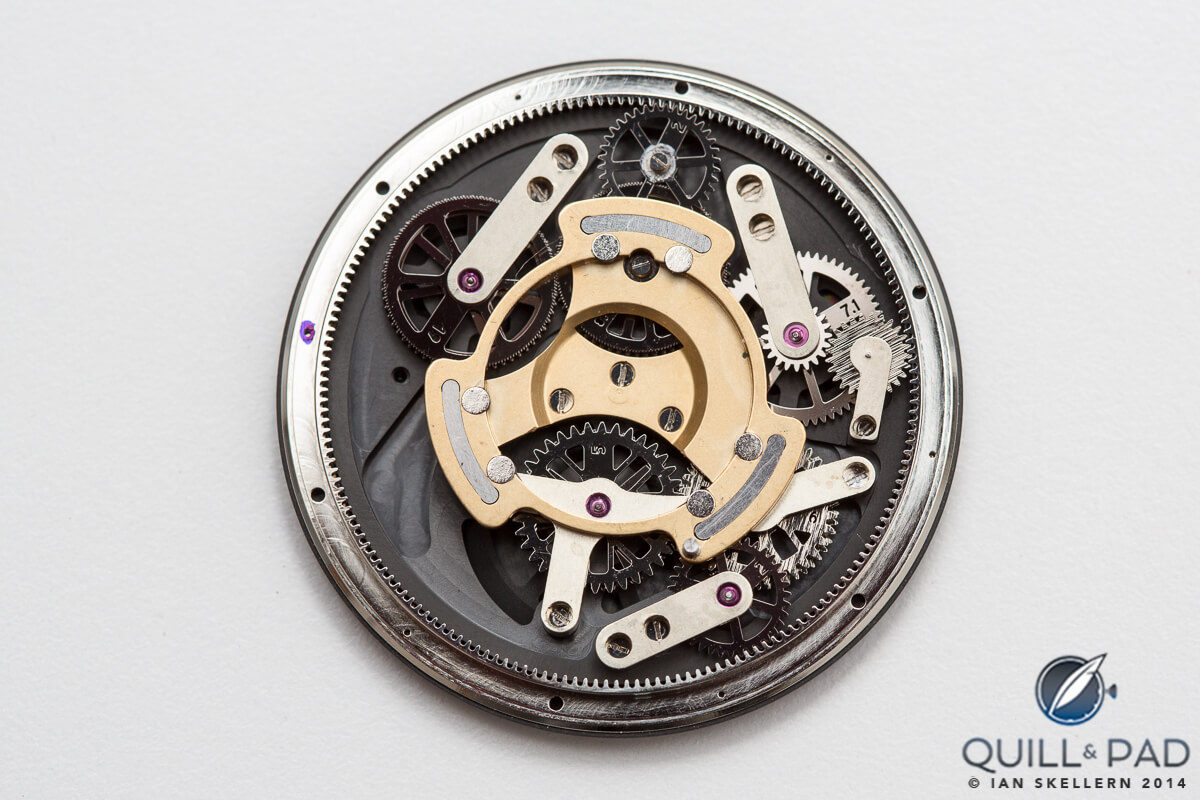
The complex system of eventually fluid-filled gearing under the dial of the Ressence Type 3; these gears are driven by magnets so as to minimize perforations in the fluid-tight upper section

The complex system of eventually fluid-filled gearing under the dial of the Ressence Type 3; these gears are driven by magnets so as to minimize perforations in the fluid-tight upper section. Please note that the movement has “working” screws, fitted, not the final screws

Since the whole dial, which indicates minutes as it rotates, is one of those disks, and the others − indicating hours, seconds and am/pm − are set into the rotating minute dial, you can appreciate that dial-side simplicity for the viewer comes at the cost of considerable complexity underneath the dial.

This video illustrates how time is indicated on a Ressence Series 1 dial like emotions on a person’s face.

“I eventually would like to be able display time on a surface like a smile on a face. With its indications appearing as if they are on the surface of the crystal, the Type 3 is a significant step in this direction,” said Mintiens.
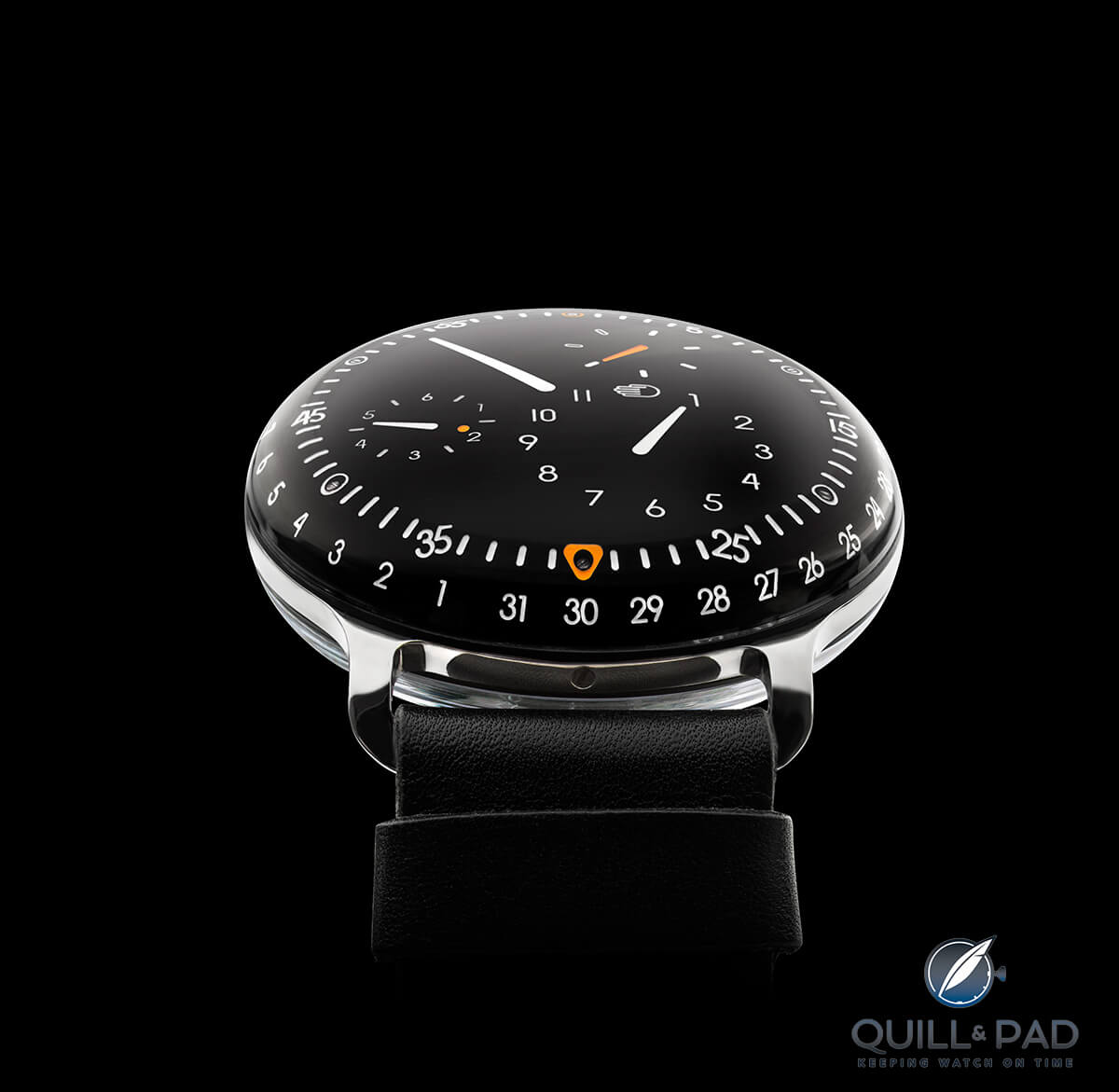
Ressence Type 3 back

Ressence Type 3

While the Type 3 has a relatively large number of indications on its dial – i.e., hours, minutes, seconds, day and date – only two connections are needed between movement and display module: one for the time, the other for the date.
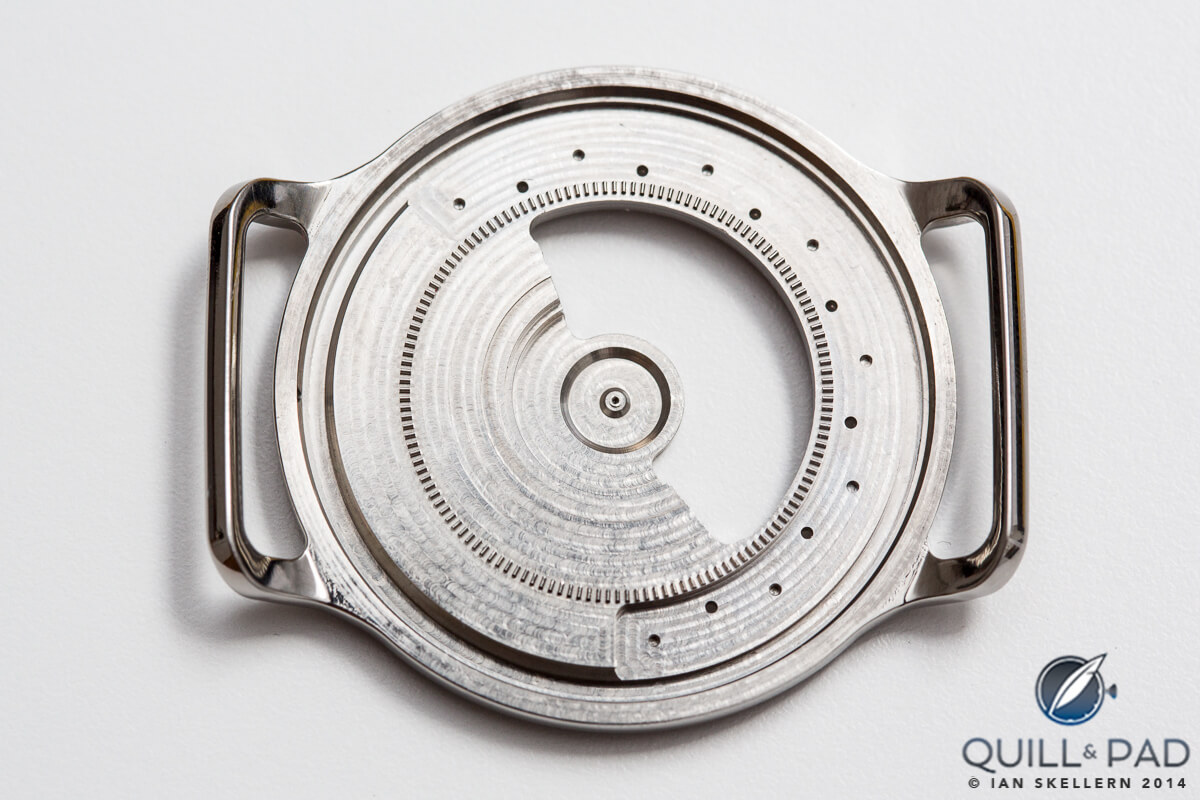
Another unique component in the Ressence Type 3

Another unique component in the Ressence Type 3

To eliminate any physical transmission between the dry movement and wet display, two pairs of tiny, focused magnets convey the information through the titanium center section of the case, which not only forms a barrier between movement and indications, but also forms the lugs for the strap.
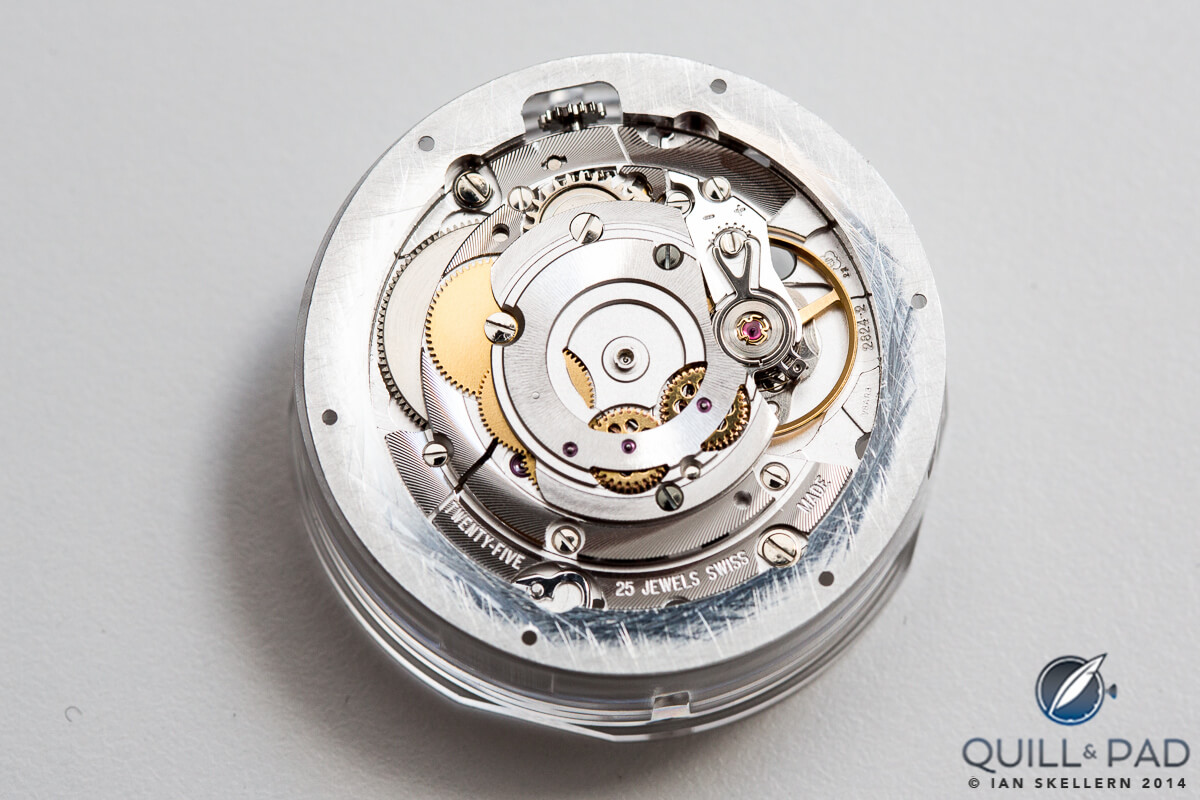
The back of the Ressence Type 3 movement without the automatic winding rotor

The back of the Ressence Type 3 movement without the automatic winding rotor. Please note that the movement has “working” screws, fitted, not the final screws

Look, Ma, no crown!

Not content with revolutionizing the display of time, Mintiens has also reinvented winding a watch. Ressence timepieces have no crown and to date have boasted automatic winding with (relatively) complicated hand winding/time setting systems.

Shop Pre Owned Watches

Mintiens has now simplified the Ressence winding system to the maximum: rotating the back in one direction winds and sets the time forward, rotating in the opposite direction sets the time back. That’s it. As the movement winds automatically, only a short wind is enough to set it in motion.
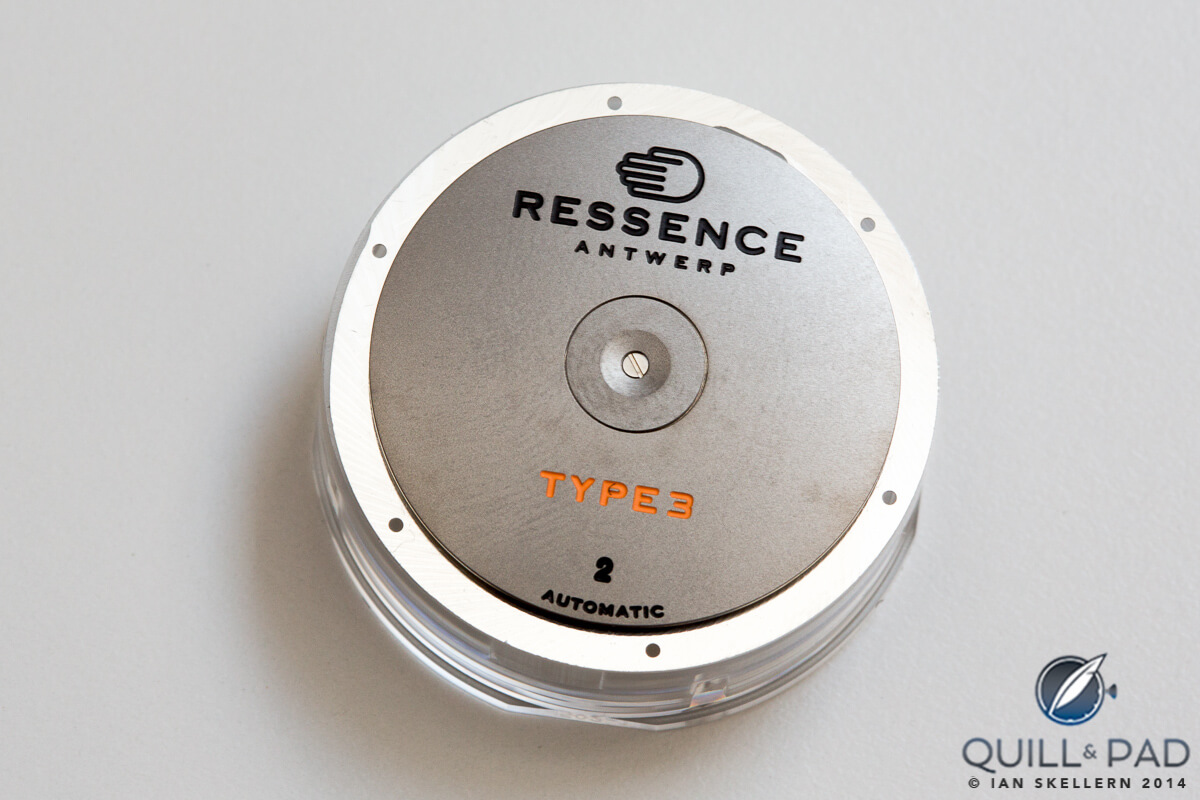
The automatic winding rotor of the Ressence Type 3

The automatic winding rotor of the Ressence Type 3

Imagine a normal two-position crown: it winds in position one, pull it out to position two and set the time. But then combine both operations so they are accomplished in one position.

And then eliminate the crown!
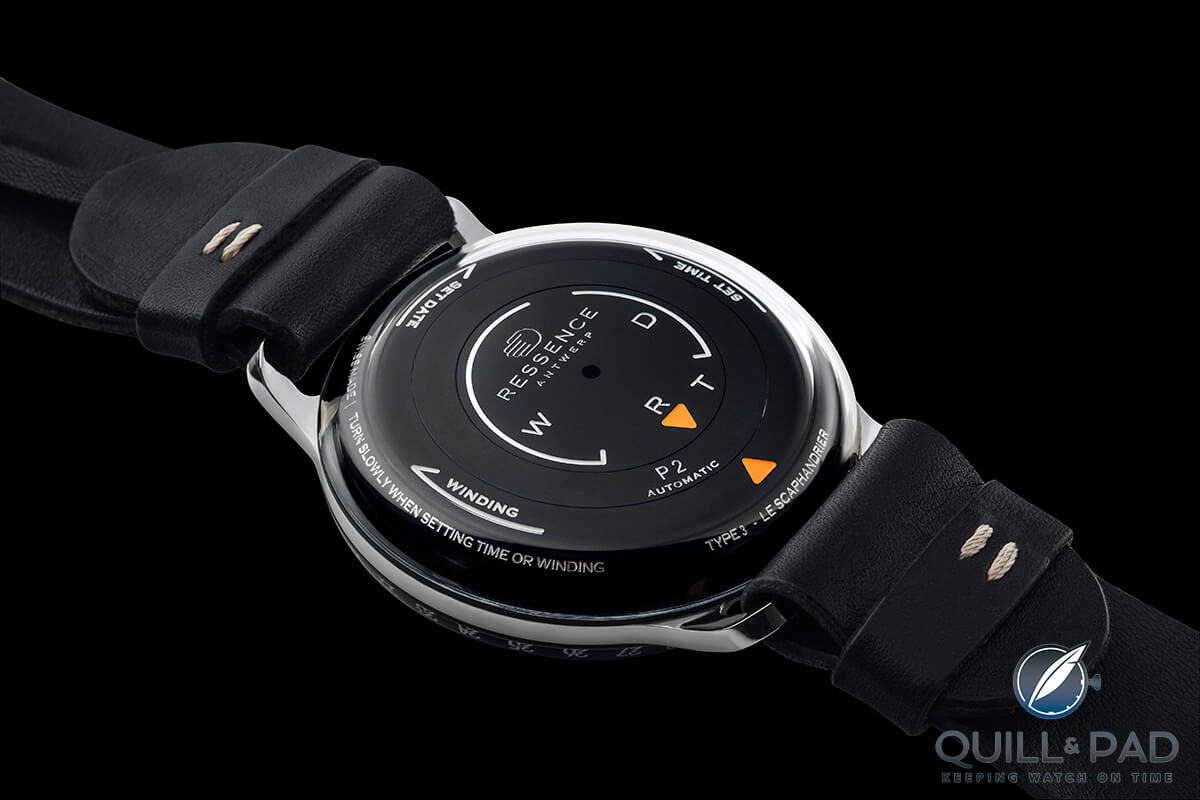
Ressence Type 3 back

Ressence Type 3’s back: winding and setting are as simple as rotating the case back in one direction or the other
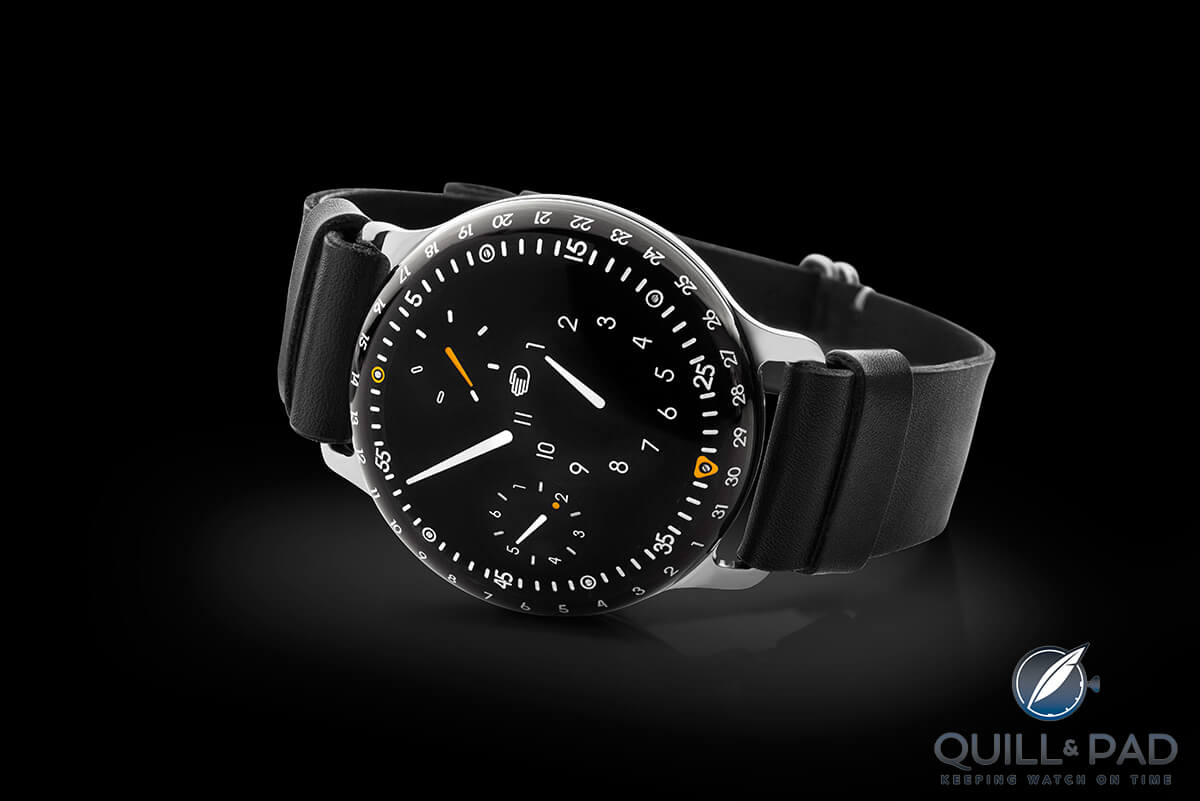
RESSENCE-TYPE-3-SIDE

The fluid-filled Ressence Type 3

For more information, please visit www.ressence.eu.

Quick Facts
Case: 44 mm sapphire crystal case top and bottom with titanium separator/lugs
Dial: fluid-filled so that the indications appear on the surface of the crystal
Movement: automatic winding, no crown
Functions: hours, minutes, seconds; date, day
Price: € 33,500 (including VAT)

8 replies
  1. Claus
    Claus says:
    October 7, 2014 at 7:27 am

    Super interesting article! Any chance of a video showing the assembly and how the fluid is kept inside?

    Reply
  2. Ian Skellern
    Ian Skellern says:
    October 7, 2014 at 8:51 am

    Unfortunately I do not have a video, Claus, but basically the center titanium plate with the lugs seals the fluid in the top sapphire crystal dome that houses the indication module.

    Reply
  3. Alejandro
    Alejandro says:
    October 7, 2014 at 5:42 pm

    Very interesting article. I always liked this watch and knowing the physics behind it makes me like it even more.

    Reply
  4. flo
    flo says:
    October 13, 2014 at 9:59 pm

    Dear Ian,

    brilliant write-up of a highly complex process. Thank you.

    Reply
  5. Hugo
    Hugo says:
    July 19, 2016 at 8:22 pm

    Dear Ian,

    Really enjoyed reading your article, thanks. Do you have any idea what kind of fluid Ressence uses? On the outside it mentions that the watches contains petroleum, is that what they use or is it diluted with another fluid?

    Reply
    • Ian Skellern
      Ian Skellern says:
      July 20, 2016 at 8:48 am

      Hi, Hugo. My understanding is that the specific type of fluid Ressence uses is a secret, but that it is a type of light oil (think kerosene) like the kind used in compasses, etc.

      Reply

Trackbacks & Pingbacks

  1. Unanimous Predictions In The Sports Category Of The 2016 Grand Prix d’Horlogerie de Genève | Quill & Pad says:
    November 12, 2016 at 11:25 am

    […] that I knew Ressence and understood the refraction-free fluid-filled dial concept pretty well (see How Do They Do That? The Ressence Type 3). And what I knew had little to no claim on being any kind of sports watch, let alone Best Sports […]

    Reply
  2. Quill & Pad | The Twelve Watch Days Of Christmas says:
    December 30, 2014 at 3:01 pm

    […] regulators: 1. Ressence Type 3 (See How Do They Do That? The Ressence Type 3.) 2. Moritz Grossmann Benu Tourbillon 3. Chronoswiss Sirius Régulateur 4. Urban Jürgensen & […]

    Reply

Leave a Reply

Want to join the discussion?
Feel free to contribute!

Leave a Reply Cancel reply

Your email address will not be published. Required fields are marked *

Featured

Featured

Categories

  • squale
  • Berneron
  • Sartory‑Billard
  • Watch Brands & Horology
    • New for 2025
    • New for 2024
    • New for 2023
    • Affordable Luxury
      • M.A.D.Editions
      • Swatch
      • Ball Watch
      • Louis Erard
      • Gorilla Fastback
      • Ikepod
      • Oris
      • Reservoir
    • Auctions
    • Behind the Lens
    • Boutiques
    • Collectors and Collecting
    • Events, Fairs & Exhibitions
    • Give Me Five!
    • History
    • Quill & Pad
    • Round Table
    • The Naked Watchmaker
    • Thoughts & Opinion
    • Video
    • WatchCharts
    • Wrist Watching
    • A. Lange & Söhne
    • AHCI
    • Akrivia
    • Andersen Genève
    • Alexandre Meerson
    • Andreas Strehler
    • Angelus
    • Antoine Martin
    • Antoine Preziuso
    • Armin Strom
    • Arnold & Son
    • Audemars Piguet
      • Royal Oak Offshore
    • Bélier
    • Bell & Ross
    • Blancpain
    • Bovet
    • Breguet
    • Bremont
    • Breitling
    • Bulgari
    • Carl F. Bucherer
    • Cartier
    • Chanel
    • Chopard
    • Christiaan Van Der Klaauw
    • Christophe Claret
    • Chronoswiss
    • Clocks
    • Corum
    • Cyrus
    • Czapek & Cie
    • De Bethune
    • de Grisogono
    • Derek Pratt
    • Dior
    • Divers' Watches
    • Eberhard
    • Emmanuel Bouchet
    • Fabergé
    • Ferdinand Berthoud
    • Fiona Krüger
    • F.P. Journe
    • Franck Muller
    • Garrick
    • Gérald Genta
    • Girard-Perregaux
    • Glashütte Original
    • GoS
    • Graff
    • Graham
    • Greubel Forsey
    • Grieb & Benzinger
    • Grönefeld
    • H. Moser & Cie
    • Habring2
    • Hajime Asaoka
    • Harry Winston
    • Hautlence
    • Hermès
    • Hublot
    • HYT
    • Independents
    • IWC
    • Jaeger-LeCoultre
    • Jaquet Droz
    • Jean Daniel Nicolas
    • Jean Dunand
    • Kari Voutilainen
    • Kees Engelbarts
    • Kobold
    • Konstantin Chaykin
    • Kudoke
    • Ladies watches
    • Lang & Heyne
    • Laurent Ferrier
    • Linde Werdelin
    • Louis Moinet
    • Louis Vuitton
    • Ludovic Ballouard
    • Manufacture Royale
    • Maurice Lacroix
    • MB&F
    • McGonigle
    • Ming Watches
    • Montblanc
    • Moritz Grossmann
    • Nomos Glashütte
    • Ochs und Junior
    • Officine Panerai
    • Omega
    • Parmigiani
    • Patek Philippe
    • Paul Gerber
    • Philippe Dufour
    • Piaget
    • Pocket watches
    • Rebellion
    • Ressence
    • RGM
    • Richard Mille
    • Roger Dubuis
    • Roger W Smith
    • Roland Iten
    • Rolex
    • Romain Gauthier
    • Romain Jerome
    • Sarpaneva
    • Schwarz-Etienne
    • Seiko
    • Silberstein
    • Singer Reimagined
    • Soviet / Eastern Europe watches
    • Speake-Marin
    • Struthers
    • Tag Heuer
    • Tudor
    • Tutima
    • Ulysse Nardin
    • Urban Jürgensen
    • Urwerk
    • Vacheron Constantin
    • Van Cleef & Arpels
    • Vianney Halter
    • Vintage
    • Wempe Glashütte
    • Zenith
  • Luxury, Experiences, Science & Nature
    • Arts
    • Book reviews
    • Cars
      • Porsche
    • Fashion & Grooming
    • Jewelry
    • Nature
    • Photo Captions
    • Photography
    • Science
    • Shoes
    • Sports
    • Technology
    • Travel
    • Wining, Dining and Cigars
    • Writing instruments
      • Caran d’Ache
      • Grayson Tighe
      • Montblanc
      • Montegrappa
  • General
    • Featured
    • Highlights
© Copyright - Quill & Pad - Enfold Theme by Kriesi
Link to: When Confusion Paves The Way To Awe: The Ludovic Ballouard Upside Down Link to: When Confusion Paves The Way To Awe: The Ludovic Ballouard Upside Down When Confusion Paves The Way To Awe: The Ludovic Ballouard Upside DownLudovic Ballouard Upside Down with mother of pearl dial Link to: Striking Pre-Selected Watches: Round Table Discussion Of The Grand Prix d’Horlogerie de Genève 2014 Link to: Striking Pre-Selected Watches: Round Table Discussion Of The Grand Prix d’Horlogerie de Genève 2014 Striking Pre-Selected Watches: Round Table Discussion Of The Grand Prix d’Horlogerie...
Scroll to top Scroll to top Scroll to top
We use cookies on our website to give you the most relevant experience by remembering your preferences and repeat visits. By clicking “Accept”, you consent to the use of ALL the cookies.
Do not sell my personal information.
Cookie SettingsAccept
Manage consent

Privacy Overview

This website uses cookies to improve your experience while you navigate through the website. Out of these, the cookies that are categorized as necessary are stored on your browser as they are essential for the working of basic functionalities of the website. We also use third-party cookies that help us analyze and understand how you use this website. These cookies will be stored in your browser only with your consent. You also have the option to opt-out of these cookies. But opting out of some of these cookies may affect your browsing experience.
Necessary
Always Enabled
Necessary cookies are absolutely essential for the website to function properly. These cookies ensure basic functionalities and security features of the website, anonymously.
CookieDurationDescription
cookielawinfo-checkbox-analytics11 monthsThis cookie is set by GDPR Cookie Consent plugin. The cookie is used to store the user consent for the cookies in the category "Analytics".
cookielawinfo-checkbox-functional11 monthsThe cookie is set by GDPR cookie consent to record the user consent for the cookies in the category "Functional".
cookielawinfo-checkbox-necessary11 monthsThis cookie is set by GDPR Cookie Consent plugin. The cookies is used to store the user consent for the cookies in the category "Necessary".
cookielawinfo-checkbox-others11 monthsThis cookie is set by GDPR Cookie Consent plugin. The cookie is used to store the user consent for the cookies in the category "Other.
cookielawinfo-checkbox-performance11 monthsThis cookie is set by GDPR Cookie Consent plugin. The cookie is used to store the user consent for the cookies in the category "Performance".
viewed_cookie_policy11 monthsThe cookie is set by the GDPR Cookie Consent plugin and is used to store whether or not user has consented to the use of cookies. It does not store any personal data.
Functional
Functional cookies help to perform certain functionalities like sharing the content of the website on social media platforms, collect feedbacks, and other third-party features.
Performance
Performance cookies are used to understand and analyze the key performance indexes of the website which helps in delivering a better user experience for the visitors.
Analytics
Analytical cookies are used to understand how visitors interact with the website. These cookies help provide information on metrics the number of visitors, bounce rate, traffic source, etc.
Advertisement
Advertisement cookies are used to provide visitors with relevant ads and marketing campaigns. These cookies track visitors across websites and collect information to provide customized ads.
Others
Other uncategorized cookies are those that are being analyzed and have not been classified into a category as yet.
SAVE & ACCEPT